
You checked your blood pressure after breakfast, saw 128/82, and wondered if that means you're fine, borderline, or drifting into hypertension. That reaction is common, because a cuff gives you two numbers, but it doesn't explain how to read them, when to repeat them, or whether the reading belongs to a calm home moment or a stressful clinic visit. For women in Dubai, the answer depends on more than one snapshot. It depends on the pattern, the setting, and whether you're looking at a true resting reading or a single spike.
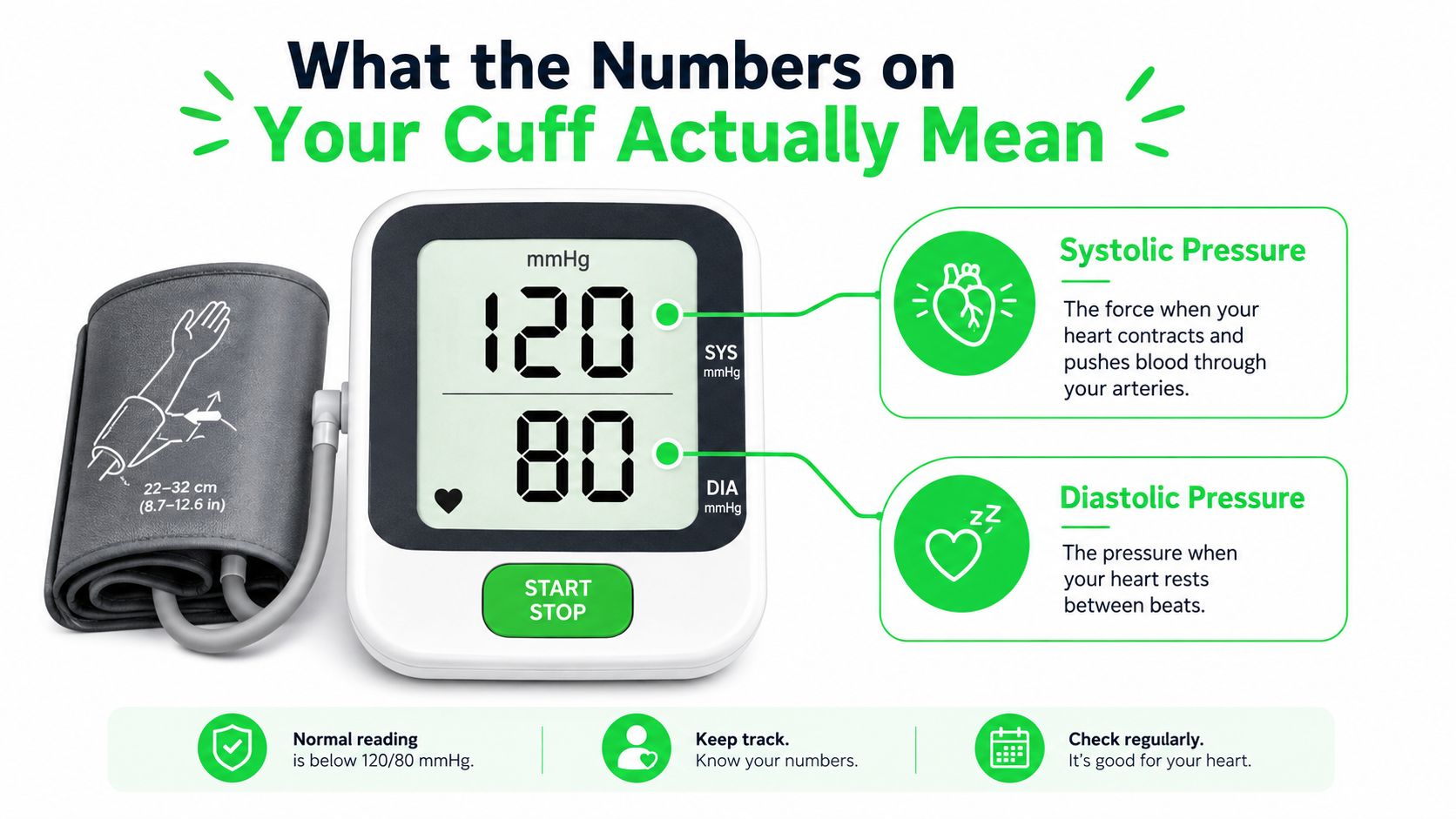
Table of Contents
- What the Numbers on Your Cuff Actually Mean
- The Normal Range for Women in the UAE
- Age, Hormones, and Pregnancy Shifts
- Measuring Your Blood Pressure the Right Way at Home
- Office Reading Versus Home Reading
- Everyday Factors That Move Your Reading
- When to Seek Medical Advice or Home Nursing Support
- Common Questions Women Ask About Blood Pressure
What the Numbers on Your Cuff Actually Mean
A home reading can feel strangely final. The cuff deflates, the screen flashes 128/82, and the mind jumps straight to, “Is that normal for me?” That's the right question, because the two numbers never mean the same thing, and they shouldn't be treated as one blob of “good” or “bad”.
Systolic and diastolic are different signals
The top number is systolic pressure, the force when your heart contracts and pushes blood through the arteries. The bottom number is diastolic pressure, the pressure when your heart rests between beats. A woman can have a top number that looks acceptable while the bottom number is creeping up, which is why the pair should always be read together. UAE patient guidance uses below 120/80 mmHg as the practical normal reference point, with 120–129/70–79 mmHg still sitting in the normal or high-normal band in some regional cardiology commentary, so a reading like 128/82 needs context rather than panic (Gulf News summary of UAE guidance).
There's also a quieter number hiding in the gap between the two. That gap is pulse pressure, and when it widens over time it can hint at arterial stiffness before the headline number rises. You don't need to calculate it every day, but if the gap starts changing on repeated readings, it's worth bringing to a clinician's attention.
What the monitor icons mean
Most cuff monitors show more than pressure. A heart rate icon tells you the pulse detected during the reading, and some devices display an arrhythmia flag when the rhythm looked irregular during measurement. Those alerts aren't a diagnosis, but they're useful clues if they appear more than once, especially when you were seated, still, and not talking. If your device shows movement or posture warnings, treat them as a reminder to repeat the reading correctly rather than as proof of disease.
Practical rule: a single reading tells you very little until you know whether it came from rest, stress, or an inaccurate setup.
For women checking numbers in Dubai, that distinction matters every day. The next ladder turns those figures into a woman-specific UAE framework you can use on your own screen.
The Normal Range for Women in the UAE
A Dubai resident checks her monitor after hurrying in from the heat and sees 128/82 mmHg. The number deserves context before it receives a label. UAE guidance is easier to apply as a reading ladder, with below 120/80 mmHg as the practical reference for adult women. Dubai Health Authority materials use adult categories that appear in clinics and telehealth forms (DHA blood pressure guide).
UAE Blood Pressure Categories for Women
| Category | Systolic (mmHg) | Diastolic (mmHg) | Action Cue |
|---|---|---|---|
| Normal | Below 120 | Below 80 | Keep routine tracking |
| Elevated | 120 to 129 | Below 80 | Recheck and watch trends |
| Stage 1 Hypertension | 130 to 139 | 80 to 89 | Repeat over several days and speak to a clinician |
| Stage 2 Hypertension | 140 or higher | 90 or higher | Arrange prompt medical review |
| Hypertensive Crisis | Above 180 | Above 120 | Seek urgent help immediately |
The ladder is especially useful for women because the same reading can sit within different personal contexts, including hormonal stages, pregnancy, and changing patterns over time. It gives you a shared language for discussing the number with a clinician instead of treating the cuff as a yes-or-no test.
Use the categories as a response guide. Under 120/80 generally supports routine tracking. 120–129/<80 calls for attention and trend-watching, not alarm. A reading in the 130–139 or 80–89 range belongs in a repeat-reading plan and may need clinical follow-up.
The setting also changes how much confidence you should place in one result. A reading taken after stairs, messages, or a rushed walk through a hot street may not represent your usual level. UAE telehealth guidance asks for at least three different repeat blood pressure readings or twice-daily home monitoring when hypertension is assessed (DHA telehealth hypertension guidance).
A UAE-hospital study found that different frameworks can classify the same number differently, so a clinician may review a borderline result more carefully than a home app (Clinical study on early hypertension management). Office readings, home readings, and repeated measurements therefore belong together when you interpret your result.
Age, Hormones, and Pregnancy Shifts
A woman's blood pressure range isn't frozen in time. It changes with age, hormones, and pregnancy, so a number that seems ordinary for one stage of life can look different in another. UAE female data show that hypertension remains a persistent issue for women, which makes these shifts clinically important rather than academic (World Heart Federation UAE evidence summary).
Younger adult women
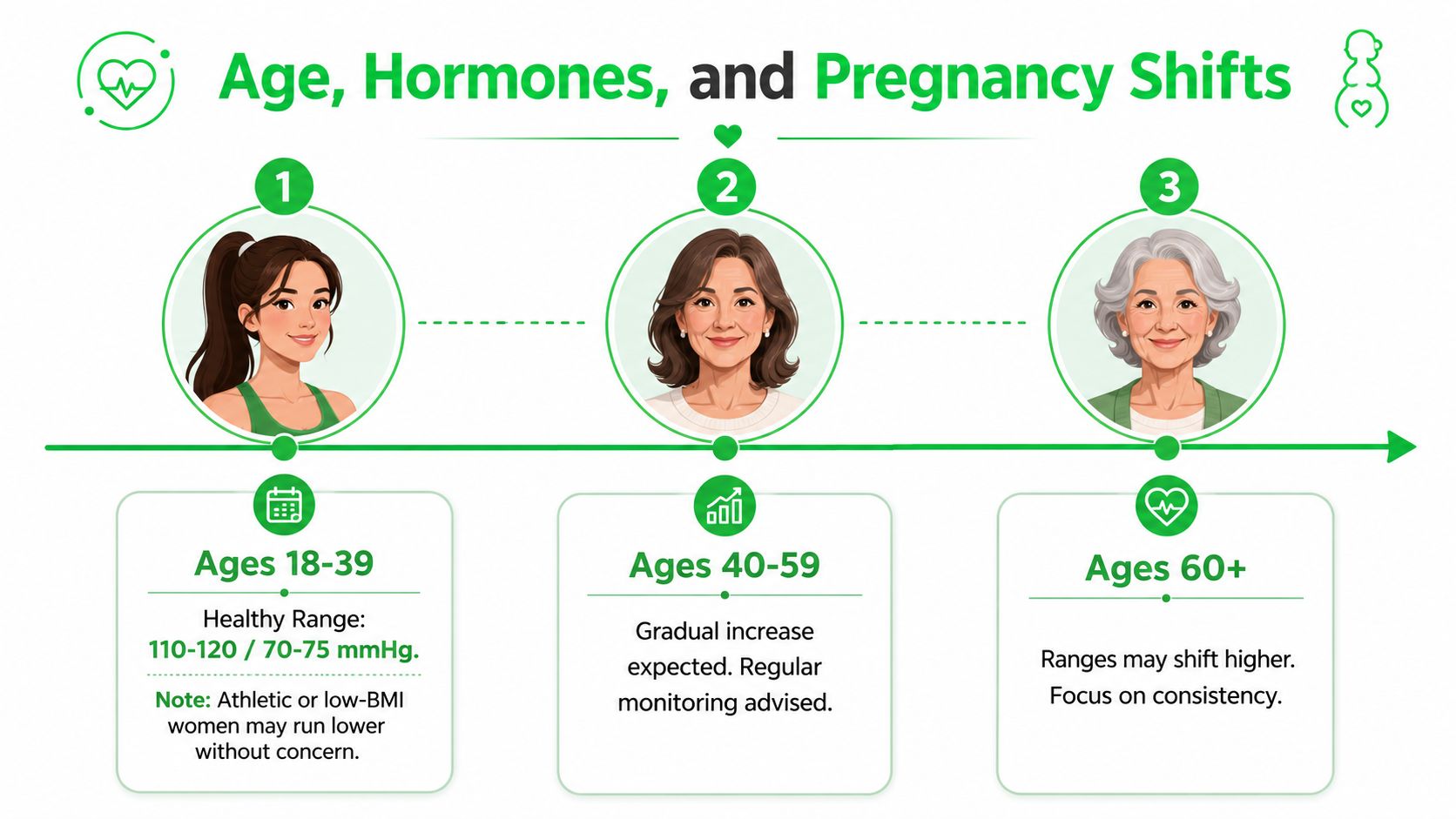
For women in their late teens and twenties, readings often sit in a lower band, and that's usually expected. In a UAE study of young Emirati female adults, 81.6% had normal blood pressure, defined in that paper as below 120/80 mmHg (PLOS ONE UAE female study). Some athletic or low-BMI women naturally run lower than average, and if they feel well, that can be completely fine.
Midlife and later years
From the forties onward, the reading often inches up as arterial elasticity falls and hormonal changes begin to settle in. That does not mean every rise is disease, but it does mean a woman who used to sit in the low 110s may drift closer to the upper-normal range and need routine monitoring. A woman in her sixties may also see numbers that look higher than they did earlier in life, and the question becomes whether the readings are stable, repeated, and symptom-free, not whether they match a younger baseline.
Plain rule: age can shift the number upward, but it doesn't cancel the need to watch the trend.
Pregnancy needs its own threshold
Pregnancy is different enough to deserve separate language. In pregnancy, normal still sits below 120/80 mmHg, while gestational hypertension begins at 140/90 after 20 weeks. Pre-eclampsia is signalled by 140/90 or higher plus proteinuria or symptoms such as headache and visual changes, so the number alone is never the full story. If you're pregnant and your readings are changing, you need obstetric review rather than self-interpretation.
Menopause also matters because estrogen decline can affect vascular resistance and blood lipids, which is one reason some women notice their numbers creeping up after midlife. That doesn't create an emergency by itself, but it does mean repeated monitoring becomes more relevant, not less. If you're already tracking fatigue, cycle changes, or sleep disruption, it's sensible to note blood pressure alongside them.
For a woman who wants a broader health snapshot at the same visit, a full blood test can help clinicians look beyond pressure alone and see whether other issues might be shaping how she feels.
Measuring Your Blood Pressure the Right Way at Home
A good reading starts before the cuff inflates. If the setup is sloppy, the number can look convincing and still be wrong. The goal is a resting result that reflects your usual state, not the stress of the moment.
Set up the reading properly
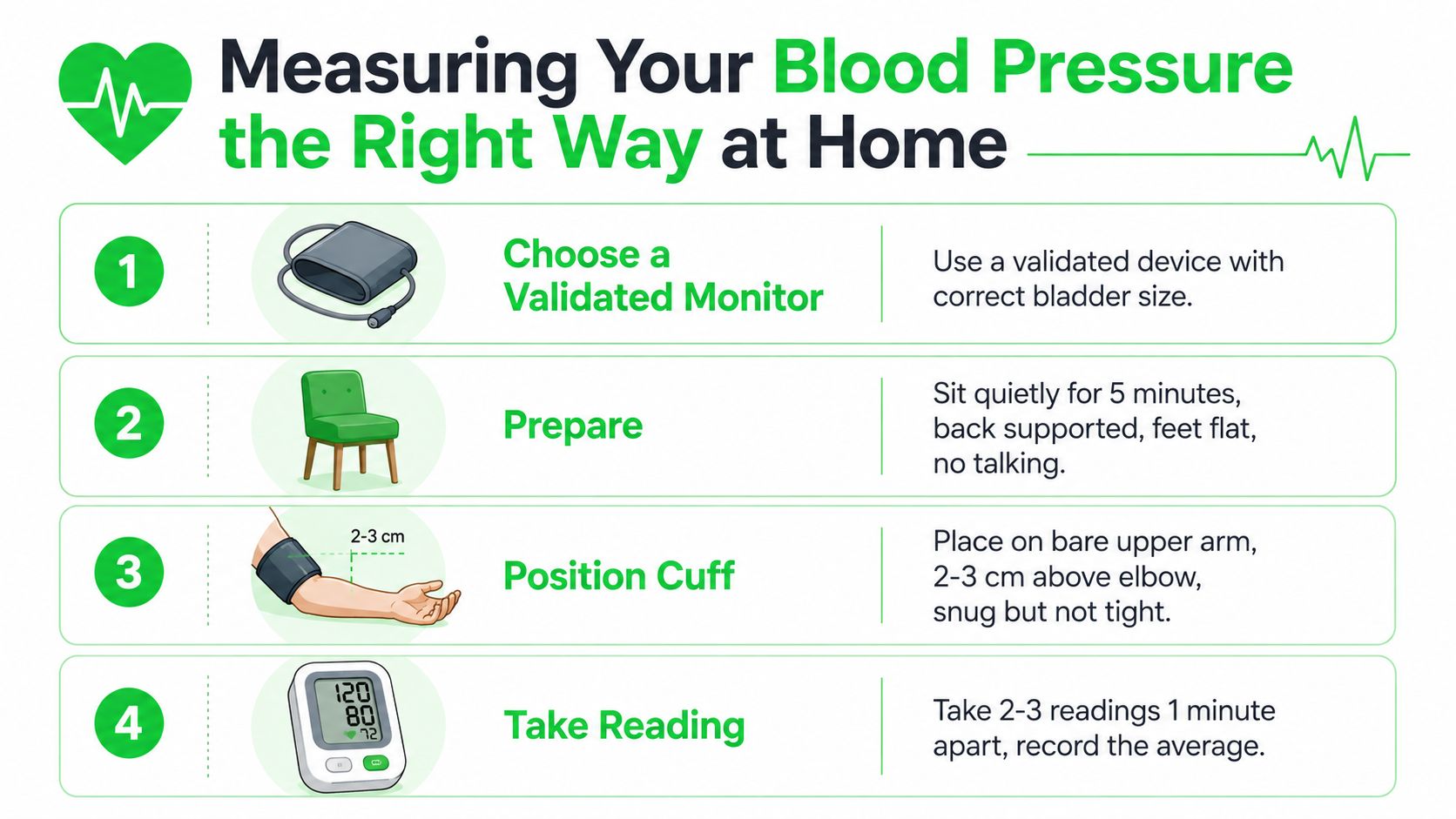
Use a validated upper-arm monitor with the correct cuff size. Wrist devices are easy to use, but they're not the right choice when you need a diagnostic decision, because position can distort the result. Before you measure, empty your bladder, avoid caffeine, smoking, and exercise for at least 30 minutes, and sit with your back supported and your feet flat.
The cuff goes on bare skin at heart level, snug but not tight. Then rest for 1 to 2 minutes before the first reading. If you've just rushed in from the car, argued on the phone, or walked from a humid car park, give your body a proper pause first.
Repeat readings matter more than one number
Take two readings one minute apart, then record the average. If it's a new day, don't overvalue the first result, because the first reading often runs higher than the rest. For women who want consistency, morning and evening windows work better than random checks, especially when they're trying to understand whether a borderline result is a real trend.
Record the average, not the drama of the first screen.
What to write down
A simple log is enough. Keep the date, time, reading, pulse if shown, and a short note on anything unusual, like poor sleep, headache, or a stressful commute. If you know your cuff size is too small, replace it, because a tight cuff can push the result upward and make a normal reading look abnormal.
For women who need home support after a clinic visit or while a reading is being watched more closely, Vitals Healthcare Doctor On Call can provide doctor review, repeat vitals checks, and follow-up guidance at home in Dubai.
Office Reading Versus Home Reading
A woman may arrive at a Dubai clinic after traffic, paperwork, or worry about the appointment. Her cuff reading can rise before the measurement begins. The result still matters, but it answers a different question from a calm reading taken at home, so office, home, and ambulatory readings should not be treated as interchangeable.
Reading differences across settings for a sample woman
| Setting | Typical systolic/diastolic (mmHg) | Difference from true resting | Likely classification | When to trust it |
|---|---|---|---|---|
| Office reading | 135/85 | Often higher because of white-coat effect | May look borderline or high | Good for screening, not for final judgment |
| Home average | 122/78 | Closer to true resting pressure | Often lower-risk than office | Strong for day-to-day monitoring |
| Ambulatory daytime average | 128/80 | Captures usual daytime load | Can sit between office and home | Useful when readings conflict |
The white-coat effect describes a temporary rise linked to the clinical setting. A single office result therefore should not label a woman as hypertensive. A home average often reflects her usual resting pressure more closely, while ambulatory monitoring follows changes during ordinary daytime activities.
For example, a 135/85 office reading alongside a 122/78 home average does not automatically mean her pressure remains high. The home pattern may provide a calmer view, while repeated office measurements show how she responds in a medical setting. UAE clinical reporting also supports judging close results through repeated measurements rather than one office snapshot (UAE hospital study on BP classification).
Use each setting for its proper purpose. Office readings support screening and treatment reviews. Home averages help confirm a day-to-day trend. Ambulatory monitoring can clarify conflicting results, symptoms, pregnancy follow-up, or readings that change noticeably between settings.
The practical reading ladder is straightforward: treat the clinic number as a signal, compare it with a correctly collected home pattern, then discuss persistent elevation with a clinician. Trust the 7-day home average more than a single clinic visit when deciding whether pressure appears normal.
Everyday Factors That Move Your Reading
A blood pressure reading doesn't exist in a vacuum. In Dubai, it can shift because of restaurant food, sleep, stress, heat, caffeine, or the wrong medication at the wrong time. If you don't track those triggers, you can mistake a temporary rise for a chronic problem.
Common everyday drivers
- Salt-heavy meals: Restaurant meals, sauces, salty snacks, and bread-heavy patterns can push pressure up.
- Stress and pressure: Traffic, deadlines, and family strain can lift a reading temporarily.
- Sleep disruption: Late-night screen use, short sleep, and untreated snoring can raise morning values.
- Caffeine and stimulants: Arabic coffee and energy drinks can nudge readings upward for some women.
- Heat and dehydration: Hot weather and fluid loss can make readings less stable.
- Over-the-counter medicines: NSAIDs and decongestants can raise blood pressure in susceptible people.
The changes are often temporary, but they still matter if you're trying to tell the difference between a real pattern and a bad day. UAE lifestyle research and clinical experience both make this clear, especially when symptoms such as dizziness appear after dehydration, medication use, or missed fluids. If sudden light-headedness is part of the picture, the context matters as much as the number, and this Dubai-focused guide on sudden dizziness is a useful reminder that not every dizzy spell is the same.
Track the trigger first, then trust the reading.
Hormonal changes can also shift the number in women, especially around the menstrual cycle and perimenopause. If your log shows that the pressure rises and falls with those patterns, that note is clinically useful. It helps prevent false alarms and keeps a physician from chasing noise instead of trend.
When to Seek Medical Advice or Home Nursing Support
The easiest way to act on a blood pressure reading is to sort it into green, amber, or red. That turns the number into a decision, not a worry. It also makes it easier to know when home nursing, telehealth, or emergency care is the right next step.
Green, amber, and red actions
- Green zone: If your home readings stay under 120/80 and you have no warning symptoms, keep routine monitoring and lifestyle review. A reasonable rhythm is a periodic recheck, plus attention to sleep, salt, movement, and hydration.
- Amber zone: If you're seeing 130–139/80–89, repeat readings over several days, log them, and arrange a clinician review. Telehealth or nurse-led follow-up fits well here, especially if the numbers are drifting rather than stable.
- Red zone: If you get 140/90 or higher on two separate occasions, or you have sudden severe headache, chest pain, vision changes, or shortness of breath, seek urgent medical care immediately.
For women with borderline or unstable readings, nurse follow-up can be useful for rechecks, symptom review, and documentation. After a clinic visit, a nurse may also monitor vitals during stabilisation, especially when a clinician wants a clearer home picture. Postnatal blood pressure checks are also relevant within the first weeks after delivery, because the body is still adjusting.
Bring the log to every appointment. A clean record of dates, times, and repeat averages is often more useful than a single dramatic reading.
If you want structured follow-up in Dubai, chronic disease management with doctor on call can fit the gap between a one-off clinic check and a full emergency visit, especially when readings need repeat review rather than immediate hospital escalation.
Common Questions Women Ask About Blood Pressure
Is my blood pressure monitor accurate enough?
Choose a validated upper-arm monitor with the right cuff size, and don't use a wrist device for diagnosis. If you already own a monitor, bring it to an annual clinic visit so the reading can be cross-checked against a professional device. If the numbers disagree, the cuff size, body position, or device accuracy may need review.
What counts as high blood pressure in pregnancy?
Pregnancy has its own rules. Gestational hypertension begins at 140/90 after 20 weeks, and pre-eclampsia involves 140/90 or higher plus proteinuria or end-organ signs that need urgent obstetric review. If you're pregnant and your readings are changing, don't self-triage, ask your OB-GYN for a baseline and follow-up plan.
Can hormonal contraception or HRT affect my readings?
Yes, combined oestrogen pills can raise blood pressure in some women, especially if you're over 35 or have migraine. That's why a baseline reading before starting, then a follow-up after a few months, makes sense. If you're considering a hormonal method, ask for a pressure check first and keep logging after you start.
What is white-coat hypertension?
White-coat hypertension means the office reading is higher than the everyday pattern at home. It's one reason clinicians may ask for a home log or a 24-hour ambulatory study before making a diagnosis. If your clinic number is high but your home average is normal, ask whether ambulatory monitoring through a DHA facility would clarify the picture.
For women who want preventive review beyond a single blood pressure question, women's preventive health tests at home can be a practical way to combine repeat vitals and lab work without another trip across the city.
If your readings are confusing, you don't need to guess alone. Vitals Healthcare Doctor On Call offers DHA-licensed doctors, nurses, and at-home vitals support across Dubai, which makes it easier to confirm whether a number is normal, borderline, or needs urgent review. Visit Vitals Healthcare Doctor On Call to arrange a home visit, repeat blood pressure check, or follow-up plan that fits your day.