
You've finished a cold in Dubai, but your face still feels heavy when you bend forward. Your nose is blocked, mucus is collecting at the back of your throat, and the air-conditioning at work seems to make everything worse. The immediate question is often, “Do I need antibiotics?” In practice, علاج الجيوب الانفية starts with a better question: what pattern are the symptoms following, and are they improving, persisting, or becoming more severe?
Sinus symptoms are common in the UAE. One UAE-based study reported chronic rhinosinusitis in 14.9% of the general population, while earlier UAE reporting cited roughly 20% of the population with chronic sinusitis, as documented in this UAE public-health study. That makes sensible assessment important, but it doesn't mean every blocked nose needs an antibiotic or a procedure.
Table of Contents
- Recognising Sinusitis and Its Symptom Patterns
- When Symptoms Need Clinical Assessment
- Medical Treatments From Self-Care to Prescriptions
- Procedural Options for Persistent Sinus Disease
- Safe Home Care and Symptom Tracking
- Using Teleconsults and Home Doctor Visits in Dubai
- Common Sinusitis Treatment Misconceptions
- A Practical Sinusitis Treatment Action Plan
Recognising Sinusitis and Its Symptom Patterns
Consider a Dubai resident whose cold began with a sore throat and runny nose. The fever settled, energy returned, and the cough eased, but two weeks later there's still pressure across the cheeks, thick nasal discharge, and reduced smell. That lingering pattern deserves attention, yet it still needs clinical interpretation rather than an automatic label of “bacterial sinus infection”.
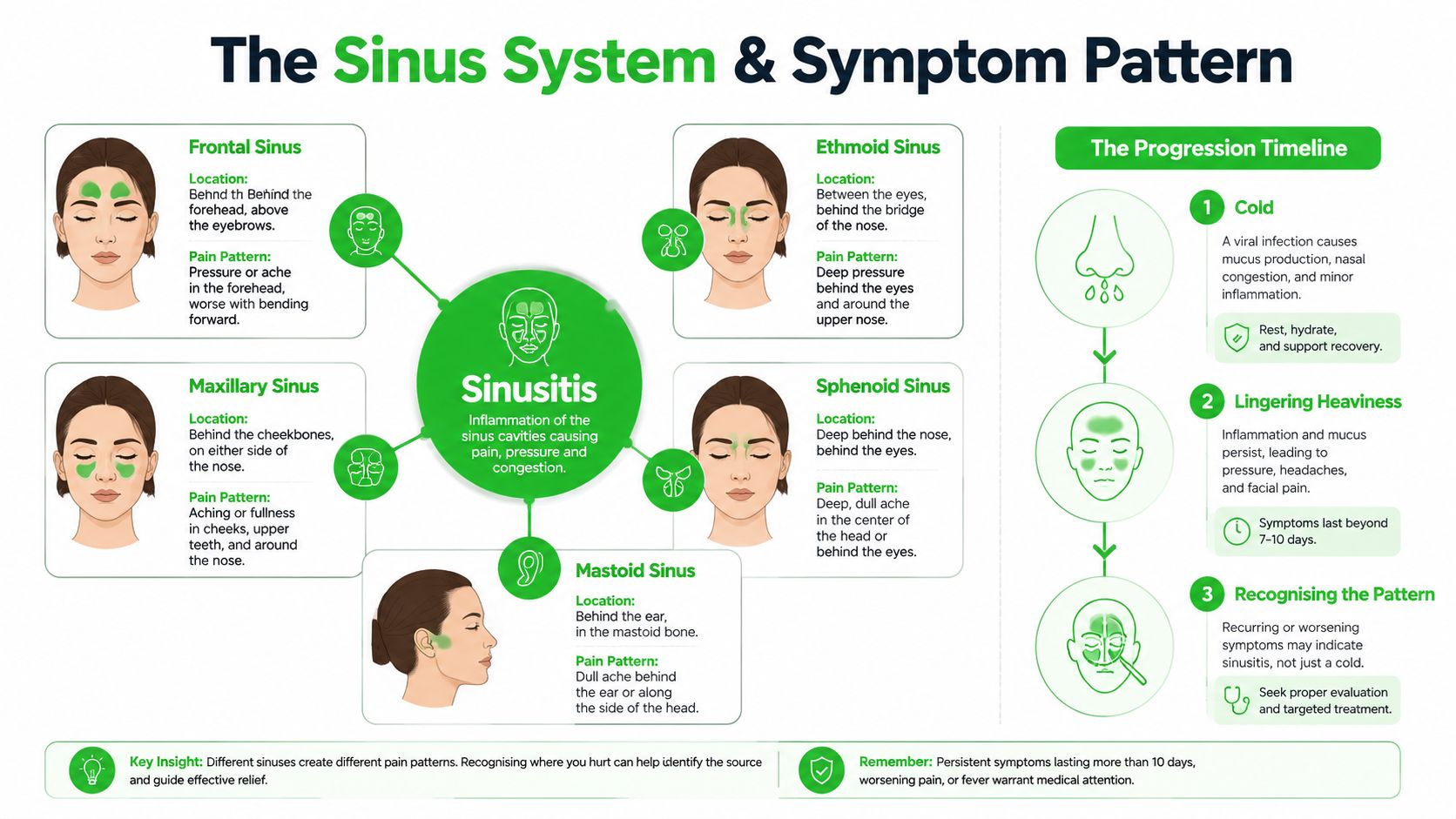
The sinuses are air-filled spaces around the nose, cheeks, eyes, and forehead. Their lining produces mucus, which normally drains through small openings into the nasal passages. When a viral illness, allergy, irritation, or structural narrowing causes swelling, drainage becomes less efficient. Mucus can remain trapped, and inflammation then contributes to facial pressure, nasal blockage, postnasal drip, reduced smell, and head heaviness that may feel worse when bending forward.
Duration changes the decision
Acute symptoms commonly follow a cold and settle as the respiratory illness resolves. The Dubai Health Authority guideline notes that most acute cases improve within 2 to 3 weeks without treatment, and that antibiotics aren't needed, as outlined in the DHA telehealth sinusitis guidance. Symptoms that continue without improvement, recur in episodes, or remain present over a prolonged period suggest a different management question.
A parent may notice that congestion improves during weekends but flares in heavily air-conditioned offices or dusty surroundings. That pattern may point the clinician towards irritants or allergy as contributors, rather than infection alone. Thick or discoloured mucus can occur with inflammation and doesn't, by itself, prove that antibiotics are required.
The practical approach described in these sinusitis treatment tips is to record the sequence, not the loudest symptom. Duration, triggers, smell changes, facial pressure, and the direction of travel help a clinician decide whether conservative care, medication review, or ENT assessment fits. Symptom patterns guide decisions, but they can't replace an examination when the course is persistent or unusual.
When Symptoms Need Clinical Assessment
Start by asking whether the illness is steadily improving. A blocked nose that is gradually easing, even if it hasn't disappeared, usually supports supportive care and observation. NICE describes acute sinusitis as usually viral, lasting around 2 to 3 weeks, with patients recovering without antibiotics in its acute sinusitis guidance.
The next pattern is persistence. If symptoms last around 10 days or more without improvement, arrange a clinical review rather than repeatedly changing over-the-counter medicines. DHA guidance describes this duration as a point at which clinicians may consider a high-dose nasal corticosteroid for 14 days in appropriate patients before specialist referral, depending on the clinical picture.
Read the direction of symptoms
A “double-sickening” pattern is particularly useful to report. You may feel better after a cold, then develop renewed congestion, facial pain, fever, or heavier discharge. A new high fever, severe facial pain, or a clear deterioration after initial improvement calls for medical assessment because the treatment decision may differ from that for a resolving viral illness.
Keep a short diary before the consultation:
- Duration: Write down the day symptoms began and whether there was an initial improvement.
- Severity: Record facial pressure, headache, sleep disruption, and how well you can breathe through your nose.
- Associated symptoms: Note fever, discharge, smell changes, cough, and postnasal drip.
- Triggers: Mention dust, strong fragrances, office air-conditioning, travel, or known allergies.
- Previous treatment: List sprays, pain relief, antibiotics, and whether each helped.
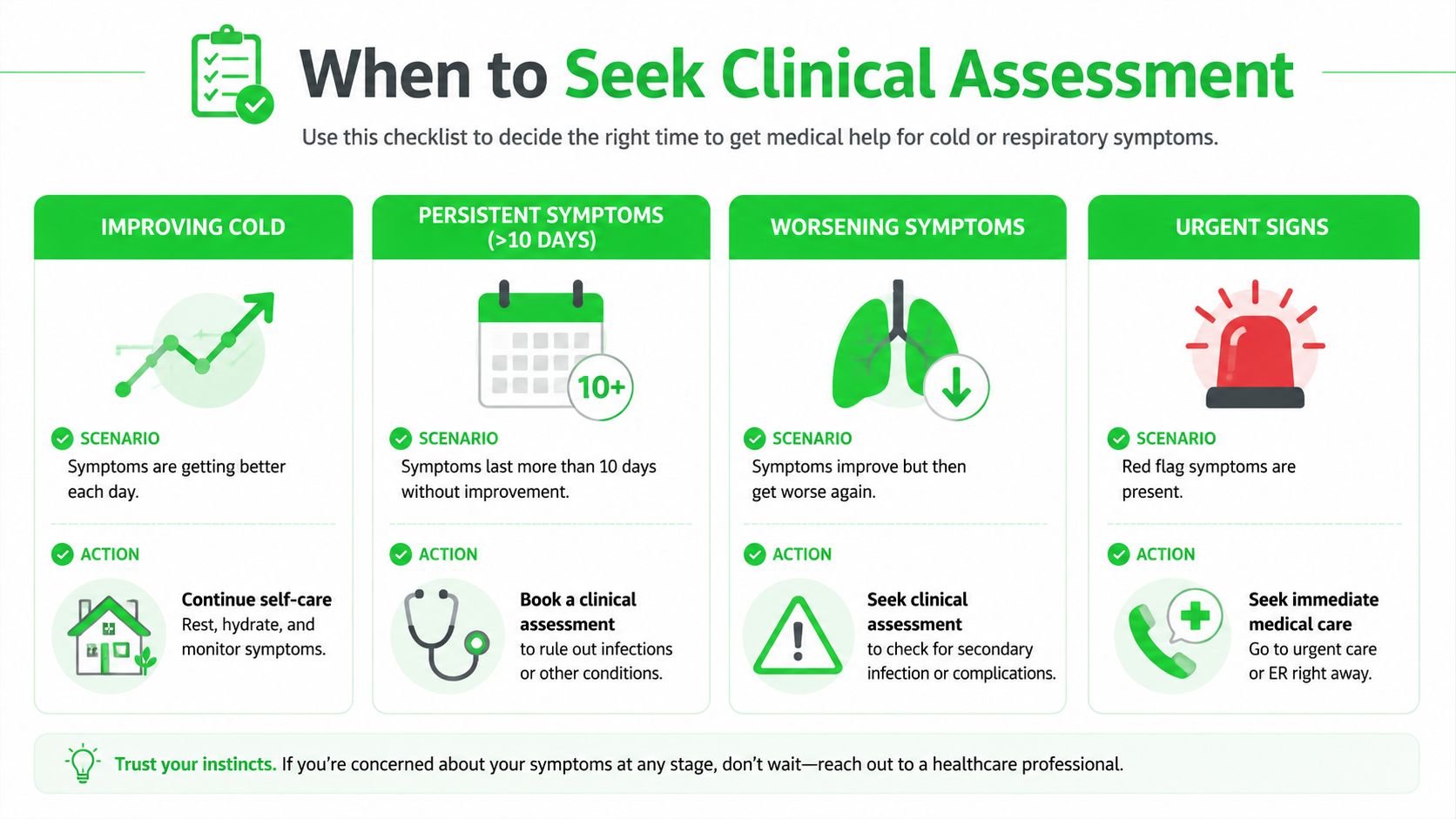
Some combinations shouldn't wait for a routine appointment. Swelling around the eye, vision changes, severe one-sided facial pain, confusion, or a severe headache with neck stiffness require urgent assessment. Those signs can indicate a complication or another serious condition, and a scheduled teleconsult isn't the right safety net.
For less urgent but persistent symptoms, a doctor home visit in Dubai can be useful when travel is difficult, while a clinic or ENT appointment may be more suitable when examination, nasal endoscopy, or imaging is likely to be needed.
Medical Treatments From Self-Care to Prescriptions
Treatment works best when it matches the mechanism causing the symptoms. Saline irrigation or spray helps clear mucus and irritants. Hydration can make secretions easier to clear, while a warm compress over the cheeks or forehead may reduce the sense of pressure. Sleeping with the head slightly raised can also make night-time drainage more comfortable.
Dubai's climate and indoor environments can add practical triggers. Dust, smoke, strong fragrances, and aggressively chilled air may irritate the nasal lining. Reducing exposure won't treat every cause, but it can prevent an inflamed nose from being repeatedly provoked while it recovers.
What prescription treatment is trying to do
An intranasal corticosteroid treats inflammation rather than directly killing bacteria. It may be considered when swelling and persistent symptoms dominate, particularly when allergy, polyps, or chronic inflammation contribute. Correct technique matters: aim the spray slightly away from the nasal septum, breathe in gently, and use it for the prescribed duration rather than stopping as soon as one dose provides relief.
Decongestants can open the nose quickly, but they're not a long-term solution. Oral products may be unsuitable for people with certain cardiovascular conditions, blood-pressure concerns, glaucoma, or medication interactions. Topical decongestant sprays also need strict limits because prolonged use can cause rebound blockage. A clinician or pharmacist should help you choose safely.
Antihistamines may help when allergy is part of the pattern. Mucus-thinning treatment can sometimes support clearance, but the choice depends on age, pregnancy, other medicines, and the actual diagnosis. These options shouldn't be mixed casually because the nose feels blocked.
Practical rule: Antibiotics treat selected bacterial disease. They don't remove allergy, correct a narrow drainage pathway, or reliably shorten an ordinary viral cold.
The DHA stepwise guidance recommends conservative measures for mild acute rhinosinusitis, including saline sprays, humidification, and analgesics. Antibiotics are reserved for patterns such as symptoms lasting more than 10 days, severe fever with purulent discharge and facial pain, or symptoms that improve initially and then worsen, as set out in the DHA clinical guideline for virtual sinusitis management.
| Treatment | Main purpose | Typical use | Key cautions |
|---|---|---|---|
| Saline spray or rinse | Clears mucus and irritants | Mild congestion and supportive care | Use safe water for rinsing and clean equipment properly |
| Intranasal corticosteroid | Reduces nasal inflammation | Persistent congestion, allergy, or inflammatory disease | Technique and regular use matter |
| Decongestant | Provides short-term nasal opening | Brief relief when blockage is prominent | Avoid prolonged use and check medical contraindications |
| Antihistamine | Controls allergy-related symptoms | Sneezing, itching, and allergy-linked congestion | Some products cause drowsiness or interact with medicines |
| Analgesic | Relieves pain and pressure | Facial discomfort or headache | Follow the product dose and consider existing conditions |
| Antibiotic | Treats suspected bacterial infection | Persistent, severe, or worsening bacterial pattern | Requires clinician assessment, prescription, and review |
For children, the UAE Ministry of Health and Prevention recommends watchful waiting for mild acute rhinosinusitis, with saline sprays, humidifiers, and suitable over-the-counter analgesics such as acetaminophen or ibuprofen. When antibiotics are indicated, its paediatric upper-respiratory guideline gives a duration of 10 to 14 days or 7 days after symptom improvement. Dubai standards also identify amoxicillin as first-line therapy when antibiotics are initiated and advise reassessment if the patient hasn't improved within 7 days of diagnosis, according to the Dubai Standards of Care for upper respiratory infections.
Procedural Options for Persistent Sinus Disease
Procedures become relevant when symptoms keep returning or remain troublesome despite appropriate medical treatment. An ENT specialist usually considers the symptom pattern alongside nasal examination, polyps, structural narrowing, prior treatment response, and imaging where appropriate. The aim is to improve drainage or deliver treatment to the diseased lining, not to promise that every future cold will be prevented.
Endoscopic sinus surgery uses instruments through the nostrils to open or clear selected drainage pathways. It may suit chronic disease with persistent obstruction, polyps, or anatomy that prevents medical treatment from reaching the affected areas. Recovery varies according to the procedure and the individual, and follow-up care remains important because inflammation can continue after the operation.
Balloon sinuplasty uses a small balloon catheter to widen selected sinus openings without removing the same amount of tissue as traditional surgery. It may be considered for carefully selected adults with suitable anatomy and a pattern of disease that fits the technique. It isn't appropriate for every sinus, every blockage, or every patient with polyps.
Newer targeted approaches
Drug-delivery implants and biologic treatments represent a more nuanced option for selected inflammatory disease. Dubai media coverage in 2024 highlighted an implant-based approach designed to deliver corticosteroids directly to nasal polyps while reducing broader steroid exposure, as reported by Al Bayan's coverage of newer sinus treatment. Suitability depends on the diagnosis, previous treatment, access to follow-up, and the ENT specialist's assessment.
| Procedure | Main purpose | Best suited for | Typical recovery |
|---|---|---|---|
| Endoscopic sinus surgery | Opens or clears diseased drainage pathways | Persistent disease, polyps, or structural blockage after medical review | Usually requires planned aftercare and a staged return to normal activity |
| Balloon sinuplasty | Widens selected sinus openings | Carefully selected anatomy and limited disease patterns | Often less disruptive than extensive surgery, but recovery depends on the case |
| Drug-delivery implant | Places anti-inflammatory treatment near target tissue | Selected inflammatory disease, including some polyp-related patterns | Depends on the device, procedure, and follow-up plan |
| Biologic therapy | Modulates severe inflammatory disease | Specialist-managed disease that meets treatment criteria | Ongoing monitoring is part of treatment |
Ask the ENT specialist whether imaging is needed, what problem the procedure is intended to correct, how recurrence will be managed, whether revision treatment could be required, and what the follow-up schedule includes. For patients who need supportive treatment at home around an illness or recovery period, home IV therapy in Dubai may be discussed with a qualified clinician, but it doesn't replace ENT care or correct sinus obstruction.
Safe Home Care and Symptom Tracking
Home care should make symptoms easier to tolerate while the natural course becomes clear. It shouldn't conceal deterioration or delay urgent assessment.
Use a saline nasal spray for gentle moisture and clearance. If you use a rinse bottle or neti pot, follow the product instructions, use appropriately safe water, and clean and dry the device after use. Drink regularly, use moderate humidification if the air feels dry, and sleep with your upper body slightly raised if lying flat worsens postnasal drip.
Warm compresses may soothe facial pressure. For pain, use an over-the-counter medicine only according to its label and your own medical advice, especially if you have kidney disease, stomach ulcers, liver disease, pregnancy, or take blood thinners. Don't combine products that contain the same pain-relief ingredient.
Track the trend, not just the symptom
A simple daily note can be more useful than memory during a rushed consultation:
- Nasal blockage: Rate whether breathing is easier, unchanged, or worse.
- Facial pressure: Record the location and whether bending forward changes it.
- Discharge: Note its amount and whether the overall illness is improving.
- Fever: Record measured readings rather than relying only on feeling hot.
- Smell: Mark whether it's returning, stable, or declining.
Nasal decongestant sprays should be stopped according to the product's instructions and clinician advice, especially if congestion is worsening after repeated use. Supportive care is reasonable for a mild, improving illness, but persistent symptoms, renewed deterioration, or red flags need review. Even practical testing logistics can be organised through home blood test guidance in Dubai when a clinician believes investigations are appropriate, although blood testing isn't routinely needed for uncomplicated sinus symptoms.
Using Teleconsults and Home Doctor Visits in Dubai
A teleconsult is a sensible first step when the symptoms are uncomfortable but stable and the main decision concerns duration, previous treatment, allergy, or whether a prescription is appropriate. During a video consultation, a doctor can take a detailed history, review the symptom timeline, ask about fever and facial pain, assess visible swelling, discuss medicines, and screen for warning signs.
That assessment has limits. A video call can't reliably exclude every complicated sinus infection, dental source of facial pain, deep swelling, or structural problem inside the nose. If the doctor needs to examine the nasal passages, check vital signs, assess a child in person, or arrange imaging, a clinic or ENT referral may follow.
When a home visit makes sense
A home visit can be practical for a bedridden adult, a child who is difficult to transport, an older family member, or a hotel guest who needs timely assessment without travelling across Dubai. The doctor can review the patient in context, examine them in person, create a treatment plan, and decide whether further care is needed.
It also suits patients whose symptoms aren't an emergency but shouldn't be ignored. A symptom diary, medication list, allergy history, and previous prescriptions will make the visit more efficient.
A convenient assessment is useful only when the patient's condition is stable enough for that setting.
Do not book a routine home visit when there is severe headache, confusion, swelling around the eye, vision change, or a high fever with marked deterioration. Those features require immediate emergency evaluation, where imaging, specialist review, and hospital treatment can be provided without delay. For non-emergency access to a clinician at home, hotel, or office, doctor on call services in Dubai can provide a practical route to assessment, but emergency symptoms should always take priority over convenience.
Common Sinusitis Treatment Misconceptions
Myth one, every sinus complaint needs antibiotics. A blocked nose, thick mucus, facial pressure, and reduced smell can occur with a viral illness, allergy, irritation, or structural congestion. The DHA and NICE guidance both support conservative management for many acute cases, so the clinician looks at duration and progression rather than prescribing solely because mucus is coloured.
Myth two, steam is a cure. Warm moisture may feel soothing for a short time, but steam doesn't remove the underlying cause. Steam from a bowl of hot water can burn the face and delicate nasal tissue, particularly in children. A safer approach is moderate room humidification or a warm shower, without placing the face over boiling water or adding irritating oils.
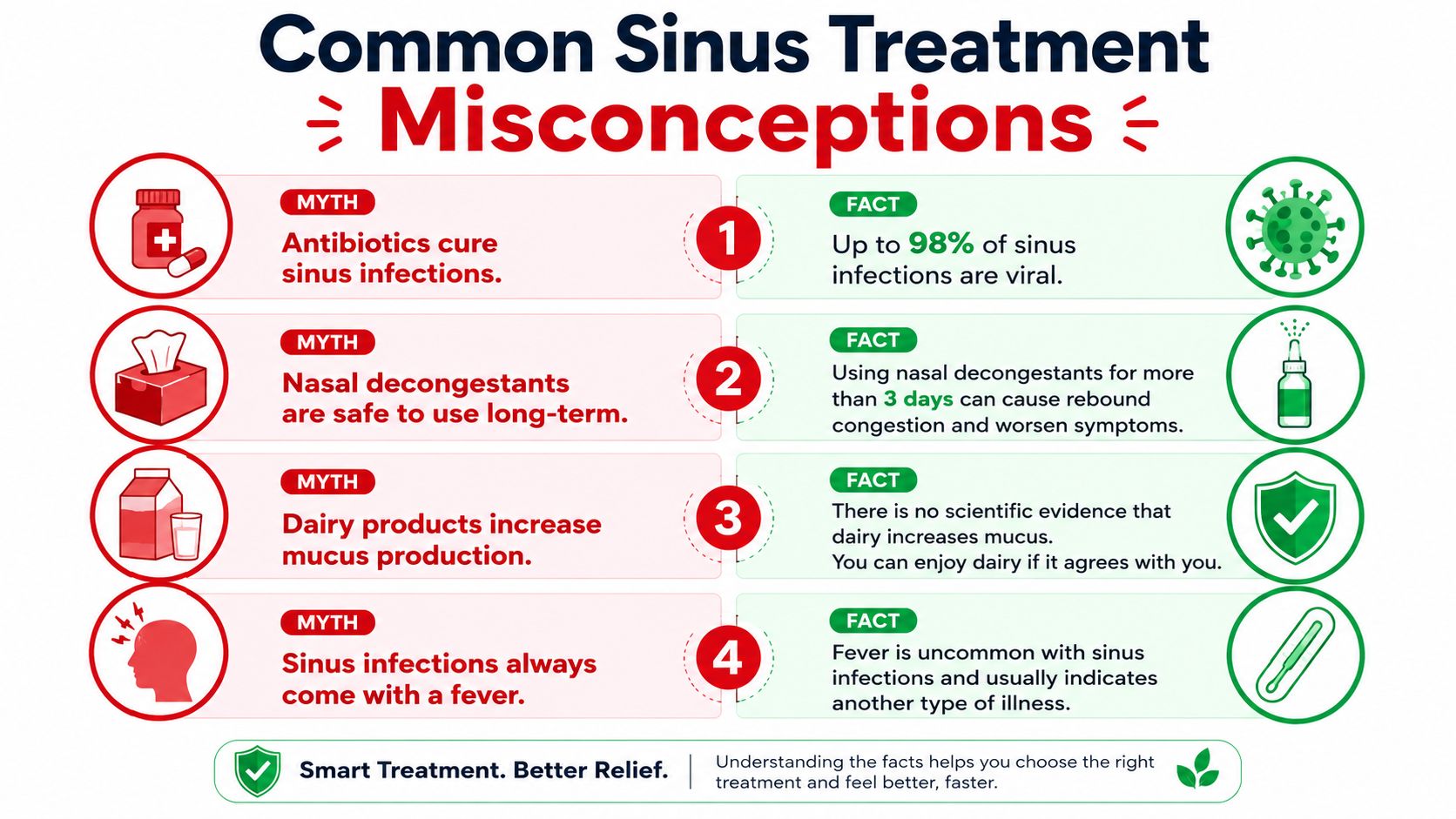
Myth three, persistent symptoms can be ignored. Ongoing inflammation can affect sleep, smell, breathing comfort, and daily concentration. It may coexist with nasal polyps or structural blockage, and rare complications can involve tissues around the eye or, exceptionally, the brain. That doesn't mean every long-lasting symptom is dangerous, but it does mean persistence deserves a proper assessment.
Myth four, surgery is always drastic. Modern endoscopic techniques and balloon procedures are minimally invasive options for selected patients. They're still medical procedures with risks, recovery, follow-up, and the possibility that inflammation or symptoms may recur. The right question isn't whether surgery is “good” or “bad”. It's whether the proposed procedure addresses a documented problem that medication hasn't controlled.
The safest choice is the one that matches the cause, not the one that promises the fastest-sounding fix.
A Practical Sinusitis Treatment Action Plan
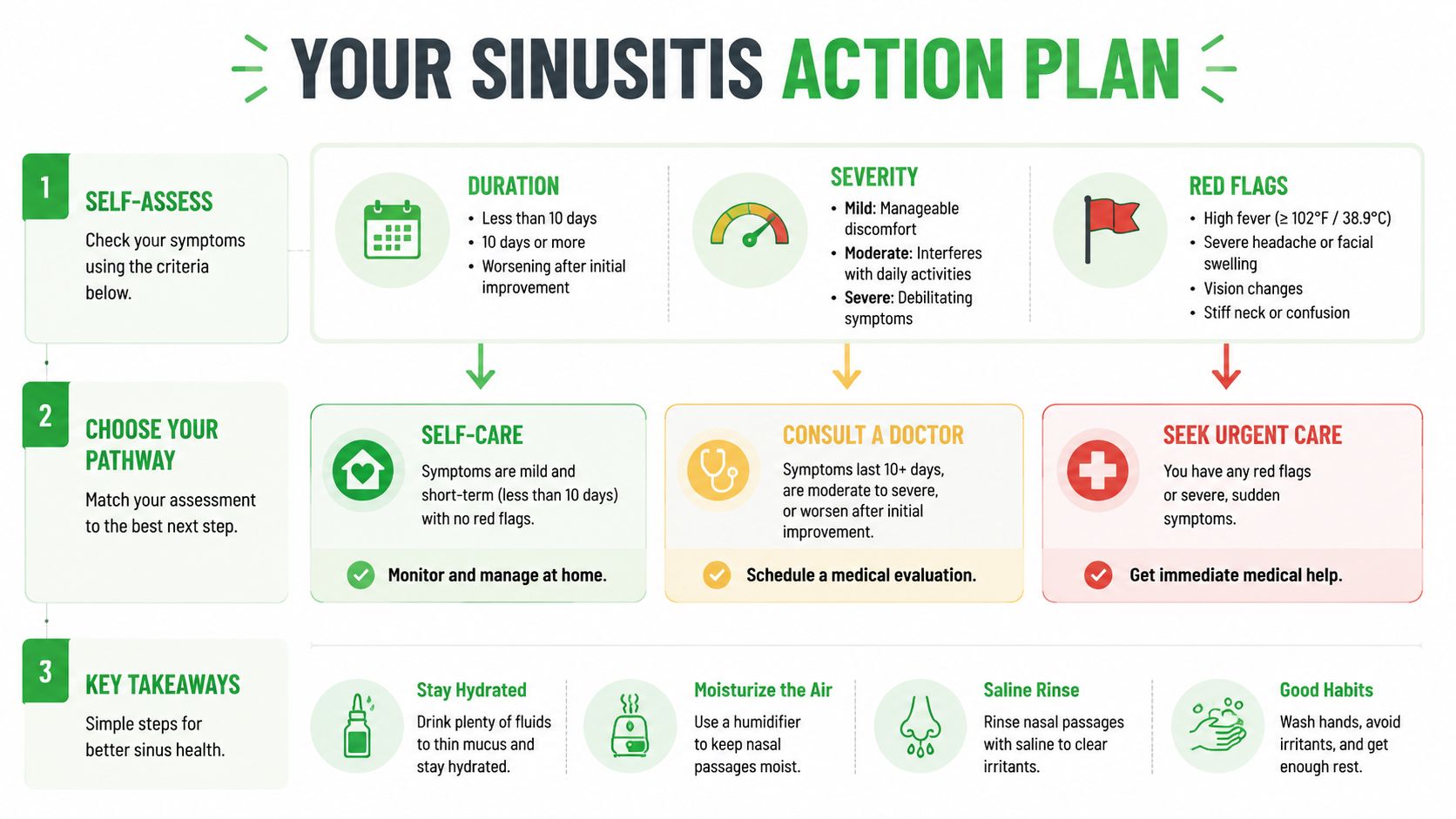
Use this symptom-pattern guide to organise the next step, not to label the illness yourself. Record when symptoms started, whether they are improving, and how they affect sleep, smell, breathing, and daily activity. Note medicines already taken, including antibiotics, nasal sprays, and pain relief.
If symptoms are mild and improving
Supportive care may suit a pattern that resembles a resolving cold. Saline spray, adequate fluids, moderate humidification, comfortable sleep positioning, and appropriate pain relief can reduce discomfort while symptoms settle. Do not use leftover antibiotics or someone else's prescription. If improvement stops, record the change and arrange clinical advice rather than extending self-treatment without review.
If symptoms persist or recur
Arrange a teleconsult, clinic assessment, or ENT review when symptoms fail to improve, return after recovery, or repeatedly disturb sleep and smell. Share the symptom record and medication list so the clinician can assess the pattern efficiently. Depending on the findings, the plan may involve observation, an intranasal corticosteroid, allergy treatment, prescription medicine, examination, or referral.
Repeated episodes also call for a cause-focused review. Allergy, nasal polyps, irritants, dental disease, and structural drainage problems can produce similar complaints or make treatment benefits short-lived. A clinician can decide whether further examination or higher-level referral is appropriate.
If travel is difficult
A home doctor visit can provide in-person assessment for a stable patient who cannot easily leave a home, hotel, or office. It may be practical for children, older adults, people with limited mobility, and travellers in Dubai. The visiting clinician can assess the patient, review medicines, and determine whether home management is reasonable or clinic or hospital evaluation is safer.
If warning signs appear
Seek urgent emergency evaluation for severe headache, vision change, swelling around the eye, confusion, neck stiffness, or high fever with significant deterioration. Do not wait for a teleconsult or home appointment when these symptoms appear.
Before contacting a clinician, prepare this short handover:
- Symptoms began:
- Direction since onset: improving, unchanged, or worsening
- Main symptoms and their effect on sleep or smell:
- Fever, eye symptoms, severe headache, or confusion:
- Medicines tried and response:
- Relevant allergies, dental symptoms, or previous episodes:
- Preferred assessment: teleconsult, home visit, clinic, or urgent care
This summary helps the clinician match the assessment to the symptom pattern and identify changes that require escalation. For stable sinus symptoms when travel to a clinic is difficult, Vitals Healthcare Doctor On Call offers DHA-licensed doctor visits to homes, hotels, and offices across Dubai, including assessment and follow-up.