
Most Dubai blood test packages bundle a fasting core panel, CBC, lipids and fasting glucose, priced from AED 249 to AED 2,000+, with home collection now standard across the city. The right choice isn't the biggest panel, but the one that matches your age, symptoms and risk profile while covering the markers prioritised by Dubai Health Authority guidance.
A Dubai Marina resident can face this decision before sunrise. You can drive to a free-standing laboratory, find parking, wait for the draw and manage the journey home while fasting, or book a phlebotomist to arrive at your door before your first work call. Both routes can produce useful results, but the package and collection standard matter more than the convenience label.
The practical framework is simple. First, identify the reason for testing, whether it's routine screening, symptoms or an executive check-up. Next, match the markers to your age and risks. Finally, decide whether fasting at home is easier than travelling across Dubai on an empty stomach. The Dubai home lab test guide is useful for checking which commonly requested tests can be collected outside a clinic.
Table of Contents
- Choosing the Right Blood Test Package in Dubai
- What a Typical Blood Test Package Includes
- Matching the Package to Your Symptoms and Risk
- Price Tiers and Turnaround Time Compared
- How At-Home Mobile Lab Services Work
- Why Reviews Matter When Picking a Lab Service
- Your Decision Checklist Before You Book
Choosing the Right Blood Test Package in Dubai
The Marina resident in this scenario shouldn't automatically buy a “full body” package. A healthy young adult with no symptoms needs a focused cardiometabolic screen, while a person with diabetes risk may need extra glucose monitoring. Someone with persistent fatigue needs a different clinical question answered altogether.
Start with the reason for testing
Routine screening is the cleanest starting point. DHA guidance prioritises fasting blood glucose or HbA1c, lipid testing and serum creatinine for relevant adult screening, with screening frequency influenced by age and risk factors. The Dubai Periodic Health Screening Guideline should be your reference point, not a package page that calls every available marker “essential”.
Symptom-driven testing deserves a clinician's assessment. Fatigue might justify thyroid testing, ferritin, vitamin B12 or vitamin D, but ordering all of them without considering the history can create confusing borderline findings. A package is a collection of measurements, not a diagnosis.
An executive check-up can be broader, but breadth isn't the same as value. Cardiac risk markers, hormone tests and other specialised additions should answer a defined question or support a documented risk assessment.
Weigh clinic collection against home collection
Home collection usually costs more than the same panel at a clinic. The premium can be worthwhile if it avoids traffic, parking around busy Dubai shopping and business districts, and the risk of feeling lightheaded while driving after a fasting draw. It also lets you complete the collection in your own kitchen or living room before work.
A Dubai home service may begin at AED 99 at one DHA-linked clinic, while another UAE provider lists individual biomarkers from AED 45 and health packages from AED 89, with home collection described as free across Dubai. Review the final quote carefully because the advertised entry price may cover a single marker rather than the panel you need. A Dubai home blood sampling service can be convenient, but convenience doesn't excuse poor specimen handling.
Practical rule: Choose the smallest package that covers the DHA-prioritised markers and your actual clinical question. Pay for home collection when it removes a real logistical problem, not simply because the booking page makes it look effortless.
What a Typical Blood Test Package Includes
Dubai providers generally organise packages from a fasting core to broad preventive panels. However, the exact contents vary substantially, so read the marker list rather than relying on labels such as “basic”, “standard” or “executive”. One locally available overview places basic packages around AED 249–300, while broad preventive panels can reach AED 800–2,000+. This full blood test reference can help you compare what a provider includes.
The core panel
A useful basic blood test package commonly includes:
- CBC: Measures red cells, white cells, haemoglobin and platelets, helping identify patterns associated with anaemia, infection or other blood abnormalities.
- Fasting glucose: Shows blood sugar at the time of collection. It can be affected by fasting, stress and recent illness.
- HbA1c: Reflects average blood sugar over roughly the preceding three months, rather than one morning reading.
- Lipid profile: Measures cholesterol and triglyceride markers used to assess cardiometabolic risk.
- ESR: Measures a general inflammation signal. It doesn't identify the cause by itself.
DHA's screening approach makes glucose, HbA1c and lipids particularly important in routine prevention. UAE health information based on the National Health and Nutrition Survey 2024–2025 reported high blood glucose in 12.5% of adults, high blood pressure in 25.9%, and high cholesterol in 54.2%, which explains why sensible packages combine glucose, HbA1c and lipid markers rather than selling one isolated test. These figures are reported in the UAE health open-data publication plan.
What broader tiers add
Standard packages often add liver markers such as ALT, AST, GGT and bilirubin, kidney markers such as creatinine, BUN and eGFR, thyroid-stimulating hormone, and urinalysis. These tests expand the assessment to organ function and thyroid signals, but abnormal results still require clinical interpretation.
Advanced packages commonly add vitamin D, vitamin B12, ferritin or iron studies, and sometimes high-sensitivity C-reactive protein. These additions can make sense for fatigue, nutritional concerns or a defined cardiovascular discussion. They aren't automatic requirements for every asymptomatic resident.
Executive packages may include hormone panels, cardiac markers and cancer-related markers such as CEA, PSA or CA-125. These are not interchangeable screening tools. PSA, for example, needs age and prostate-risk context, while tumour markers shouldn't be treated as stand-alone cancer diagnoses.
| Package Tier | Core Markers | Added Markers | Typical Price (AED) |
|---|---|---|---|
| Basic | CBC, fasting glucose, HbA1c, lipid profile, ESR | Usually none | 249–300 |
| Standard | Basic markers | Liver, kidney, TSH and urinalysis | Varies by provider |
| Advanced | Standard markers | Vitamin D, B12, iron studies and hs-CRP | 800–1,400 |
| Executive | Advanced markers | Hormones, cardiac markers and selected tumour markers | 1,500–2,500 |
The table shows why price alone is misleading. A lower-cost package can be appropriate if it answers the right question, while an expensive panel can waste money if its extra markers have no clinical purpose.
Matching the Package to Your Symptoms and Risk
The right package changes with the resident, not the marketing tier. I grade each choice against the DHA periodic screening priorities, then add tests only when the person's symptoms or risk profile justifies them.
Persona one, the asymptomatic young adult
A 26-year-old Sharjah-based professional with no symptoms and no family history should choose the basic panel, provided it includes CBC, glucose or HbA1c, lipids and the relevant kidney marker. Grade: A for a focused preventive screen. Buying an executive package at this age adds complexity without automatically adding useful answers.
Persona two, the high-risk professional
A 38-year-old DIFC professional with a prediabetic BMI and parents who have type 2 diabetes needs more than a single fasting glucose reading. I'd choose a standard package with HbA1c and discuss whether fasting insulin is clinically justified. Grade: A minus, because the package aligns well with DHA priorities but diabetes risk needs ongoing interpretation, not one isolated result.
The UAE screening guidance specifically highlights fasting glucose or HbA1c and gives greater screening attention to adults with risk factors. That makes HbA1c the practical addition here, not a decorative extra.
Persona three, the executive buyer
A 46-year-old Emirates Hills executive asking for a detailed preventive assessment could choose an advanced package with vitamin D, hs-CRP and lipid sub-fractions. Grade: B plus against DHA guidance. The core glucose, HbA1c, lipid and kidney markers fit the preventive framework, but DHA doesn't make cardiac inflammation markers mandatory for every low-symptom adult.
Persona four, the fatigued tourist
A 34-year-old tourist returning from travel with ongoing fatigue needs symptom-led testing rather than a generic full-body label. A standard package with thyroid testing, B12, vitamin D, ferritin and hepatitis B serology can be a reasonable starting point when the clinical history supports it. Grade: A for symptom fit, but a clinician should review travel exposures, sleep, diet, medications and other symptoms before adding more tests.
Persona five, the family-risk resident
A 52-year-old JBR resident with a family history of colon cancer needs a clinician-led cancer-risk discussion, not blind reliance on a blood panel. An executive package containing CEA and, for an appropriate male patient, PSA may be considered alongside the relevant screening pathway. Grade: A only when the package is part of a proper risk assessment, because blood markers don't replace recommended cancer screening or diagnostic evaluation.
The over-ordering trap: In your twenties, an executive panel can produce borderline findings that lead to repeat testing and anxiety without answering a real health question. Buy clarity, not alphabet soup.
Price Tiers and Turnaround Time Compared
Dubai pricing is easiest to understand when you separate the core laboratory fee from the convenience of collection. Verified local listings show basic packages around AED 249–499, while executive offerings can exceed AED 2,500. Another Dubai home service lists tests at home from AED 99, which demonstrates why an advertised starting price must be matched against the actual marker list.
| Package Tier | Price Range (AED) | Key Markers | Fasting Required | Typical Turnaround |
|---|---|---|---|---|
| Basic | 249–499 | CBC, glucose and lipid markers | Usually required for fasting glucose and lipids | Depends on provider |
| Standard | Varies by inclusions | Core panel plus HbA1c, thyroid, liver and kidney markers | Usually required | Depends on provider |
| Executive | 800–2,500+ | Nutritional, cardiac, hormone and selected specialised markers | Often required | Specialised tests may take longer |
A fasting appointment typically means avoiding food for 8–12 hours, with water permitted, because meals can affect glucose and lipid measurements. Don't assume every package needs identical preparation. Ask whether the provider offers a random glucose option and whether a specialised marker requires separate handling.
The useful comparison isn't “How many tests do I get?” It's “How many relevant tests are included, and what happens if one result is abnormal?” A package containing CBC, lipids, fasting glucose, HbA1c and creatinine is often more defensible for routine prevention than a larger panel that buries those markers among unrelated tests. The mobile lab testing guide for Dubai is a practical reference when comparing clinic and home workflows.
Turnaround also depends on the laboratory, specimen transport and whether the test is processed locally or referred elsewhere. Get the promised time in hours, not a vague “fast results” claim, and ask whether a physician reviews the report before delivery.
How At-Home Mobile Lab Services Work
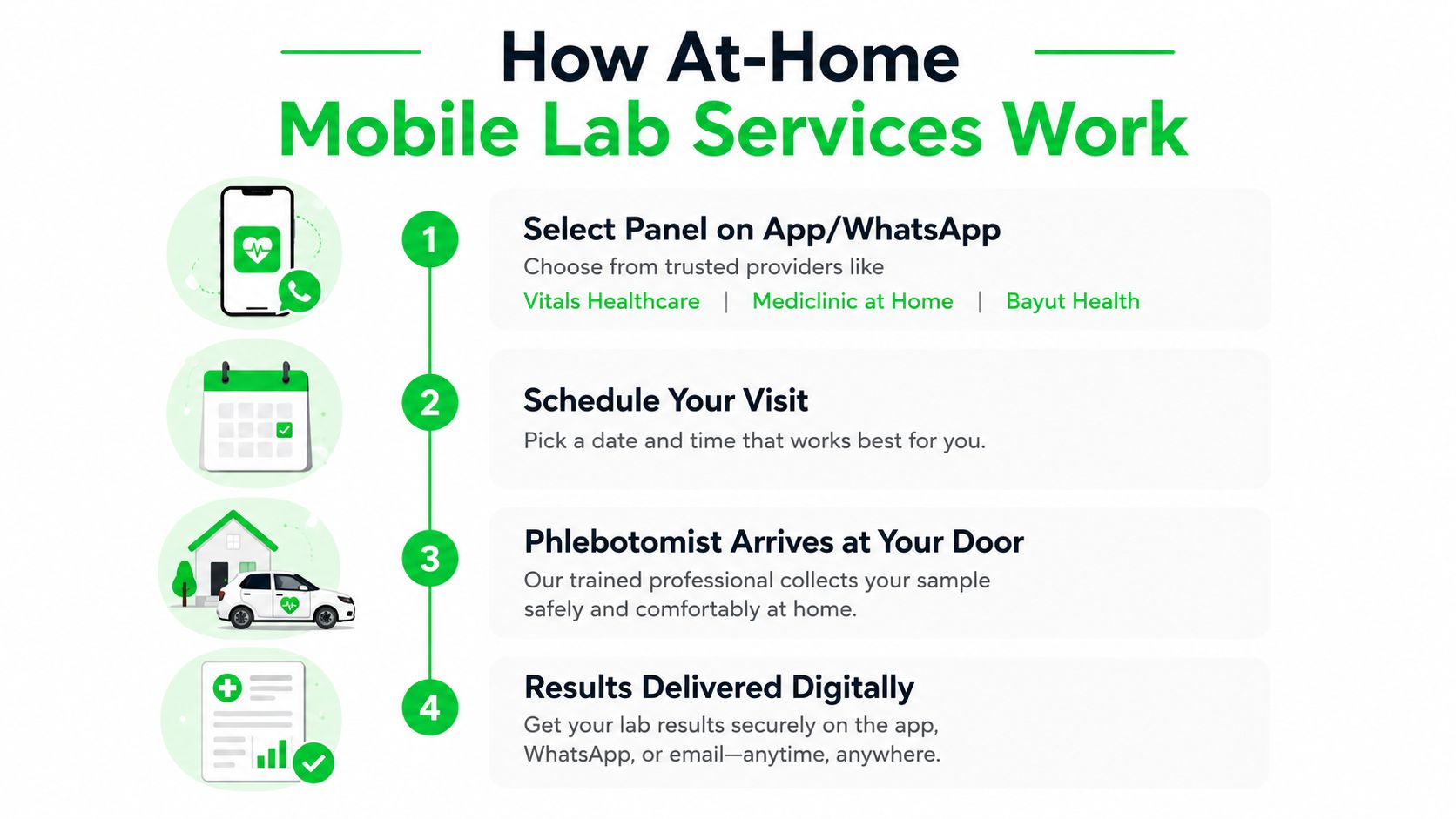
A home blood draw should follow a controlled clinical workflow, not resemble a courier collecting a parcel. Providers such as Vitals Healthcare, Mediclinic at Home and Bayut Health use catalogue-style booking through digital channels, but you still need to verify the panel, collector and destination laboratory.
Booking and preparation
You select the blood test package through an app or WhatsApp, confirm the preparation instructions and choose an arrival window. Morning collection is usually the least disruptive for fasting patients, but the important point is that the provider confirms the slot, location and total price in writing.
The collector should arrive with an appropriate sealed kit, verify your identity using at least two identifiers and label each specimen in your presence. DHA clinical-laboratory standards also require secure packaging that prevents leakage or contamination, with biohazard transport bags and the requisition documentation. Read the DHA clinical laboratory standards before booking if you want to assess the provider's process properly.
Collection and transport
The phlebotomist's licence and sample handling matter more than the appearance of the vehicle. Ask whether the collector is DHA licensed, which laboratory will process the sample, and how the service protects specimens during transport. A haemolysed sample can invalidate results, particularly when several analytes depend on one draw, forcing recollection and delaying the complete report.
The service should document the collected tubes, apply labels while you're present and secure the specimens immediately. If the collector can't explain where the sample is going or how it will be protected, choose another provider.
Results and follow-up
Digital reports commonly arrive by email or app, but a flagged result still needs a clinician's interpretation. A home service can remove travel and waiting-room friction, yet it doesn't turn screening into a diagnosis. Keep the full report, preparation details and medication list together so your doctor can interpret the findings accurately.
Why Reviews Matter When Picking a Lab Service
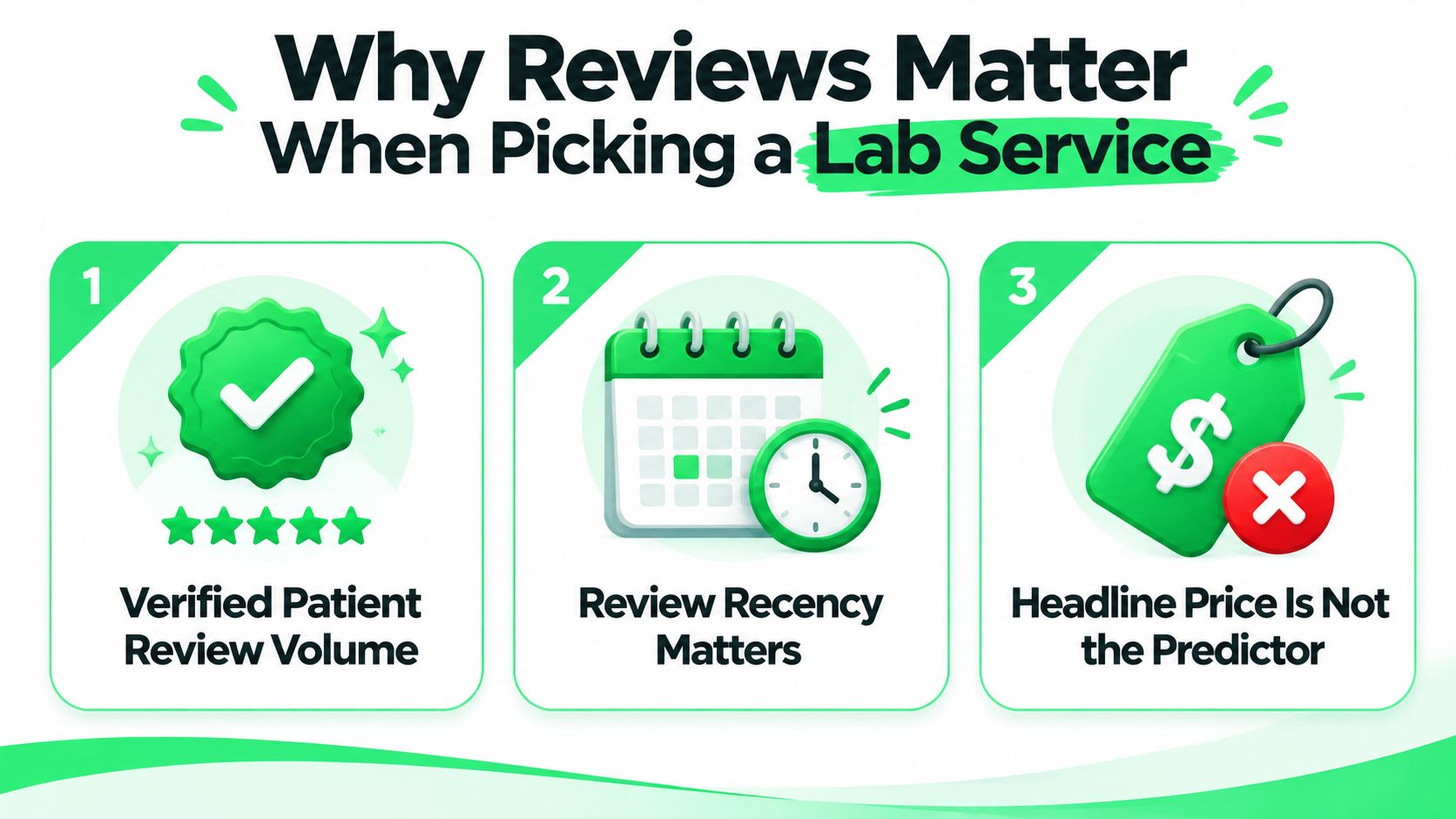
A low advertised price tells you what the provider wants you to notice. Reviews reveal whether the service arrives on time, identifies patients correctly, handles redraws professionally and delivers reports as promised. For home testing, those operational details determine whether convenience translates into a reliable result.
Use more than one review source. Check Google Maps, Dubai Healthcare City listings where relevant and the DHA provider directory for licensing. Then read recent comments for recurring complaints about missed appointments, delayed reports, poor communication or haemolysed samples. A high rating with a small review base deserves more investigation than a slightly lower rating supported by substantial verified feedback.
UAE healthcare directories provide a useful sense of review scale. One directory lists a top-ranked UAE hospital or medical centre with a 4.9-star rating based on 12,428 verified patient reviews, while another Dubai hospital listing displays 23,446 reviews. These figures come from UAE healthcare directory listings, and they show why review volume is a meaningful reference point when comparing services.
Don't treat a five-star average as proof of laboratory quality. Look for evidence that reviewers discuss the actual service, including collection punctuality, staff conduct, report delivery and responses when something goes wrong. A provider with repeated complaints about redraws or unexplained delays is a poor choice even if its package price is attractive.
Read the one-star reviews first. They often expose the hidden cost of a cheap package, especially when the provider adds collection fees, delays results or asks patients to repeat an improperly handled sample.
Your Decision Checklist Before You Book
Before you pay, match the package to the resident profile it is meant to serve. A low-cost panel for an asymptomatic young adult should cover routine prevention, while a prediabetic professional needs glucose markers and kidney monitoring. An executive check-up can justify broader risk assessment, but “full body” labels do not make packages interchangeable. A post-travel tourist needs tests guided by symptoms, exposure and travel history, not a generic panel.
- Confirm the fasting window. Check whether the required preparation fits your morning schedule and whether water is permitted.
- Verify the core markers. For routine prevention, look for CBC, lipid profile, fasting glucose, HbA1c and the kidney marker suited to your risk profile.
- Match DHA guidance. Compare your age, risk factors and reason for screening with the DHA periodic screening guidance covered earlier.
- Add only relevant tests. Vitamin D, ferritin, B12, thyroid or hepatitis testing belongs in the package when symptoms, medical history or exposure supports it.
- Check the collector. Confirm that the home phlebotomist is DHA licensed and that staff verify your identity before collection.
- Demand a time commitment. Ask when the report will arrive and whether specialised markers go to a separate laboratory process.
- Compare marker depth per dirham. Place competing packages side by side. Remove tests that do not answer your clinical question.
- Get the final price in writing. The quote should separate the panel, home collection, add-ons and consultation fee. Reject unexplained charges.
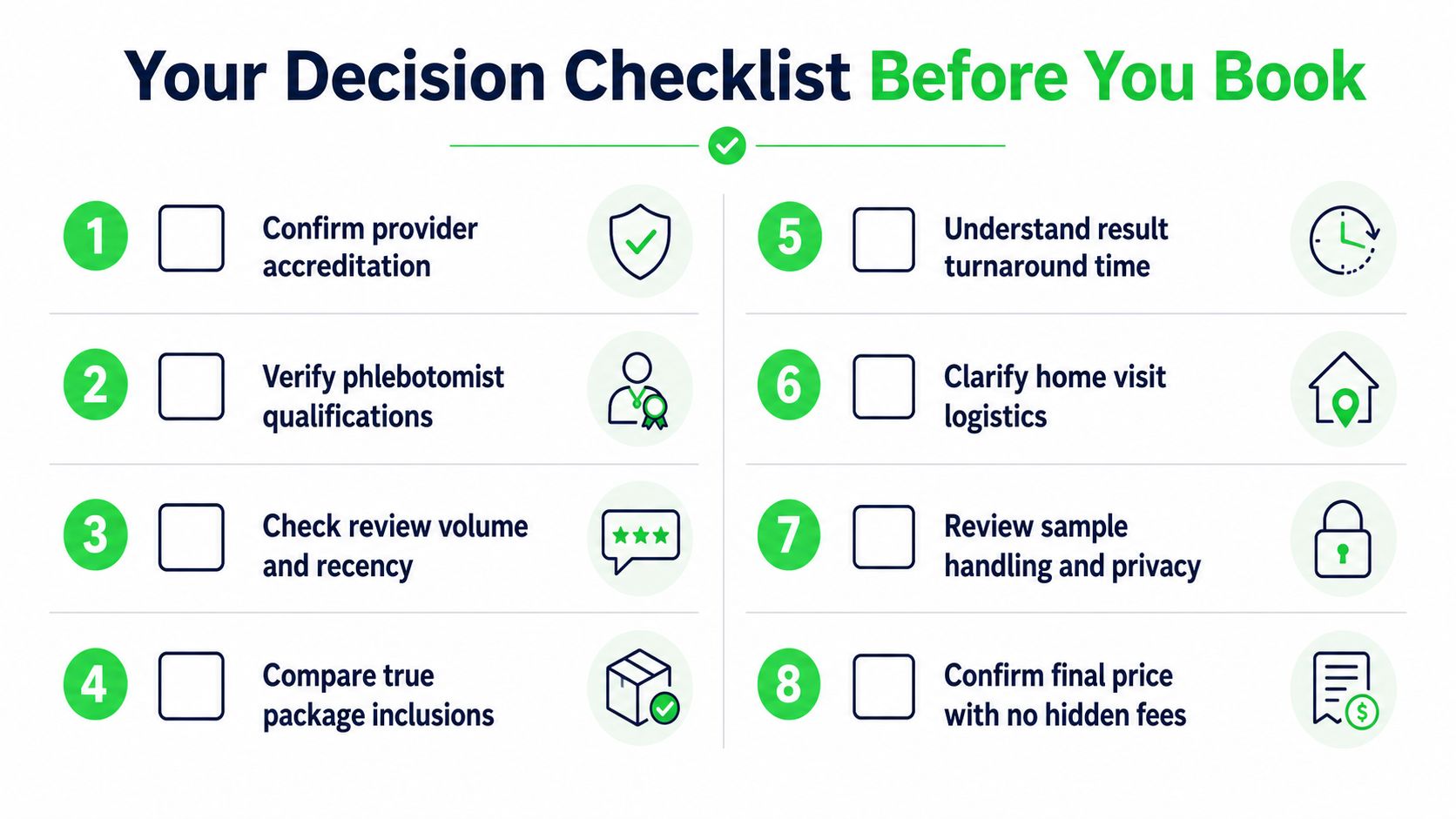
Book a package only when its markers fit your profile, preparation is clear and specimen handling is controlled. If you want to avoid travelling from Dubai Marina, JBR, Downtown or another district, learn how to book a blood test at home in Dubai and confirm the complete quote before the collector leaves.
Vitals Healthcare Doctor On Call provides DHA-licensed home sample collection for routine and preventive laboratory testing at homes, hotels and offices in Dubai. Visit Vitals Healthcare Doctor On Call to review available blood test options and arrange collection around your fasting schedule.