
You're in Deira, JVC, or Dubai Marina, and you've just been told you need an ultrasound. The immediate questions are practical: Can I get it today? How much will it cost? Do I need a referral? Should I go to a clinic, hospital, or mobile service? The right answer depends less on the machine's marketing label and more on your symptoms, the urgency, the reporting arrangements, and whether the facility follows Dubai's licensing requirements.
Ultrasound is a mainstream diagnostic service in Dubai, not a niche pregnancy test. Dubai Health Authority reporting tracks ultrasound as a radiology modality and records 86,696 ultrasound examinations for expatriates and 2,654 for UAE nationals in one reporting table, illustrating the scale of use across the emirate's health system (Dubai Health Authority annual statistical report). That volume makes access important, but it also makes provider quality, credentialing, preparation, and reporting worth checking before you book.
Table of Contents
- A Typical Day That Leads to an Ultrasound in Dubai
- How Ultrasound Works and Why It Is Everywhere in Dubai
- Types of Ultrasound Available in Dubai and When Each Is Indicated
- Preparing for Your Scan in Dubai
- Ultrasound Cost in Dubai and What Drives the Price
- Clinics, Hospitals, and Home Pathways for Ultrasound in Dubai
- Booking, Referrals, and Reporting Step by Step
- Quick Checklist Before You Book Your Ultrasound in Dubai
A Typical Day That Leads to an Ultrasound in Dubai
You wake with sharp right-sided flank pain. It could be a kidney or urinary problem, but pain alone doesn't tell you which scan is appropriate. Your first step should be a clinical assessment, not just booking the cheapest available slot.
The decision starts with urgency
If the pain is manageable and you have no alarming symptoms, call a DHA-licensed clinic and ask whether a same-day abdominal or renal ultrasound is available. Give the receptionist the exact location of the pain, when it began, whether it comes in waves, and whether you have urinary symptoms. The clinic may require a doctor's referral, and it should tell you whether fasting or bladder preparation is needed.
Severe pain changes the route. Go to a hospital A&E if the pain is paired with fever, repeated vomiting, fainting, blood in the urine, abdominal rigidity, or a sudden deterioration. A hospital can combine clinical examination, laboratory testing, emergency imaging, and specialist review. Don't wait for a routine outpatient appointment when the symptoms suggest a potentially urgent condition.
Practical rule: The faster option is not always the safer option. A clinic is suitable for a stable patient with a focused diagnostic question. A hospital is the correct setting when the patient may need treatment, observation, or more than ultrasound.
Traffic and mobility affect the choice
Dubai traffic can turn a short journey into a frustrating delay, particularly around peak commuting periods. If you're stable but unable to travel easily, ask whether a mobile sonographer can visit your home, hotel, or office. Home ultrasound is a limited service, and you should confirm the scan type, the clinician's licence, and how the final report will be issued before paying.
The same logic applies to other sudden symptoms. If dizziness is your concern rather than flank pain, review the clinical warning signs in this guide to when to call a doctor about sudden dizziness in Dubai and seek urgent care when symptoms are severe or neurological.
Dubai's rules matter at every stage. A licensed consultant or specialist physician may perform sonography only within the appropriate specialty scope and with ultrasound-specific training. General practitioners aren't permitted to provide ultrasound services, and written radiology reports must come from a licensed radiologist. An ultrasound that could lead to intervention or surgery should be countersigned by a radiologist (UAE diagnostic imaging regulation).
How Ultrasound Works and Why It Is Everywhere in Dubai
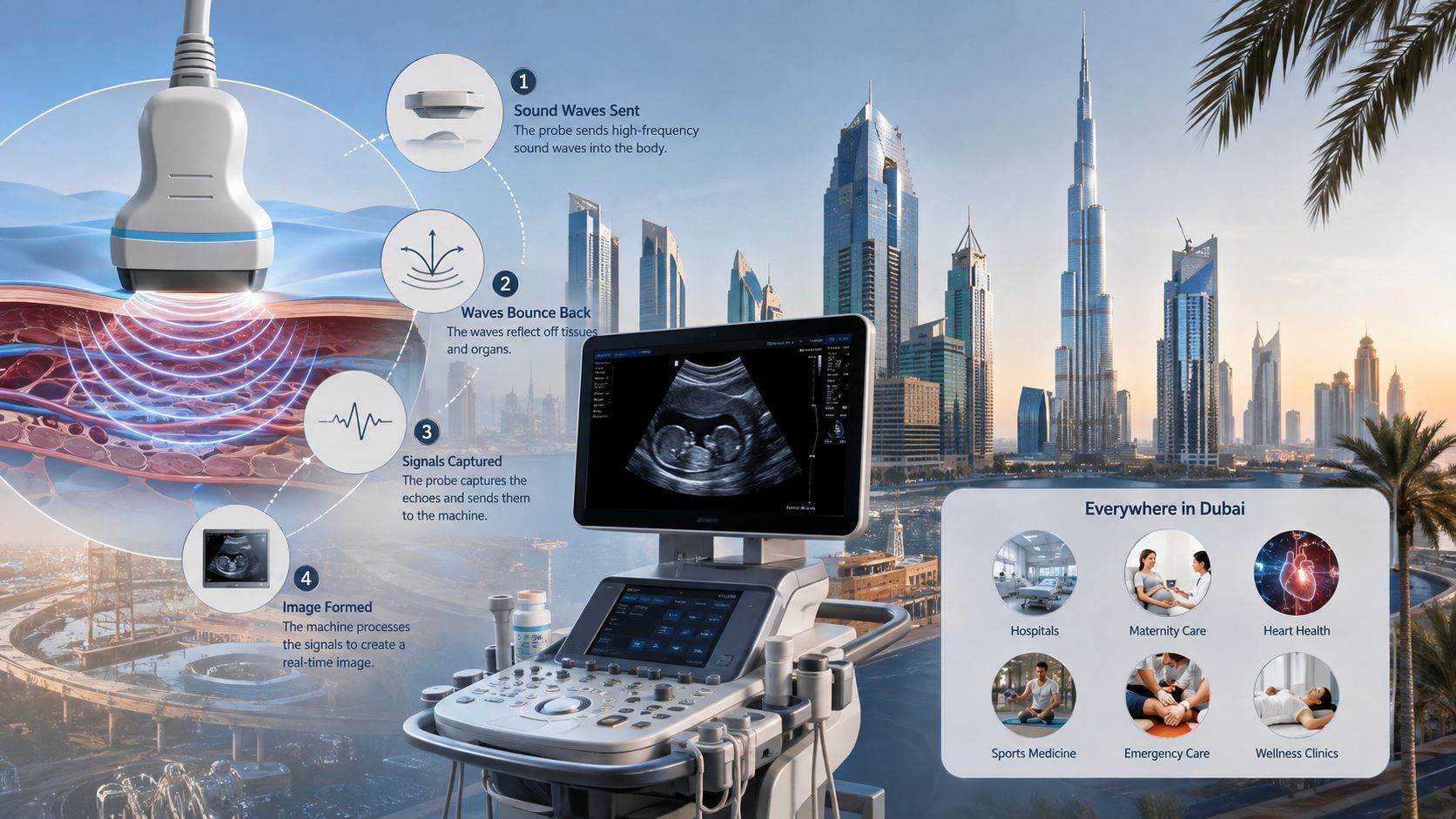
Ultrasound, or sonography, uses high-frequency sound waves to create moving images of structures inside the body. A sonographer places a transducer against the skin with gel between the probe and the body. The probe sends sound waves into the tissues, receives the returning echoes, and passes that information to a computer, which displays the image.
A simple sonar-boat analogy helps. A boat sends a signal into the water and listens for the echo. The timing tells it how far away an object is, while the strength and character of the echo provide clues about what the object may be. An ultrasound probe performs a similar task, but the computer converts the echoes into a real-time medical image.
Why clinicians reach for it first
The most important safety feature is that ultrasound uses sound waves, not ionising radiation. That makes it especially useful in pregnancy, paediatric care, and situations where repeat imaging may be needed. It also supports real-time assessment, so clinicians can observe fetal movement, blood flow, organ motion, or tendon movement while the examination is taking place.
The technology is versatile because different probes and settings answer different clinical questions. A curved probe can examine deeper abdominal structures, while a high-frequency linear probe is better suited to superficial areas such as the thyroid, breast, tendons, and soft-tissue lumps. Doppler adds information about blood movement through vessels.
Why it fits Dubai's care environment
Portable equipment allows ultrasound to be used at the bedside, in outpatient rooms, and in selected home-care pathways. It can support obstetric, abdominal, pelvic, vascular, and musculoskeletal assessments without the patient entering a large imaging department.
That convenience shouldn't be confused with simplicity. Ultrasound is operator-dependent, which means the quality of image acquisition, the clinical question, and the final radiology report all matter. The UAE-region outpatient standard requires at least one licensed specialist or consultant radiologist and one full-time radiographer in an outpatient setting providing ultrasound. It also states that examinations must be performed by clinicians trained and experienced in the specific sonography area (Abu Dhabi outpatient radiology standard).
Dubai facilities adding diagnostic imaging services must apply through the Sheryan system and follow DHA licensing procedures. The DHA standard also confirms that ultrasound doesn't use ionising radiation and doesn't require radiation shielding (DHA standards for diagnostic imaging services). That doesn't remove the need for clinical governance. It clarifies where ultrasound sits within regulated healthcare delivery.
Types of Ultrasound Available in Dubai and When Each Is Indicated
Choose the scan based on the clinical question, not the most impressive name on a booking page. A referral for flank pain may need abdominal or renal imaging, while a swollen leg may require vascular Doppler. Pregnancy scans follow a staged pathway rather than a single universal examination.
| Ultrasound Type | Common Indication | Typical Prep |
|---|---|---|
| Abdominal | Gallbladder, liver, kidney, or upper abdominal symptoms | Fasting is commonly required. Confirm the centre's instructions |
| Pelvic | Uterine, ovarian, bladder, prostate, or bleeding concerns | Transabdominal studies may require a full bladder. Transvaginal studies generally use an empty bladder |
| Obstetric | Pregnancy confirmation, dating, anatomy, growth, or fetal assessment | Early scans may require bladder preparation. Later studies usually follow centre-specific instructions |
| Vascular Doppler | Suspected DVT, venous symptoms, carotid assessment, or blood-flow review | Usually no preparation for limb or carotid studies |
| Musculoskeletal | Tendon, joint, muscle, ligament, or soft-tissue injury | Usually no preparation. Wear clothing that exposes the area |
| Small-parts | Thyroid, breast, neck nodes, or a soft-tissue lump | Usually no preparation. Avoid products over the examination area |
Matching symptoms to the service
An abdominal ultrasound is a sensible first investigation for certain right upper abdominal, flank, liver, gallbladder, or kidney concerns. A pelvic ultrasound is more appropriate for abnormal bleeding, pelvic pain, ovarian concerns, urinary symptoms, or prostate assessment. The imaging centre needs to know whether the scan is transabdominal, transvaginal, or directed at the bladder and prostate because preparation differs.
For pregnancy, ask what the referral is designed to answer. UAE payer guidance commonly limits routine obstetric ultrasound to up to three scans per pregnancy, one per trimester, in normal cases, while also distinguishing confirmation and dating, nuchal translucency screening at 11 to 13 weeks, and fetal anatomy assessment at 18 to 22 weeks (Daman obstetric ultrasound guidance). Additional scans may be clinically appropriate when a doctor identifies a concern, but they shouldn't be added because a package advertises more images.
Specialist studies need the right operator
Vascular Doppler is the right pathway for a suspected clot or a focused blood-flow question. Musculoskeletal ultrasound can assess superficial tendons and joints dynamically, while thyroid, breast, and other small-parts scans depend heavily on probe selection and the experience of the operator.
If you're unsure whether your symptoms need an ultrasound, a home doctor assessment can help you decide whether imaging is appropriate before you travel. You can also review guidance on when to call a doctor home in Dubai.
Preparing for Your Scan in Dubai
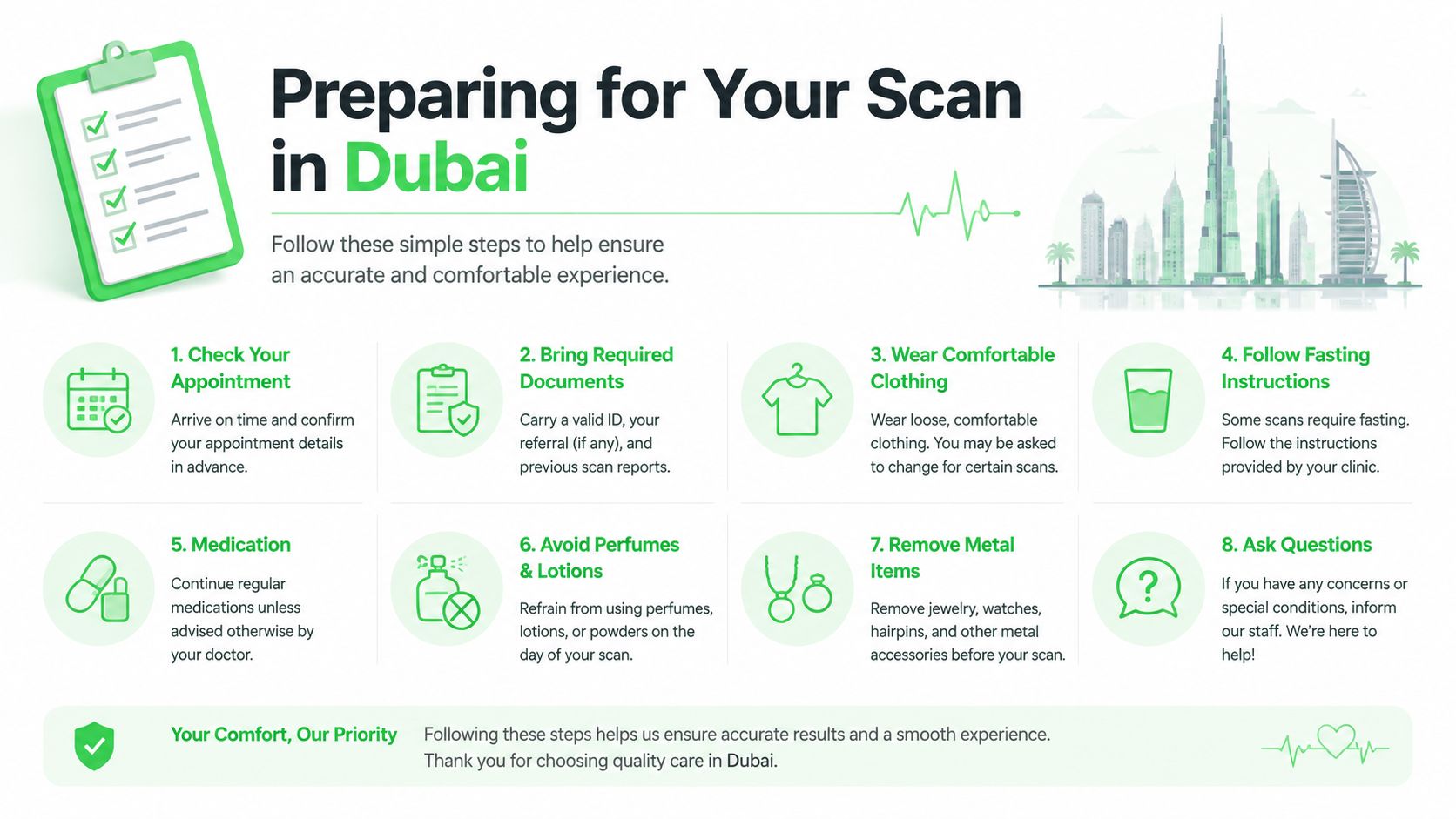
Preparation affects whether the sonographer can see the target clearly. Follow the instructions given by the imaging centre, because the same body region can require different preparation depending on the technique.
Four common preparation patterns
- Abdominal scans: A fasting window of 6 to 8 hours is commonly requested, with water only. Morning appointments are usually easier, especially if you take regular medication.
- Transabdominal pelvic scans: You may be asked to drink 32 to 40 ounces of water roughly an hour before the appointment and arrive with a bladder that's uncomfortably full.
- Transvaginal scans: An empty bladder is generally preferred, and fasting isn't usually required.
- Obstetric scans: Early dating and nuchal translucency examinations may need a moderately full bladder. Later anatomy and growth scans generally don't require the same bladder preparation.
Vascular, musculoskeletal, thyroid, breast, and most soft-tissue examinations generally need no special preparation. Still, confirm this when booking rather than relying on a general online list.
Make the appointment easier
Wear a two-piece outfit so the abdomen or legs can be exposed without unnecessary changing. For obstetric appointments, avoid a one-piece abaya-style dress if possible, because gel can reach clothing and make the examination awkward.
Continue prescribed medication with a small sip of water unless your referring doctor has given different instructions. Before leaving home, confirm the location, parking, insurance requirements, and whether a female sonographer or chaperone is available. If you're also arranging home laboratory work, keep your scan instructions separate from the guidance for booking a blood test at home in Dubai, because preparation for blood collection and imaging isn't interchangeable.
Ultrasound Cost in Dubai and What Drives the Price
Dubai ultrasound prices depend on the examination, reporting level, facility, urgency, and equipment. The government's published administrative fee schedule lists AED 150 for ultrasound, confirming that ultrasound is separately priced within Dubai's official medical framework (Dubai ultrasound fee reference). Treat that figure as an administrative benchmark, not the complete patient bill. Before booking, ask whether the quote includes image acquisition, a radiologist's report, consultation, and administration.
Independent Dubai pricing references place ultrasound broadly between AED 300 and AED 1,500, with one typical estimate around AED 700. Another guide lists standard scans between AED 300 and AED 800 (Dubai ultrasound pricing estimate). These ranges are useful for comparison, but providers can charge differently for the same scan type.
| Scan type | Clinic (AED) | Hospital (AED) | Main cost driver |
|---|---|---|---|
| Routine obstetric or abdominal | AED 300–800 | AED 500–1,500 | Facility tier and reporting arrangement |
| Advanced obstetric, including anomaly or growth Doppler | AED 500–1,200 | AED 800–1,500 | Specialist expertise and Doppler assessment |
| Musculoskeletal, vascular Doppler, or breast | AED 400–1,000 | AED 600–1,500 | Probe, Doppler use, and radiologist review |
| 3D or 4D obstetric add-on | AED 400–1,000 | AED 600–1,200 | Additional imaging time and service design |
These are planning ranges, not fixed tariffs. Confirm the final quote with the licensed provider.
What changes the quote
A routine clinic scan often costs less than a hospital study because hospitals carry emergency, staffing, and infrastructure costs. A radiologist-reported examination can also cost more than image acquisition without a formal report. Choose the signed report when the result will guide treatment, referral, or follow-up.
Urgency changes both availability and price. Some Dubai providers advertise turnaround as fast as 30 minutes, while others report results within 18 to 24 hours (Dubai diagnostic provider turnaround examples). Ask what “fast results” means. It may describe image availability, preliminary feedback, or a signed radiology report.
Patient review volume is another practical screening signal. Read recent reviews alongside DHA licensing, radiologist credentials, and the provider's experience with your specific scan. A large review history cannot prove diagnostic quality, but repeated comments about delays, unclear reports, or poor communication should affect your choice.
Insurance can change the final amount. Confirm network status, pre-authorisation, obstetric coverage, and any consultation charge. If you are comparing a home assessment with clinic care, review home doctor visit costs in Dubai, and confirm separately whether diagnostic imaging is available.
Clinics, Hospitals, and Home Pathways for Ultrasound in Dubai
The best setting depends on the patient's stability and the complexity of the question. Clinics are efficient for planned, stable investigations. Hospitals are safer when imaging is part of urgent assessment or specialist treatment. Home services are useful for selected patients, but they have clear limits.
Clinics for planned outpatient imaging
A DHA-licensed diagnostic clinic is usually the practical choice for routine abdominal, pelvic, obstetric, thyroid, breast, and selected musculoskeletal scans. Clinics often offer easier booking and a more focused experience than a hospital department. Before you confirm, ask who performs the scan, who signs the report, and whether a radiologist is physically or remotely involved.
A clinic isn't automatically better because it offers a same-day appointment. Confirm that the scan type matches the referral and that the equipment supports the clinical question. A basic handheld device may be suitable for a limited bedside assessment, but it isn't automatically equivalent to a full diagnostic study.
Hospitals for high-risk and emergency presentations
Choose a hospital when the patient may need immediate intervention, observation, surgery, or several investigations. Suspected DVT, ectopic pregnancy, testicular torsion, trauma, postoperative complications, and severe abdominal symptoms belong in a setting with emergency and specialist support.
Rashid Hospital's radiology service document lists ultrasound among emergency imaging services with a reported delivery time of 10 to 20 minutes (Rashid Hospital radiology service document). That figure describes an emergency hospital workflow, not a guarantee for every outpatient booking. Hospitals may also involve longer registration and waiting processes when the case isn't triaged as urgent.
Home ultrasound has a narrower role
Mobile ultrasound services do exist in Dubai, but they're limited. They're most appropriate for selected reassurance scans, basic abdominal assessments, or certain vascular Doppler examinations when the patient has mobility constraints and the service has the correct equipment and licensed staff.
Home imaging costs more than a standard clinic visit and cannot replace formal radiology reporting when the result may determine surgery, intervention, or complex treatment. Ask whether you'll receive a signed report, where the images are stored, and what happens if the scan is inconclusive.
Reviews are useful, but read them intelligently
Patient-review volume is a real trust marker because it can reveal whether a centre has sustained patient traffic rather than a small set of recent promotional reviews. Dubai provider listings show one diagnostic centre with a 4.8 out of 5 rating from more than 1,000 reviews, and another radiology centre with a 4.7 out of 5 rating from 3,104 reviews (Dubai ultrasound provider reviews).
Reviews don't prove that a provider is right for your scan. Use them to assess recurring themes, such as preparation communication, report delays, staff professionalism, privacy, and whether patients received clear follow-up instructions. Then verify licensing and reporting credentials independently.
Booking, Referrals, and Reporting Step by Step
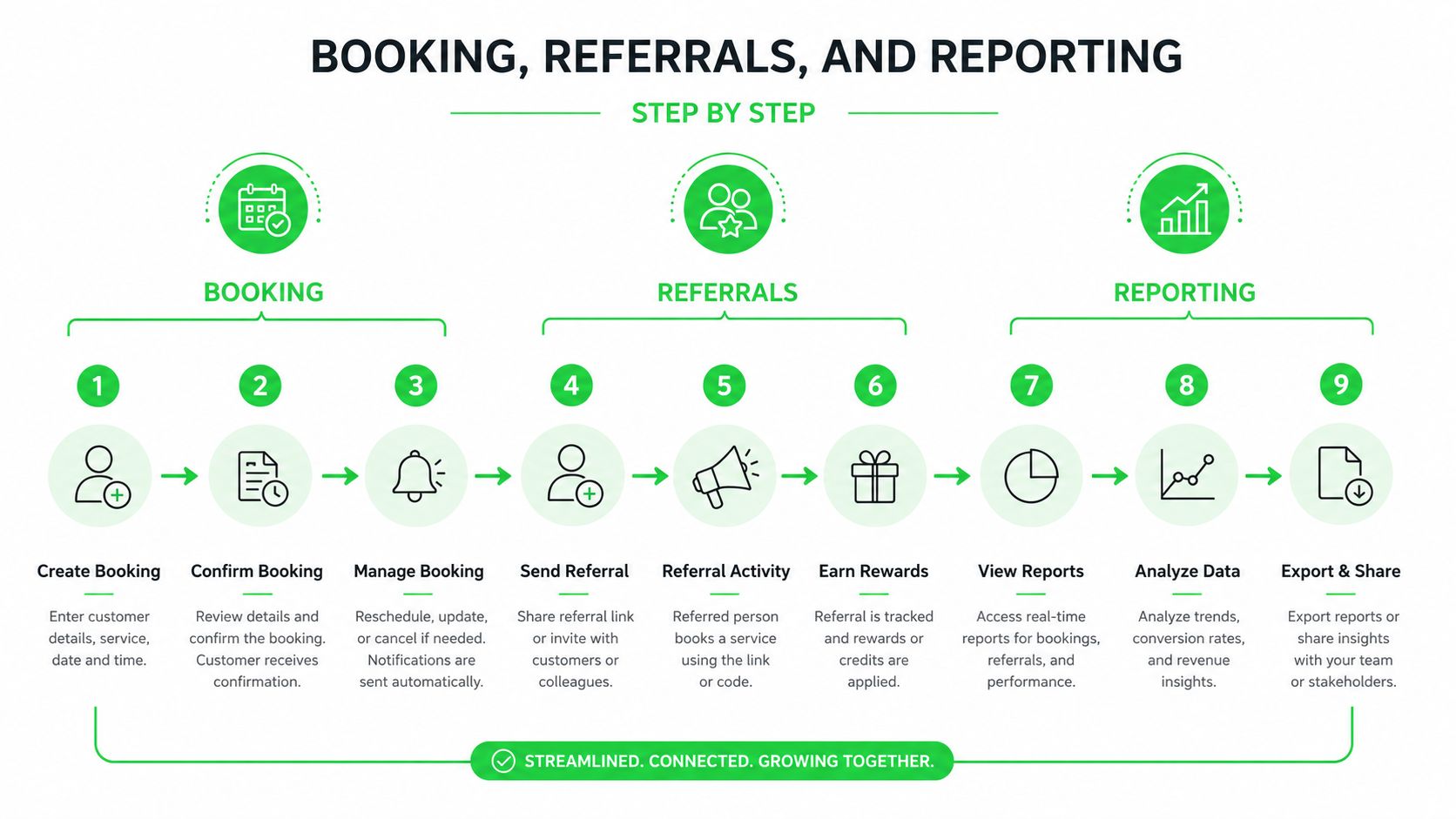
Booking ultrasound in Dubai should be a coordination exercise, not a quick click followed by surprises at reception. Start with the clinical question and finish by confirming who receives the report.
The booking sequence
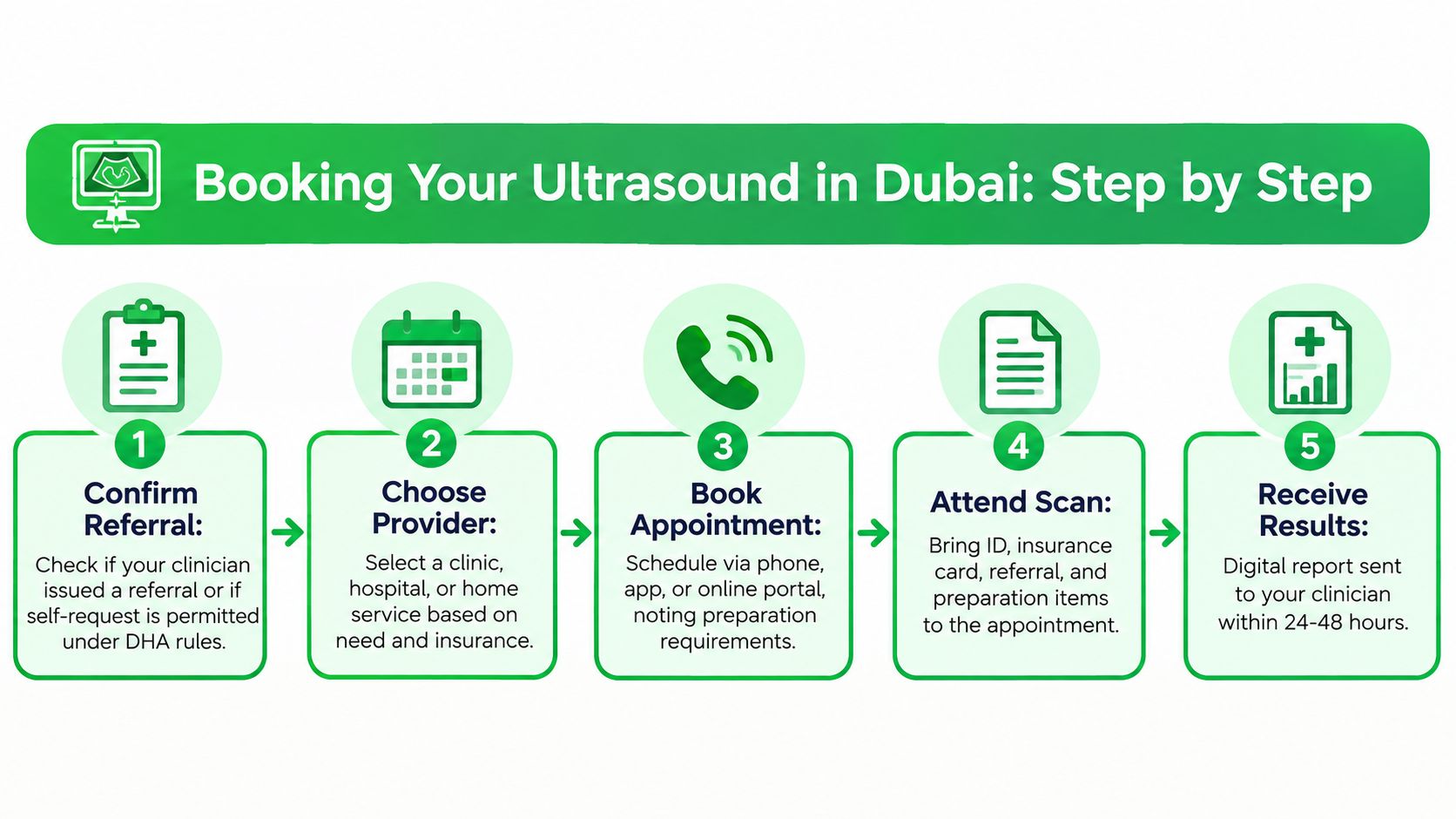
- Confirm the referral: Check whether your clinician has issued a referral and whether the specific scan can be self-requested under the facility's DHA-compliant process.
- Name the clinical question: Tell the radiology desk whether the concern involves the abdomen, pelvis, pregnancy, blood vessels, thyroid, breast, joints, or another area.
- Send the paperwork: Have your Emirates ID, insurance card, referral letter, previous reports, and relevant images ready.
- Check authorisation: Ask whether your insurer needs pre-authorisation and whether the facility is in network.
- Confirm preparation: Get fasting, bladder, clothing, and medication instructions in writing.
- Ask about the operator: Confirm that the scan will be performed by an appropriately licensed and trained clinician.
- Clarify reporting: Ask whether a licensed radiologist will issue the written report and when it will be available.
- Arrange image copies: If another doctor may review the case, request a CD, DICOM copy, or secure digital access where available.
- Plan follow-up: Confirm whether the report goes directly to the requesting doctor and how you'll receive a patient copy.
What happens after the scan
Routine studies may be reported through the centre's normal workflow, while urgent examinations follow the facility's clinical escalation process. Don't rely on a sonographer's comments during the scan as your diagnosis. The formal report and the requesting physician's interpretation determine what happens next.
For reimbursement, keep the invoice, payment receipt, referral, insurance authorisation, and signed report. Requirements vary by insurer, so ask the radiology desk what documents it can provide before leaving. If you need help comparing local providers, use a trusted clinic finder in Dubai and still verify the facility's credentials directly.
Quick Checklist Before You Book Your Ultrasound in Dubai
A low-risk follow-up scan and a suspected emergency need different booking decisions. Use this checklist before paying or confirming a home appointment:
- Verify the licence: Check that the facility is DHA-licensed, or authorised by the relevant UAE authority outside Dubai.
- Check the reporter: Confirm that a licensed radiologist will review and sign the final report.
- Match the equipment: Ask whether the scanner and transducer suit the requested study, particularly for vascular, breast, obstetric, or musculoskeletal imaging.
- Get preparation in writing: Confirm fasting, bladder instructions, medication guidance, and arrival time.
- Request the full quote: Ask whether the total includes the scan, report, consultation, and any administrative charge. Compare the written quote with the applicable government fee framework, including the AED 150 administrative ultrasound benchmark listed in the official fee reference.
- Confirm insurance: Check network status, pre-authorisation, exclusions, and your expected out-of-pocket amount.
- Set a report expectation: Clarify whether “same day” means images, preliminary feedback, or a signed radiology report.
- Use reviews as a signal: Look for substantial review volume and repeated comments about communication, privacy, preparation, and reporting, rather than relying on stars alone.
- Choose the right setting: Suspected torsion, ectopic pregnancy, severe infection, trauma, or conditions needing hospital imaging and treatment belong in A&E, not a home visit.
Common booking errors include arranging an advanced obstetric scan without confirming specialist coverage, accepting a walk-in slot without asking about sonography experience, overlooking Doppler or probe requirements, and choosing home imaging for a problem that needs urgent assessment. Convenience helps, but credentialing and reporting matter more.
Vitals Healthcare Doctor On Call provides DHA-licensed doctor visits to homes, hotels, and offices across Dubai, with bedside assessment, referral coordination, mobile diagnostics, and follow-up when clinic or hospital care is required. For urgent symptoms, limited mobility, or help choosing the safest ultrasound pathway, visit Vitals Healthcare Doctor On Call to arrange care.