
A post-procedure incision starts leaking through its covering during a hotel stay. A kitchen burn becomes painful overnight. A travel scrape looks harmless until the surrounding skin turns soft and wet. In Dubai, these situations often need careful wound care dressing, but not necessarily a trip to a clinic.
A dressing protects the wound, manages drainage, limits friction and helps maintain the moisture balance needed for healing. The right choice depends on the wound's depth, exudate, tissue condition and surrounding skin. The wrong choice can stick to new tissue, trap excess moisture or require unnecessary changes.
This guide helps Dubai residents, tourists, hotel guests and caregivers prepare, apply and monitor a dressing more safely. It also explains when fewer changes can reduce wound disturbance, when drainage demands an earlier change, and when a DHA-licensed clinician should assess the wound. Home dressing is clinical care, not improvised first aid. For post-operative recovery guidance, see this post-operative care guide for Dubai homes.
Table of Contents
- Introduction to Wound Care Dressing at Home
- Understanding Wound Care Dressing Types and How to Choose
- Preparing to Apply a Wound Care Dressing Safely
- Applying and Changing Your Wound Care Dressing
- Recognizing Infection and Knowing When to Call a Clinician
- Aftercare Troubleshooting and Next Steps for Healing
Introduction to Wound Care Dressing at Home
A useful wound dressing does more than cover damaged skin. It creates a protective interface, absorbs or manages exudate, reduces friction and supports a controlled healing environment. That doesn't mean every wound should stay wet, and it doesn't mean a dry dressing is always safer. The practical target is balanced moisture without leakage, pooling or maceration.
The Dubai Health Authority advises avoiding gauze alone unless no other option is available. It also links dressing selection and change frequency to the wound's condition, including the amount of exudate and the dressing material. DHA guidance allows a range from twice daily to weekly, depending on those factors, with more frequent changes when there is heavy exudate, weeping or infection. See the DHA wound dressing guidance.
Why the choice matters
A lightly exuding surgical incision may need a low-disturbance covering that stays in place. A heavily draining wound needs absorbency and closer observation. A superficial burn may need a non-adherent contact layer, while a deeper or infected wound needs assessment rather than a product chosen from a supermarket shelf.
Dubai has an established and expanding demand for modern dressing products. The UAE wound dressing market generated USD 94.4 million in 2023 and is projected to reach USD 114.7 million by 2030, with a projected compound annual growth rate of 2.8% from 2024 to 2030, according to UAE wound dressing market data. Advanced wound dressing is identified as the largest product segment, while foam dressings were the leading sub-segment in 2023.
That market context matters clinically. Modern dressings can manage drainage while reducing disruption, but no dressing is automatically right for every wound.
What this guide helps you do
You'll learn how to:
- Match the dressing to drainage: Choose a material according to exudate, wound depth and tissue needs.
- Prepare a clean setting: Create a suitable workspace in a home, hotel room or office.
- Change at the right time: Avoid both unnecessary disturbance and unsafe delay.
- Recognise deterioration: Identify signs that need a nurse, doctor or urgent assessment.
- Arrange regulated support: Use a properly licensed home healthcare provider when self-care is unsuitable.
Understanding Wound Care Dressing Types and How to Choose
The safest selection method starts with the wound, not the brand name. Ask whether the wound is dry, lightly draining, moderately exuding, heavily exuding, superficial, infected, burned or post-surgical. Then consider whether the dressing can be removed without damaging new tissue and whether it can stay secure in a warm, humid environment.
DHA burn guidance recommends initial irrigation with normal saline or sterile water, and advises against hydrogen peroxide because it can be painful and impair healing. It also describes non-adherent films or fine-mesh gauze with topical antimicrobials as common options, with foam, alginate, hydrocolloid and hydrogel selected according to exudate and wound needs. The DHA clinical guidance for virtual burn management provides the relevant clinical framework.
Comparing the main dressing families
| Dressing Type | Exudate Level | Best For | Wear Time Guidance |
|---|---|---|---|
| Non-adherent film or contact layer | Low to moderate | Superficial wounds, burns and fragile tissue | Keep in place according to the clinician's plan and change sooner if loose, wet or contaminated |
| Foam | Moderate to heavy | Exuding wounds where absorbency and cushioning are useful | May support longer wear, but inspect for saturation, leakage and edge lifting |
| Alginate | Heavy | Wounds with substantial drainage | Change according to saturation and clinical advice, not a fixed routine |
| Hydrocolloid | Low to moderate | Selected shallow wounds with manageable drainage | Can stay in place longer when sealed and appropriate, but avoid using it over uncontrolled infection |
| Hydrogel | Low or minimal | Dry wounds requiring moisture support | Monitor for excess moisture and surrounding skin softening |
| Gauze | Variable | Temporary coverage or situations with limited alternatives | Gauze alone may stick, dry the wound or require frequent disturbance, so DHA advises avoiding it when other options are available |
| Antimicrobial dressing | Depends on product and wound | Clinician-directed infection risk or bioburden management | Use only for an appropriate indication and review the wound response |
A surgical incision often benefits from a dressing that doesn't need repeated removal. Middle East surgical incision consensus emphasises leaving a dressing in place as long as possible to minimise wound disturbance, while still selecting a material that's easy to remove and practical for staff consistency. The UAE wound dressing market outlook also reflects growing interest in advanced, protocol-driven care.
Practical rule: Longer wear is helpful only when the dressing remains clean, secure and appropriate for the wound's drainage.
Humidity adds a second decision layer. Adhesive edges may lift with perspiration, while an absorbent dressing can become saturated sooner when drainage is heavy. The best option may be the one that maintains a stable seal and avoids repeated removal, not necessarily the most absorbent or most antimicrobial product.
Preparing to Apply a Wound Care Dressing Safely
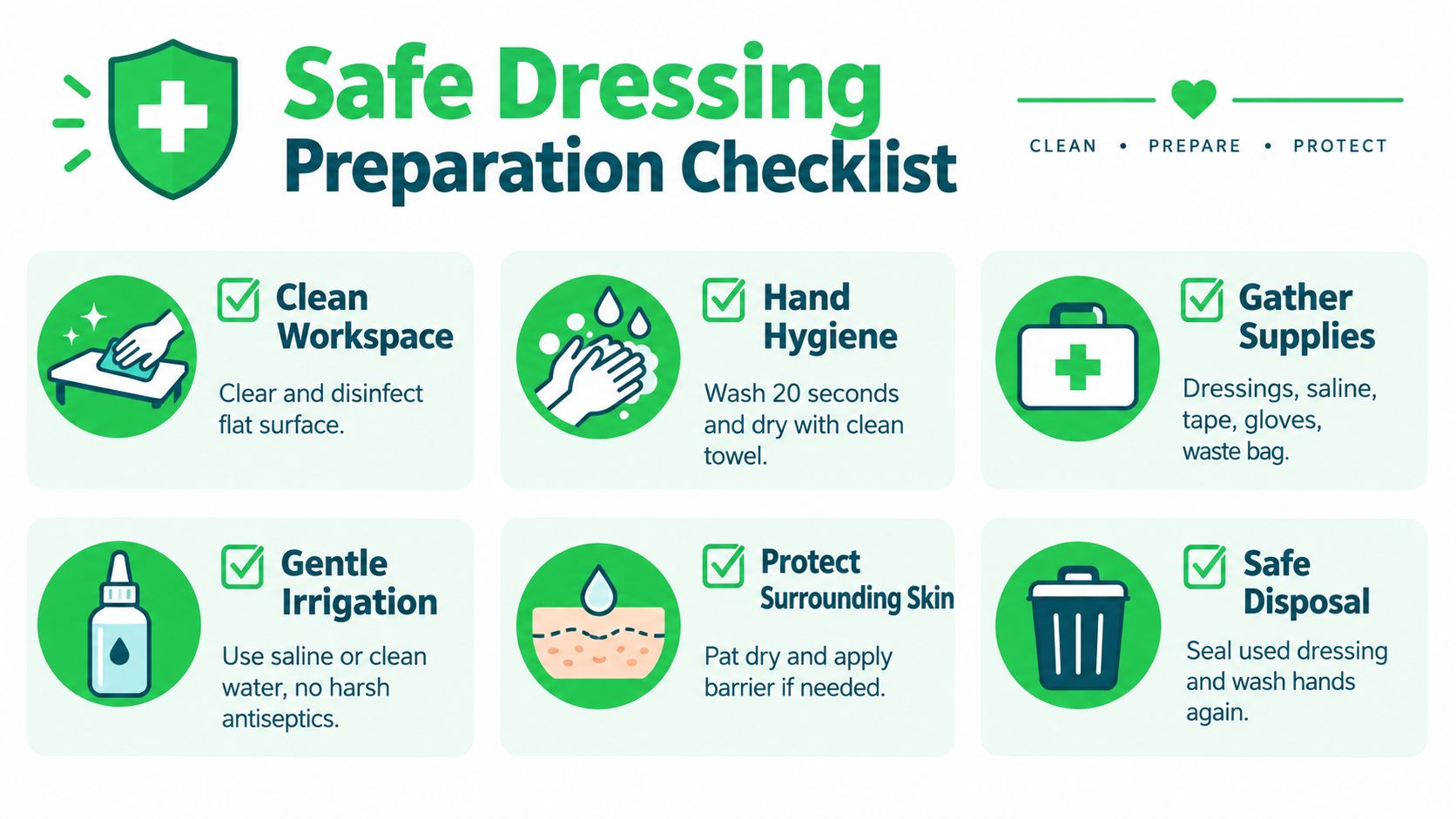
Preparation prevents many avoidable problems. Before opening a sterile dressing, create a clean, dry surface away from food, used towels, luggage and bathroom splash. In a hotel, a wiped table is preferable to a bed or bedside carpet, and the supplies should remain within reach so you don't leave the wound exposed.
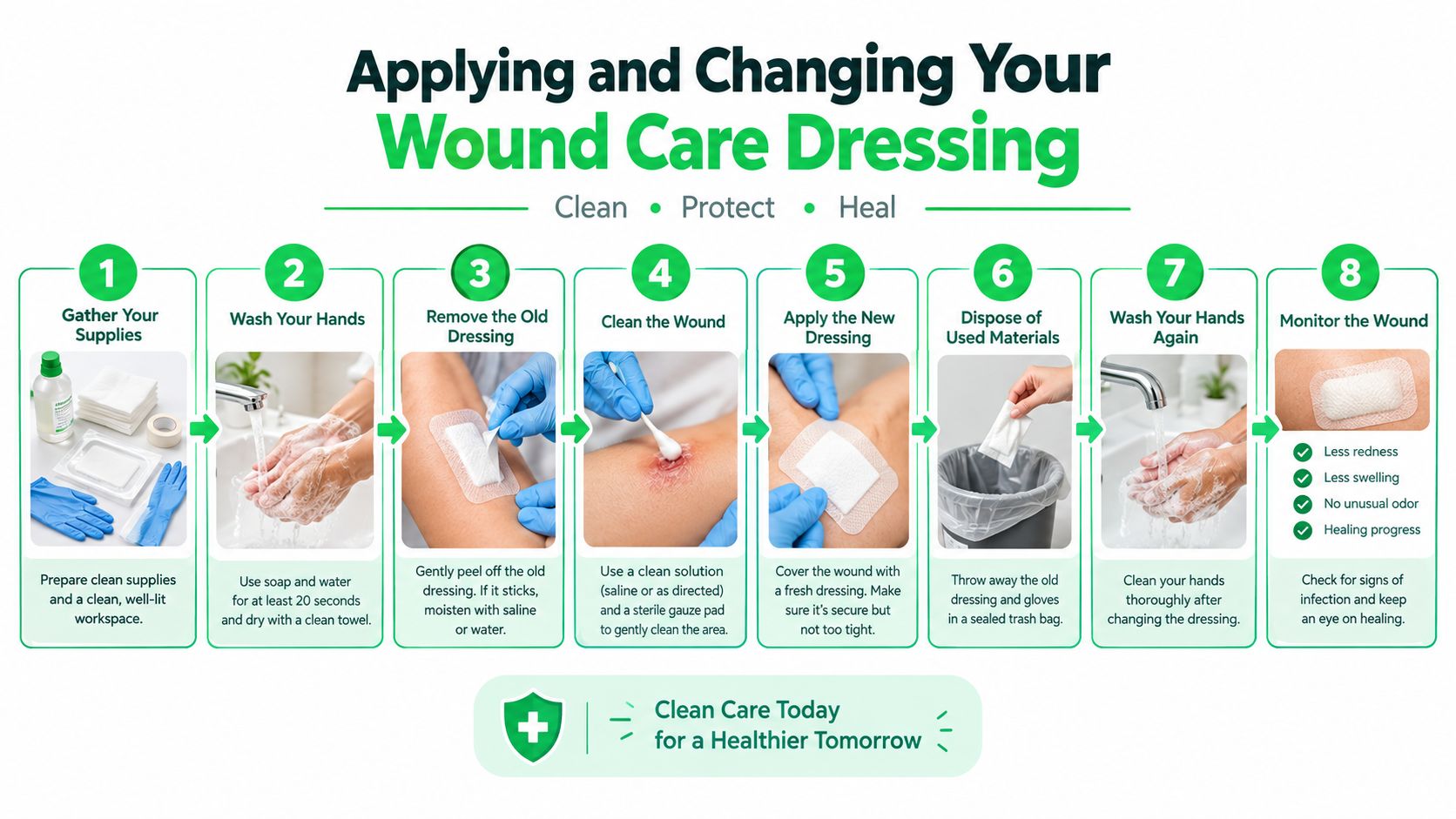
Gather the new dressing, normal saline or sterile water, clean gloves if advised, sterile gauze, tape or a suitable fixation system, a waste bag and any prescribed topical product. Check packaging before use. If the pack is damaged or the dressing is visibly contaminated, don't use it.
The preparation routine
Wash your hands carefully before touching the wound or supplies. If you're using gloves, hand hygiene still comes first. Keep the inner dressing surface away from your fingers, clothing and nearby objects.
DHA burn guidance recommends copious irrigation with normal saline or sterile water, specifically about 50–100 mL per centimetre of wound, to improve bacterial clearance. It warns against hydrogen peroxide because it's painful and can impair healing. Use gentle flow rather than forceful scrubbing, and pat the surrounding skin dry without rubbing the wound bed.
Remove an old topical antimicrobial gently at the next change, rather than pulling dried material aggressively from the tissue. If the dressing is stuck, moisten it with appropriate saline and allow it to loosen. Do not rip it away, because that can disturb fragile re-epithelialising tissue.
Protecting the surrounding skin
Moisture trapped beneath an adhesive can soften the periwound skin. Dry the surrounding area thoroughly, keep adhesive away from the wound itself and use a suitable skin barrier only where clinically appropriate. Avoid applying unprescribed creams, powders or household antiseptics beneath the dressing.
Before covering the wound, observe its appearance. Note drainage colour and amount, odour, pain, swelling and the condition of the surrounding skin. A simple written record or photograph, taken only when appropriate and stored privately, can help a clinician compare changes.
A clean technique course can help caregivers understand contamination risks, but it doesn't replace an individual wound assessment. Vitals Healthcare provides information about its first aid course in Dubai for people seeking structured practical training.
Applying and Changing Your Wound Care Dressing
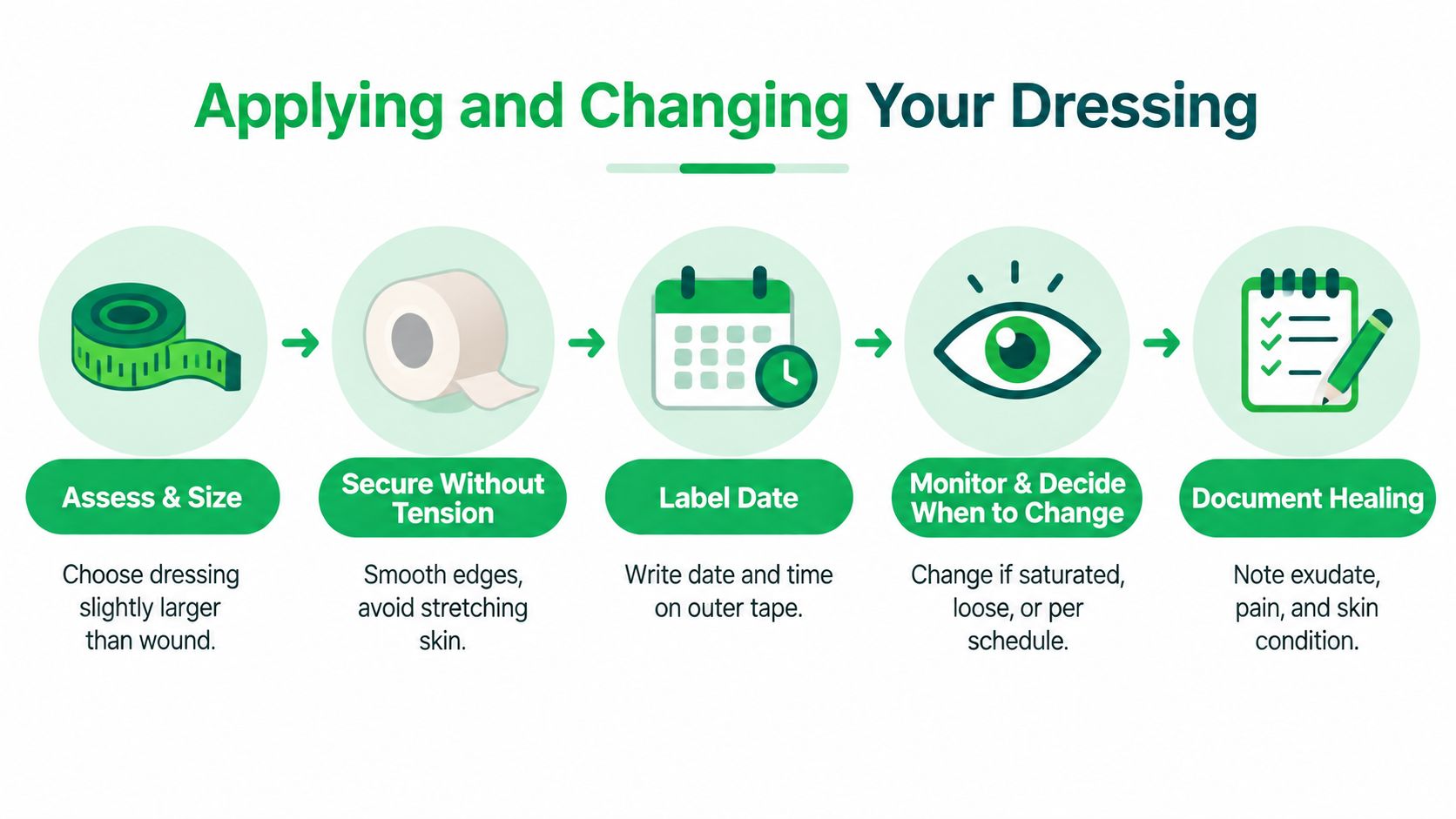
In a Dubai hotel room, a dressing can look clean at breakfast and loosen by evening after sweating, movement or a shower. Assess the wound's size, depth and drainage before each application. Choose a dressing large enough to cover the wound with an adequate margin for fixation, keeping adhesive off fragile or broken tissue. If the wound has changed since the previous dressing, reassess the product rather than repeating it automatically.
Place the contact layer gently, without stretching it across the wound. Add foam, alginate or another secondary layer according to the exudate and the product instructions. Secure the edges without tension. Humidity increases the chance of slipping, but excessive tape can irritate skin. Too little fixation allows movement, friction and contamination.
Write the date and time on the outer tape or label when practical. This helps a caregiver or visiting nurse judge how long the dressing has remained in place. Check the seal after the patient walks, moves or changes position, particularly when the wound is near a joint.
Deciding when to change it
There is no universal daily rule. DHA guidance places dressing changes between twice daily and weekly, based on dressing type and exudate. Heavy drainage, weeping or infection requires closer attention and often more frequent changes. A clean, stable dressing may remain undisturbed according to the care plan. See the DHA wound management guidance for this condition-based approach.
Change sooner when:
- Saturation appears: Drainage reaches the outer layer or the dressing no longer absorbs it.
- Leakage occurs: Fluid escapes at the edges or soils clothing and bedding.
- The seal fails: The dressing is loose, rolled, wet or visibly contaminated.
- The skin softens: Periwound skin looks pale, white, soggy or increasingly fragile.
- The wound worsens: Pain, odour, redness or drainage increases.
Leave the dressing in place when it remains clean, dry, secure and clinically appropriate. Removing it only because a routine interval has passed can disturb the wound bed through unnecessary handling. Delaying a change while exudate saturates the dressing creates another risk, including maceration and contamination.
A dressing that slips in humidity may need a different fixation method or drier surrounding skin. A dressing that sticks to the wound may require a non-adherent contact layer and slower removal. Adhesive irritation usually calls for a product change, not more tape. For complex wounds, learn what to expect during a home nurse visit so a nurse can assess the tissue and balance wear time with drainage control.
Recognizing Infection and Knowing When to Call a Clinician
A wound can be mildly tender and locally red after an injury or procedure. Concern increases when those changes spread, intensify, or appear with altered drainage or declining general health. If the wound looks worse at each dressing change, adding another layer is not a safe plan.
Check for these changes:
- Spreading redness: Redness moves beyond the immediate wound edge.
- Increasing warmth or swelling: Nearby tissue becomes hotter, tighter, or more swollen.
- Worsening pain: Pain keeps increasing, or seems disproportionate to the wound's appearance.
- Changed drainage: Exudate becomes heavier, cloudy, discoloured, or foul-smelling.
- Systemic symptoms: Fever, chills, or feeling significantly unwell develops alongside wound changes.
- Wound separation: A surgical incision opens, continues bleeding, or exposes deeper tissue.
Heavy exudate, persistent weeping, or suspected infection can shorten dressing wear time. A covering may saturate sooner, while the wound needs closer review. Do not apply hydrogen peroxide, random antibiotic creams, or household products while waiting for advice. Keep the dressing clean, note what changed, and contact a qualified clinician.

When home assessment is suitable
A doctor or nurse can assess a wound at home, in a hotel, or at an office when travel, limited mobility, or scheduling makes clinic attendance difficult. Dubai humidity and hotel conditions can also make dressing decisions harder, especially when a covering is slipping or drainage is increasing. For complex or deteriorating wounds, a wound care nurse at home in Dubai can assess the tissue and manage dressing changes.
Home visits should come through a regulated provider. DHA rules require an independent home healthcare facility to hold a DHA licence, and a licensed health facility needs DHA approval to provide home healthcare services. The DHA home healthcare licensing rules explain this requirement.
DHA standards describe home healthcare providers as authorised, licensed organisations delivering medical, therapeutic, and personal care in a patient's home. Licensed facilities adding home healthcare must apply through the Sheryan platform, as described in the DHA home healthcare standards.
Arrange prompt clinical advice when symptoms worsen. Seek emergency care for severe bleeding, rapidly deteriorating illness, exposed deep structures, or any situation that appears immediately life-threatening.
Aftercare Troubleshooting and Next Steps for Healing
Once the dressing is secure, protect it from soaking and friction. Follow the clinician's instructions for bathing, movement and follow-up. In a humid room, loose clothing and dry surrounding skin can help reduce edge lifting, but don't keep adding tape over a failing dressing without checking why it has failed.
A small amount of strike-through may require observation, while saturation or leakage requires assessment and usually an earlier change. If the adhesive causes itching, redness or blistering, use a different fixation approach and ask a clinician to review the skin. If odour appears with increasing drainage or pain, treat it as a possible wound complication rather than masking it with fragrance or antiseptic.
A practical aftercare checklist
- Protect the seal: Replace a loose, wet or contaminated dressing.
- Watch the edges: Look for lifting, rolling and moisture under the adhesive.
- Check the skin: Report whitening, sogginess, blistering or spreading redness.
- Support recovery: Maintain appropriate nutrition, hydration and mobility within the clinician's advice. This home recovery nutrition guide offers related general guidance.
- Keep records: Note drainage, pain, odour, dressing changes and any new symptoms.
- Escalate early: Arrange clinical review when the wound is deteriorating or the dressing plan no longer controls exudate.
Longer-wear foam or hydrocolloid dressings may reduce disruption for selected wounds with controlled drainage and intact surrounding skin. They aren't suitable because fewer visits are convenient. Antimicrobial or more absorbent options may be appropriate when a clinician identifies infection risk or heavier exudate, but product selection should follow assessment rather than trial and error.
Vitals Healthcare Doctor On Call offers DHA-licensed doctor and nursing visits for wound assessment, dressing changes and post-procedure support at homes, hotels and offices across Dubai. For professional wound care dressing support, visit Vitals Healthcare Doctor On Call to arrange a home visit or request further assistance.