

You've been meaning to book a health check, but work, traffic, family responsibilities, or a busy hotel schedule keep getting in the way. You may feel well, yet still wonder whether your blood sugar, cholesterol, thyroid, liver, kidneys, or vitamin levels are shifting without your knowledge. That uncertainty is exactly where a full body test package can help, provided it's designed as a clinical assessment rather than a random collection of laboratory tests.
For people in Dubai, the most useful package combines appropriate measurements with your age, symptoms, medical history, lifestyle, and family risks. It should also include a clear explanation of the results, sensible follow-up, and attention to areas that blood tests can't measure, including mental wellbeing.
Table of Contents
- What a Full Body Test Package Actually Covers
- Why Dubai Residents Should Consider Preventive Screening
- How to Prepare for Your Full Body Test Package
- Home Sample Collection vs Clinic Visits in Dubai
- The Mental Health Gap Most Packages Miss
- Understanding Your Results Without Panic
- Who Should Book a Full Body Test Package
- Next Steps After Your Full Body Assessment
What a Full Body Test Package Actually Covers
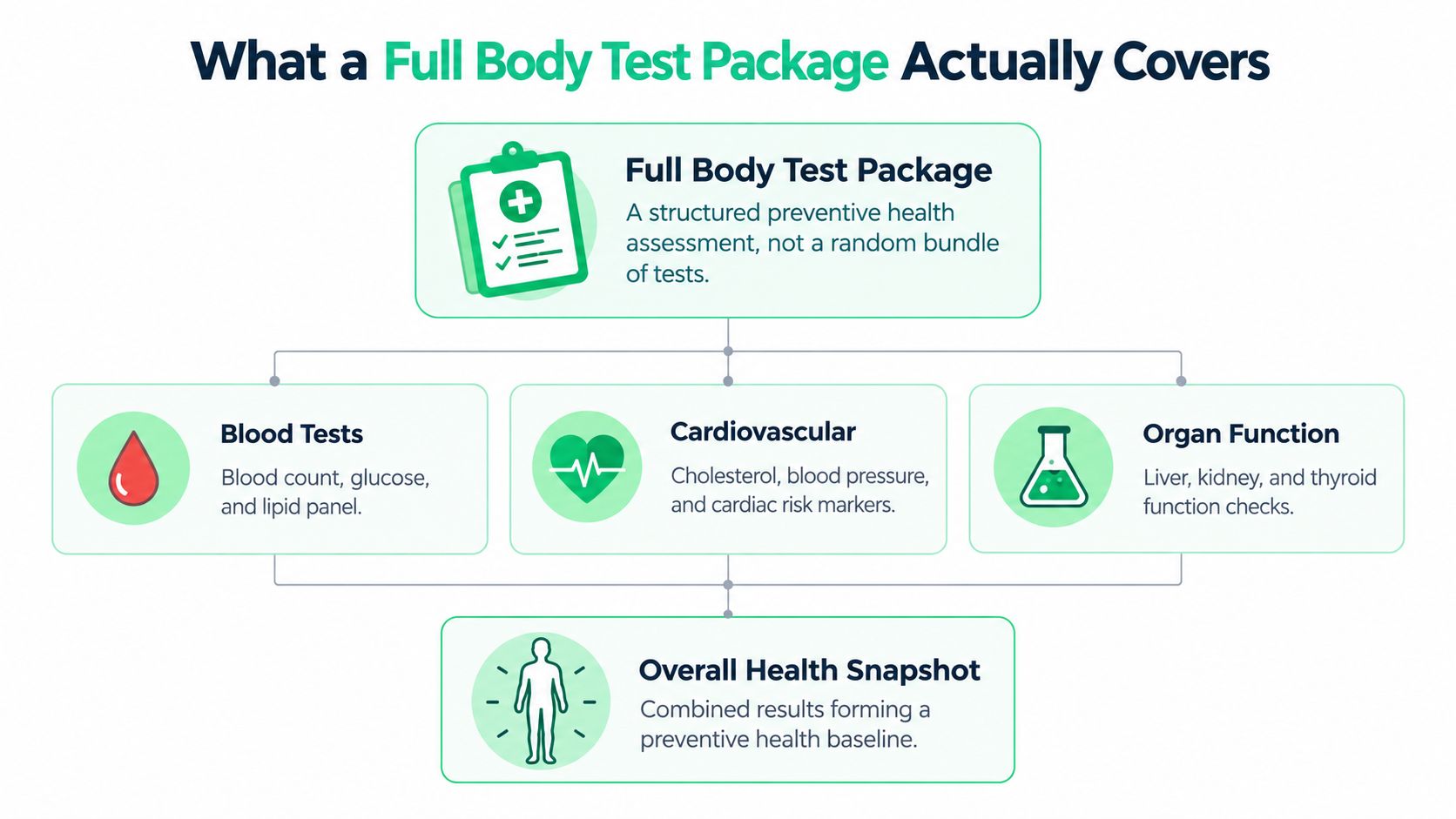
A full body test package isn't one universal test. It's a group of assessments selected to create a practical health baseline.
Consider someone working long hours in Downtown Dubai. They may book a package expecting “everything” and receive a report containing several pages of numbers. The helpful question isn't how many tests were ordered. It's whether the selected tests answer relevant questions about blood health, metabolism, organ function, and possible risk.
The usual foundation
A routine package may include:
- Complete blood count: Reviews haemoglobin, red cells, white cells, and platelets. Results can help a clinician investigate concerns such as anaemia or infection.
- Blood glucose testing: Fasting glucose may be included, while HbA1c can provide a longer-term view of glucose regulation when clinically appropriate.
- Lipid profile: Measures cholesterol and related fats used in cardiovascular risk assessment.
- Liver and kidney function tests: Assess markers associated with organ function and fluid or electrolyte balance.
- Thyroid testing: A thyroid panel may be useful when symptoms or history suggest a thyroid-related concern.
- Urinalysis: Can provide information about urinary, kidney, or metabolic concerns.
- Vitamin D testing: May be considered when nutritional status, symptoms, or medical history make it relevant.
Some providers offer iron studies, vitamin B12, inflammatory markers, hormones, or additional diabetes markers as add-ons. Imaging, ECGs, specialist examinations, and cancer screening aren't automatically included because a package is called “full body”. Always ask for the exact test list before booking.
Practical rule: A transparent package tells you what is included, what requires preparation, which tests are optional, and who will interpret the findings.
A body-composition assessment can also add context when weight, muscle mass, or metabolic health is part of the discussion. The Venus Health Co. scale guide offers a useful explanation of why body measurements should be interpreted thoughtfully rather than treated as a diagnosis.
For executives who need an organised preventive appointment, a Dubai executive health check may combine clinical review with selected testing. The right choice depends on your actual needs, not the length of the brochure.
Why Dubai Residents Should Consider Preventive Screening
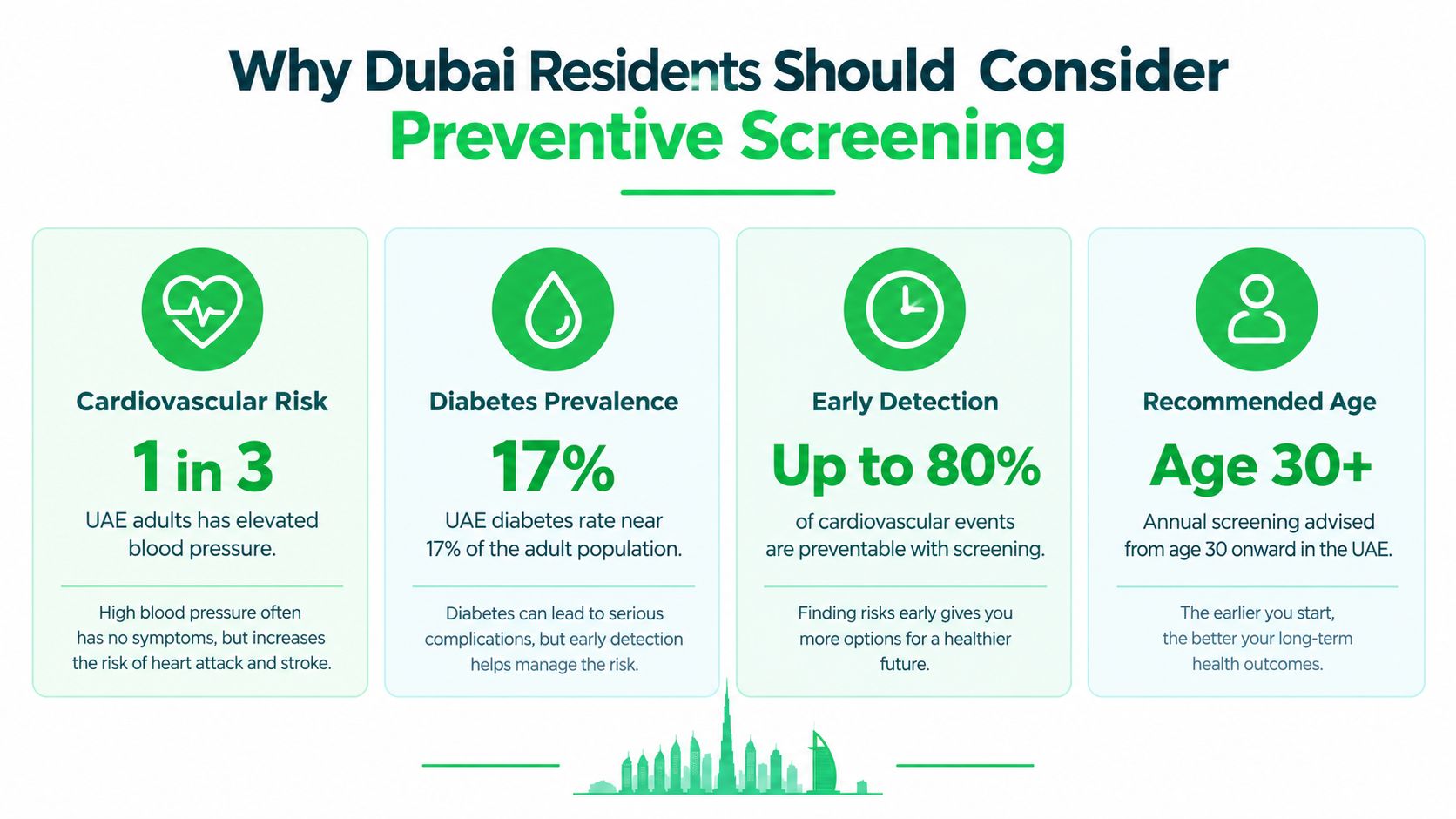
Preventive screening matters because several important health risks can develop without obvious symptoms. The UAE national health survey reported that among adults aged 18 and above, 25.9% had high blood pressure, 12.5% had raised blood glucose, 54.2% had high cholesterol, and 22.4% were living with obesity. These figures are reported in the UAE national health survey announcement.
Those results don't mean every person needs every available test. They show why a structured conversation about blood pressure, glucose, lipids, weight, lifestyle, and family history can be useful before symptoms appear.
How the risk picture fits together
Think of screening as a set of connected layers:
- Vital signs and history identify context, including blood pressure, symptoms, medicines, smoking, nutrition, activity, and family history.
- Core laboratory tests assess blood count, glucose, cholesterol, liver, kidney, thyroid, and urine findings where appropriate.
- Targeted additions address a specific concern, such as HbA1c, iron studies, vitamin status, or further cardiac assessment.
- Clinical follow-up confirms whether an unusual result matters and what should happen next.
Dubai's Household Survey 2019 found that 15.0% of respondents reported at least one noncommunicable disease, diabetes affected 13.7%, prediabetes affected 16.2%, and 32.5% reported hypertension. The same survey reported that 62.1% of adults had a weight disorder, defined as a body-mass index of at least 25 kg/m². These figures appear in the Dubai Health Authority periodic screening guideline.
The DHA guidance recommends periodic screening for adults aged 18 and above who don't have pre-existing morbidities, generally at three-year intervals unless a different schedule is clinically indicated. Its framework includes cardiovascular disease, hypertension, diabetes, cancer, osteoporosis, and mental-health disorders. A package therefore works best as part of an ongoing preventive rhythm, not as a promise that one visit can detect every disease.
How to Prepare for Your Full Body Test Package
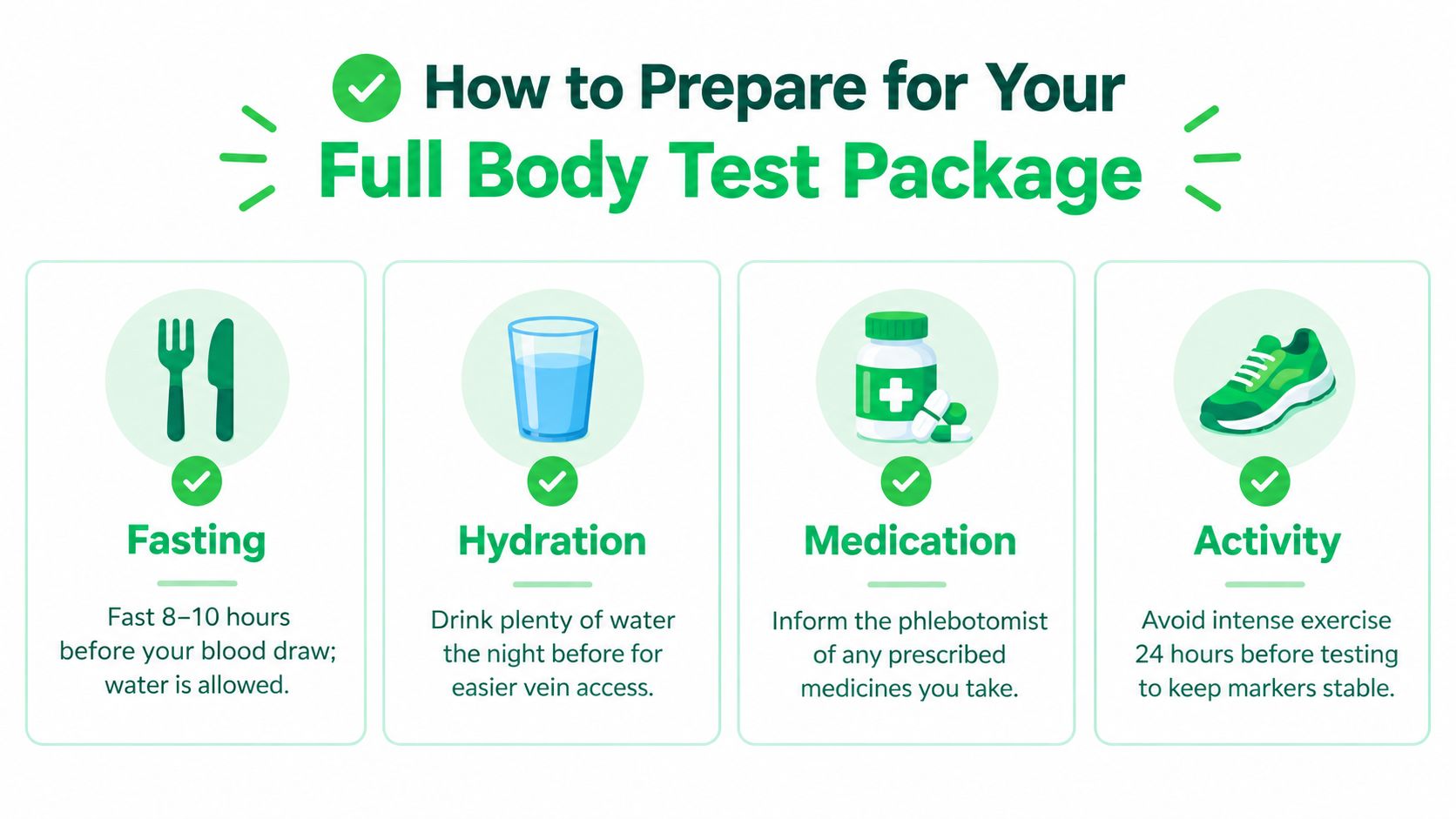
Good preparation protects the usefulness of your results. Before the appointment, read the provider's instructions and ask which tests require fasting. Some glucose and lipid measurements can be affected when a sample is collected after eating, so never guess the preparation requirements.
The evening before
If fasting is prescribed, follow the exact duration given by the clinician or laboratory. Water is often permitted, and sensible hydration can make blood collection easier, but don't add juice, sweetened drinks, or supplements unless you've been told to do so.
Avoid unusual exertion before testing if your provider advises it. A demanding workout, poor sleep, acute illness, or dehydration may affect some results. Tell the collector if you've been unwell, recently exercised heavily, or had difficulty following the instructions.
At the appointment
Keep prescribed medicines unchanged unless your doctor has specifically told you otherwise. Give the phlebotomist a complete list of medicines, vitamins, and supplements, and mention pregnancy, recent treatment, or known conditions when relevant.
The collector also needs to match you to the request correctly, use the appropriate tubes, label them at the point of collection, and record relevant timing or preparation details. These steps may seem administrative, but they help prevent a result being attached to the wrong person or interpreted without important context.
A guide to home lab tests in Dubai can help you think through which investigations may be relevant, but your final selection should come from a qualified clinician or laboratory service. If preparation wasn't followed, say so. Repeating a test may be safer than making decisions from a misleading sample.
Home Sample Collection vs Clinic Visits in Dubai
Home collection and clinic visits both have a place in preventive care. A home appointment may suit a person who works from home, an older family member, a hotel guest, or an executive who can't easily leave an office. A clinic may be more appropriate when you need an examination, an ECG, imaging, urgent review, or several services in one visit.
What home collection can offer
The main advantage is reduced travel and fewer disruptions. You can arrange collection at a home, hotel, or office, prepare in a familiar setting, and avoid carrying family members through a busy waiting area.
Convenience doesn't remove the need for laboratory discipline. Dubai clinical laboratory services must comply with UAE laws and Dubai regulations, and DHA policy requires laboratories under its jurisdiction to obtain international accreditation within the specified implementation period. The DHA standards for clinical laboratory services set the regulatory context.
What to verify before booking
Ask the provider:
- Laboratory processing: Will the sample go to a DHA-compliant, appropriately accredited laboratory?
- Patient identification: How will the collector confirm your identity and label the tubes?
- Specimen handling: Are transport time, temperature, tube selection, and sample integrity documented?
- Result review: Will a clinician explain abnormal findings rather than sending unexplained numbers?
- Escalation: What happens if a critical result requires prompt contact?
A clinic visit gives the care team immediate access to examination and on-site services. Home collection is a collection method, not a replacement for clinical assessment. If symptoms are urgent, or if your results need bedside review, choose a service that can arrange appropriate medical follow-up. For a practical overview of the mobile option, see home sample collection in Dubai.
The Mental Health Gap Most Packages Miss
A person can have reassuring blood results and still be struggling with anxiety, depression, poor sleep, burnout, disordered eating, or substance use. Laboratory testing can identify some physical contributors to symptoms, but it can't rule out common mental-health conditions.
Dubai's preventive guidance treats mental health as part of health assessment. For patients aged 12 and above, depression and anxiety screening is recommended at the first visit to a primary healthcare centre. The guidance describes the GAD-2, followed by GAD-7 when indicated, and recommends eating-disorder screening for people with relevant risk factors. These recommendations are set out in the UAE preventive screening service guidance.
Physical results and personal experience
A well-designed assessment asks questions that blood tests cannot answer:
- Are you sleeping adequately?
- Have worry or low mood affected work, relationships, or daily tasks?
- Do you use tobacco or alcohol to cope?
- Have eating patterns, appetite, or body-image concerns changed?
- Do you feel safe discussing these issues privately?
The conversation should be confidential and based on consent. That matters when a collector visits a hotel room, an executive's office, or a family home. Older adults may also want a private discussion without relatives answering on their behalf.
A stress and anxiety management guide may offer practical ideas, but self-help isn't a substitute for professional support when symptoms are persistent or severe. Urgent psychological symptoms, thoughts of self-harm, or immediate safety concerns need prompt medical attention and emergency support.
Understanding Your Results Without Panic
A flagged result can look frightening, especially when a report uses colour coding or marks a value outside its reference interval. Start by remembering that a reference interval isn't a diagnosis. It's a comparison range used by the laboratory, and your result must be considered alongside symptoms, age, medicines, medical history, preparation, and previous results.
Read the report in a sensible order
- Confirm the basics: Check your name, collection date, sample type, units, and whether fasting or other conditions were recorded correctly.
- Read the reference interval: Different laboratories may use different methods and intervals. Don't compare isolated values from unrelated reports without context.
- Look for patterns: One mildly unusual marker may mean little, while a group of related findings may warrant review.
- Ask what happens next: The clinician may recommend repeat testing, lifestyle changes, a targeted investigation, or no immediate action.
For example, borderline glucose may need confirmation and risk assessment. A lipid result may be interpreted differently depending on blood pressure, family history, smoking, and other cardiovascular factors. A low vitamin D result may prompt a discussion about diet, sunlight exposure, supplements, and appropriate dosing. A mild kidney-function change may need repeat testing, hydration review, medicine assessment, or further investigation.
The lab results explanation from Stride can help you become familiar with common report language. For a clinician-led blood assessment, you can also review the full blood test service. Don't start or stop medication based on a flagged line alone, and seek prompt advice if the report marks a critical result or you feel seriously unwell.
Who Should Book a Full Body Test Package
A structured package may be useful for adults who want a preventive baseline, particularly when daily life makes routine appointments easy to postpone. It can be relevant to Dubai residents with sedentary work, people with a family history of chronic disease, executives with limited time, hotel guests who need care where they are staying, and older adults who prefer home-based collection.
The package should still be shaped to the individual. Someone without symptoms and without known risks may need a straightforward baseline panel, while a person with diabetes, hypertension, thyroid disease, persistent symptoms, or ongoing treatment may need condition-specific monitoring rather than a broad retail bundle.
Use these questions before you book
- What prompted you? Routine prevention, a symptom, a family history, or monitoring an existing condition?
- What do you already know? Gather previous reports, medicines, diagnoses, and recent changes in weight, sleep, energy, or appetite.
- What can the package answer? Confirm the included tests and ask which results will be reviewed by a clinician.
- What might it miss? Remember that mental health, physical examination, imaging, and specialist assessment may require separate care.
A package should make your next decision clearer. If the provider can't explain why a test is included or what happens after an abnormal finding, pause before booking.
Next Steps After Your Full Body Assessment
Your report is the beginning of a conversation, not the end of one. First, review the findings with a DHA-licensed clinician, especially if a result is outside the reference interval, you have symptoms, or you take regular medicines.
A useful follow-up plan answers four questions:
- What needs confirmation? Some findings call for repeat testing under suitable conditions.
- What needs investigation? A clinician may request a targeted test, examination, imaging study, or referral.
- What can change now? Depending on the result, the discussion may include food choices, physical activity, sleep, tobacco, alcohol, stress, or medication adherence.
- When should you review again? The interval depends on your results, health history, and the screening guidance that applies to you.
Keep the report securely so future clinicians can compare trends rather than judging one isolated result. If you receive care at home, hotel, or office, confirm how reports are delivered, how privacy is protected, and who you can contact with questions.
A normal assessment is reassuring, but it doesn't guarantee that every condition has been excluded. Continue routine care, pay attention to new symptoms, and include mental wellbeing in future reviews. An abnormal result is also not a verdict. It's a prompt to confirm, understand, and act with appropriate clinical support.
For Dubai residents, families, executives, and visitors, the most useful service is one that connects collection with interpretation and follow-up. That approach turns a full body test package into an organised preventive-care routine rather than a one-off search for bad news.
Vitals Healthcare Doctor On Call offers DHA-licensed home sample collection and clinical support for residents, hotel guests, families, and offices across Dubai, with results sharing and follow-up guidance. Visit Vitals Healthcare Doctor On Call to arrange a structured assessment at a convenient location and discuss the right next step for your health.