



Dubai is one of the best cities in the world to eat out. Friday brunches, buffets, late-night shawarma and a delivery app for everything. Most of the time it’s all fine. But a few hours after the wrong meal, a stomach bug can wipe out a weekend, a business trip or the first days of a holiday.
Most food poisoning settles on its own within a day or two with rest and fluids. This guide explains the symptoms, how soon they start, how to rehydrate properly, the warning signs that need a doctor, and when to call one to your home or hotel.
Key takeaways
- Symptoms can start anywhere from 30 minutes to several days after eating, so the last meal isn’t always the cause.
- Fluids matter most. Small, frequent sips of oral rehydration solution are better than large gulps.
- See a doctor for bloody diarrhoea, a fever over 38.9°C, diarrhoea lasting more than 3 days, or vomiting that stops you keeping fluids down.
- Babies, older adults, pregnant women and people with weak immunity should get advice early.
- In Dubai’s heat, cooked food shouldn’t sit out for more than an hour.
Too unwell to leave the bathroom, let alone the house?
A DHA-licensed doctor can come to your home or hotel in 30–45 minutes, day or night.
Common symptoms of food poisoning
The most common symptoms are diarrhoea, stomach pain or cramps, nausea, vomiting and fever. Some people have all of them; others mainly vomit or mainly have diarrhoea, depending on the germ involved.
How soon after eating do symptoms start?
This is where people often blame the wrong meal. Some germs make you sick within hours, while others take days. A stomach bug on Sunday night could come from Sunday lunch, or from something you ate on Thursday.
How soon after eating do food poisoning symptoms start?
Typical incubation period by germ, from eating contaminated food to the first symptoms (time scale is compressed)
View the data
| Germ | Symptoms usually start | Illness usually lasts |
|---|---|---|
| Staphylococcus aureus | 30 minutes to 8 hours | About 1 day |
| Bacillus cereus (vomiting type) | 30 minutes to 6 hours | About 24 hours |
| Clostridium perfringens | 6 to 24 hours | Less than 24 hours |
| Norovirus | 12 to 48 hours | 1 to 3 days |
| Salmonella | 6 hours to 6 days | 4 to 7 days |
| Campylobacter | 2 to 5 days | About a week |
| E. coli | 1 to 10 days (usually 3 to 4) | 5 to 10 days |
A quick onset, within a few hours, often points to toxins made by bacteria in food that was left out too long. Illness that starts days later is more likely an infection, such as Campylobacter from undercooked chicken. Either way, the first steps at home are the same.
How to treat food poisoning at home
- Rehydrate first. Take small sips of water or an oral rehydration solution (ORS) from any pharmacy every few minutes. If you’ve been vomiting, wait 15 to 30 minutes, then start with a spoonful at a time.
- Rest. Your body is busy fighting the infection. Stay home and stay close to a bathroom.
- Eat when you feel ready. Start with plain foods such as rice, toast, bananas, crackers or soup, then build up slowly.
- Skip alcohol, coffee, fizzy drinks and fatty food until you’ve recovered. They can make diarrhoea worse.
- Be careful with anti-diarrhoea tablets. Don’t take them if you have bloody diarrhoea or a high fever, and don’t give them to children unless a doctor advises it.
- Protect others. Wash your hands well, don’t prepare food for anyone else, and keep towels separate. Norovirus spreads very easily.
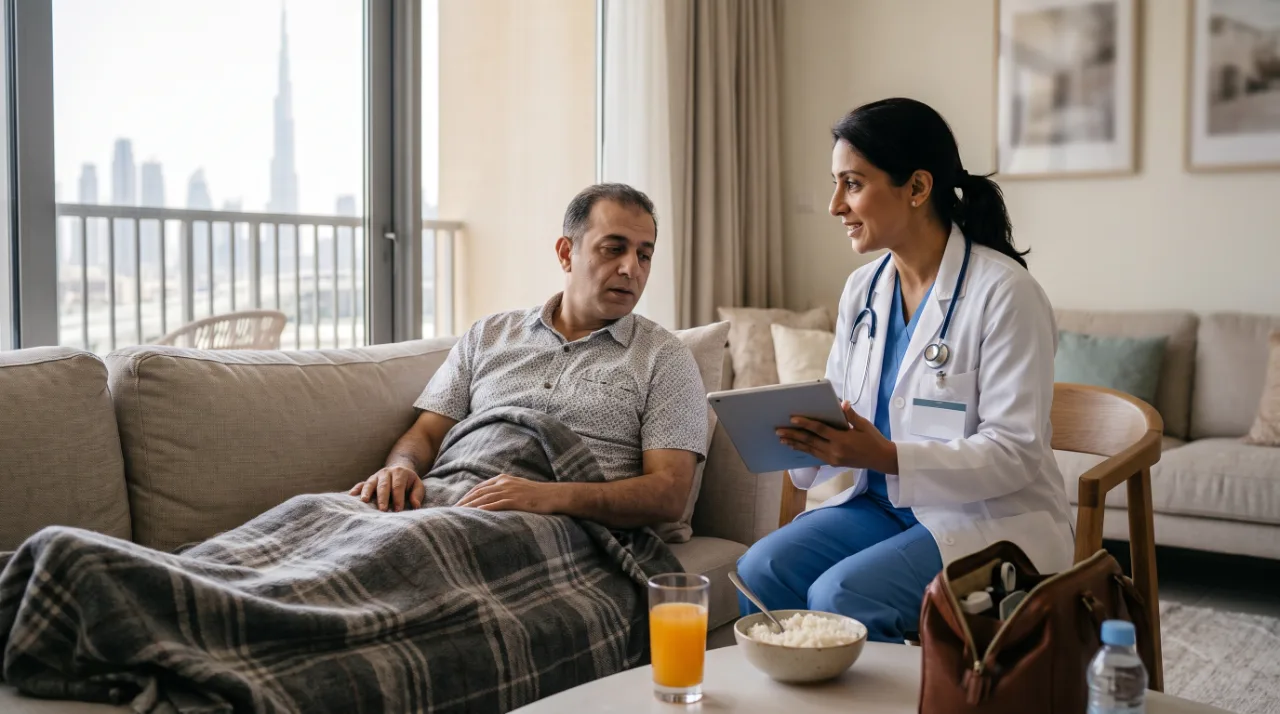
When to see a doctor for food poisoning
The US Centers for Disease Control and Prevention (CDC) advises seeing a doctor if you have any of these:
- Bloody diarrhoea
- Diarrhoea that lasts more than 3 days
- A fever over 38.9°C (102°F)
- Vomiting so often that you can’t keep liquids down
- Signs of dehydration: passing very little urine, a dry mouth and throat, or feeling dizzy when you stand up
Get advice sooner for babies and young children, adults over 65, pregnant women and anyone with a weakened immune system or a long-term condition such as diabetes or kidney disease. They become dehydrated faster and are more likely to have complications.
Stomach bug at 3 a.m.? We come to you.
Our DHA-licensed doctors treat food poisoning at homes, offices and hotels across Dubai, 24 hours a day, including weekends and public holidays.
- Examination and a check for dehydration
- Medicines to ease vomiting and pain, if appropriate
- Lab tests at home when needed
- IV hydration if the doctor advises it
- Clear advice on eating, drinking and recovery
DHA licence no. 3728742 · No hidden call-out fee · Cash, card or secure payment link
Dehydration: the real risk with food poisoning in Dubai
Losing fluid through vomiting and diarrhoea is what makes food poisoning dangerous, and dry, air-conditioned indoor air makes it easier to fall behind. Dehydration builds slowly, so check for it: dark urine or long gaps between trips to the toilet, a dry mouth, headache, tiredness and dizziness. In babies, look for fewer wet nappies and no tears when crying.
If you can’t keep any fluids down, a doctor may recommend IV hydration after examining you. It isn’t needed for most people, and it should only be given after a proper medical assessment.
Emergency signs: when to call 998
Get emergency help straight away
Severe dehydration or illness
- Confusion, extreme drowsiness or fainting
- No urine at all for many hours
- Vomiting blood or material that looks like coffee grounds
- Severe, constant stomach pain
- Black or heavily bloody stools
Signs of botulism (rare but serious)
- Double or blurred vision
- Drooping eyelids
- Slurred speech
- Difficulty swallowing or breathing
- Muscle weakness
A home visit is not a substitute for emergency care.
How to avoid food poisoning in Dubai’s heat
FoodSafety.gov sums up prevention in four steps: clean, separate, cook and chill. In Dubai, the chill step matters most.
- Clean: wash hands, chopping boards and worktops, and rinse fruit and vegetables.
- Separate: keep raw meat, chicken and seafood away from ready-to-eat food.
- Cook: make sure chicken, burgers and minced meat are cooked all the way through.
- Chill: refrigerate leftovers quickly. Perishable food shouldn’t sit out for more than two hours, or one hour when it’s above 32°C, which covers much of the year here.
- Watch the beach picnic and the delivery bag. Food that’s been sitting in a hot car or at the beach for a while isn’t worth the risk.
- Be wary of lukewarm buffet food, and of rice that has been kept warm for a long time.
How Vitals Healthcare can help
If you’re too unwell to travel, our doctor at home service brings the clinic to you. Visitors can book a hotel doctor visit anywhere in Dubai, and if the doctor wants to check your blood or a stool sample, our lab tests at home service can collect it without you leaving bed.
Book a doctor for food poisoning
Available 24/7 across Dubai, at home, at the office or in your hotel.
Frequently asked questions
How long does food poisoning last?
It depends on the germ. Norovirus usually lasts one to three days, while Salmonella often lasts four to seven days. Most people start to feel better within a day or two. If you’re not improving after three days, see a doctor.
Can a doctor treat food poisoning at home or in a hotel?
Yes. Our DHA-licensed doctors examine you, check for dehydration, prescribe medicine if it’s appropriate and tell you if you need hospital care.
Do I need antibiotics for food poisoning?
Usually not. Most food poisoning gets better on its own, and antibiotics don’t help viral causes such as norovirus. A doctor will decide whether you need them after examining you.
Do I need an IV drip?
Most people don’t. An IV drip is only useful if you’re dehydrated and can’t keep fluids down, and a doctor should assess you first.
When can I go back to work or school?
Most doctors advise staying at home until you’ve had no vomiting or diarrhoea for 48 hours, especially if you handle food or work with children or older people.
Feel better faster, without leaving home.
One call or message, and a DHA-licensed doctor is on the way to your home, office or hotel anywhere in Dubai.
- FoodSafety.gov. Bacteria and viruses that cause food poisoning.
- Centers for Disease Control and Prevention. Food poisoning symptoms.
This article is for general information and doesn’t replace advice from a doctor who has examined you. In an emergency, call 998.