



Home physiotherapy delivers professional rehabilitation treatment directly at your residence, eliminating travel to clinics while providing personalized recovery support. This approach combines convenience with clinical effectiveness, allowing patients to heal in comfortable, familiar surroundings under expert guidance.
Rising demand for home healthcare services reflects changing patient preferences and medical advances, making home-based treatment viable for conditions previously requiring facility care. Rehabilitation after injury or surgery determines recovery speed, making professional home physiotherapy guidance essential for optimal outcomes.
What Is Home Physiotherapy and How Does It Work?
Home physiotherapy is licensed physical therapy delivered at the patient’s residence by qualified physiotherapists who assess injuries, create treatment plans and guide rehabilitation exercises. Treatment occurs in your home environment using portable equipment and techniques adapted to available space.
Physiotherapists visit your home on scheduled appointments, typically 2-3 times weekly initially, decreasing as recovery progresses. Each session lasts 45-60 minutes, during which therapists conduct hands-on treatment, teach exercises, monitor progress and adjust plans based on improvement rates.
The role of physiotherapists extends beyond exercise instruction to include pain assessment, movement analysis, functional goal setting, and educating patients about injury prevention. They create personalized recovery roadmaps addressing specific injuries, patient fitness levels and home environment constraints.
Personalized Care Approach:
Home physiotherapy enables customization impossible in busy clinic settings. Therapists observe how you move in your actual living space, identifying environmental factors affecting recovery like stair navigation, bathroom access, or furniture placement requiring modification.
Treatment plans adapt to your daily routines, incorporating exercises into normal activities rather than requiring separate gym-like sessions. This integration improves compliance because exercises fit naturally into life rather than feeling like additional burdens.
For comprehensive healthcare support beyond physiotherapy, Vitals Healthcare offers doctor on call services coordinating with physical therapy for complete recovery management.
Why Does Home Physiotherapy Help You Recover Faster?
Personalized care, comfort and consistent treatment accelerate recovery at home.
Home physiotherapy speeds recovery through one-on-one attention during entire sessions rather than shared therapist time in clinics. Undivided focus means therapists notice subtle movement compensations, provide immediate technique corrections and adjust exercises precisely to your response.
Reduced travel stress matters more than most realize for recovery. Post-surgery or injured patients experience pain and fatigue from traveling to clinics, arriving exhausted before therapy even begins. Home treatment preserves energy for actual rehabilitation rather than wasting it on commuting.
Better Patient Compliance:
Studies show home-based rehabilitation achieves 60-80% higher exercise compliance compared to clinic programs. Patients complete prescribed home exercises more consistently when therapists demonstrate them in the actual environment where they will be performed.
Familiar surroundings reduce anxiety and tension that impair movement quality. Relaxed patients move more naturally, allowing therapists to assess true functional capacity rather than guarded, protective movements common in unfamiliar clinical settings.
Customized Recovery Plans:
Home therapists create plans considering your specific home layout, available equipment, daily routines and lifestyle goals. Someone recovering to return to gardening receives different programming than someone preparing to resume office work and home settings allow practice of actual target activities.
Progress tracking happens in real-world contexts. Therapists see how you navigate your stairs, enter your shower, or lift objects you actually use rather than generic clinic equipment, making treatment directly transferable to daily life.
Recovery requires comprehensive support beyond exercise. Explore Vitals Healthcare’s home healthcare services for coordinated medical care, physiotherapy, and wellness support across Dubai.
What Conditions Can Be Treated with Home Physiotherapy?
Home physiotherapy effectively treats numerous conditions requiring rehabilitation, from acute injuries to chronic mobility limitations.
Post-Surgery Recovery:
Orthopedic surgeries like knee replacements, hip replacements, rotator cuff repairs and spinal procedures require structured rehabilitation for optimal outcomes. Home physiotherapy guides joint mobilization, strengthening and functional movement restoration during critical healing phases.
Cardiac and abdominal surgeries benefit from respiratory physiotherapy, gentle mobilization, and gradual reconditioning programs deliverable at home. Post-surgical patients often have movement restrictions, making home treatment more practical than clinic visits.
Sports Injuries:
Muscle strains, ligament sprains, tendonitis and overuse injuries respond well to home physiotherapy combining manual therapy, progressive strengthening and sport-specific movement retraining. Athletes receive guidance returning to training safely without risking re-injury through premature intensity increases.
Stroke Rehabilitation:
Stroke survivors require intensive physiotherapy addressing paralysis, balance problems, coordination deficits and functional movement relearning. Home settings allow practice of actual daily activities like dressing, cooking and household tasks under therapist supervision.
Neurological physiotherapy for stroke, Parkinson’s disease, or multiple sclerosis focuses on maximizing independence in patients’ own environments where they need to function, making home treatment especially relevant.
Chronic Pain Conditions:
Arthritis, fibromyalgia, chronic back pain and neck pain benefit from ongoing physiotherapy teaching pain management strategies, gentle mobility exercises and functional movement patterns reducing daily discomfort.
Home therapists adapt exercises to pain levels and teach patients to modify activities triggering symptoms, skills best learned in environments where patients spend most time.
Elderly Mobility Issues:
Age-related balance problems, muscle weakness, joint stiffness and fall risk require physiotherapy emphasizing safe mobility, strength maintenance and fall prevention strategies. Home treatment allows direct assessment of fall hazards and mobility challenges in seniors’ actual living spaces.
For elderly patients requiring comprehensive care, Vitals Healthcare provides specialized elderly care services combining physiotherapy with medical monitoring and daily living support.
How Does Home Physiotherapy Improve Patient Comfort and Convenience?
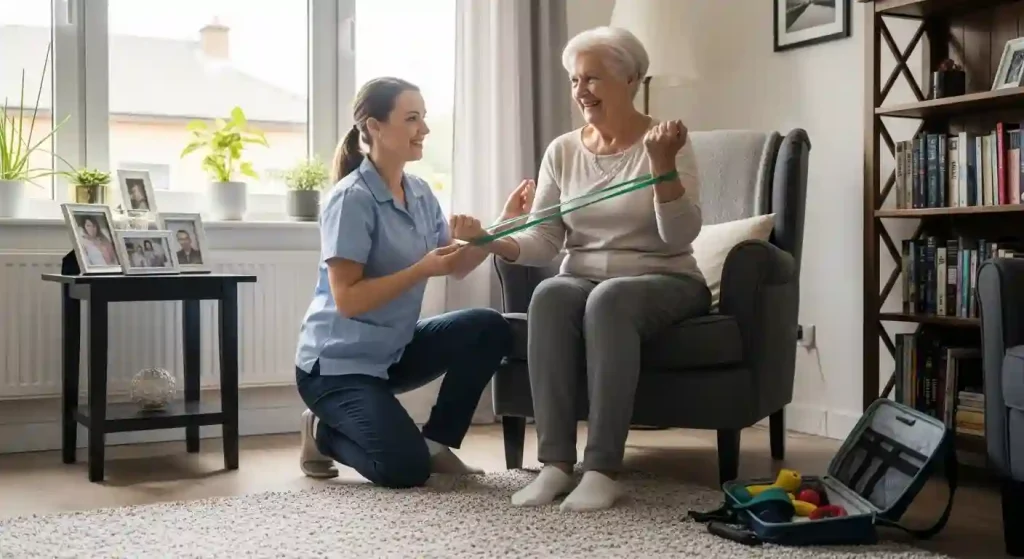
Treatment in a familiar environment reduces stress and anxiety that impede recovery. Patients feel more relaxed at home, allowing better movement quality and more honest communication about difficulties they experience.
Privacy matters especially for conditions involving intimate areas or embarrassing symptoms. Home settings provide dignity during treatment that busy clinics cannot match, encouraging patients to address problems they might hide in public settings.
Flexible Scheduling:
Home physiotherapy adapts to patient schedules rather than forcing patients to conform to clinic hours. Early morning, evening, or weekend appointments accommodate work schedules and family commitments impossible with standard clinic hours.
Treatment timing can be optimized around daily routines, scheduling sessions when patients have the most energy or coordinating with medication schedules for pain management.
Reduced Exposure to Infections:
Clinics concentrate sick and injured people, creating infection risks particularly dangerous for post-surgical or immunocompromised patients. Home treatment eliminates exposure to hospital-acquired infections and seasonal illnesses circulating in healthcare facilities.
During flu seasons or disease outbreaks, home healthcare becomes even more valuable for vulnerable populations requiring ongoing rehabilitation without infection risks.
Improved Mental Wellbeing:
Recovery happens faster when patients feel emotionally supported and psychologically comfortable. Familiar surroundings, presence of family support and ability to maintain normal routines between therapy sessions all contribute to positive mental states, accelerating physical healing.
Isolation and depression are common during prolonged recovery, but decrease when patients remain integrated in home life rather than repeatedly leaving for clinic appointments that disrupt daily patterns.
Complete recovery requires both rehabilitation and medical oversight. Contact Vitals Healthcare for integrated home physiotherapy coordinated with physician care, ensuring comprehensive treatment across all Dubai areas.
What Techniques Are Used in Home Physiotherapy?
Home physiotherapists employ diverse evidence-based techniques adapted to home environments without sacrificing treatment quality.
Manual Therapy:
Hands-on techniques including joint mobilization, soft tissue massage, myofascial release, and trigger point therapy address pain, stiffness and movement restrictions. Therapists bring portable treatment tables or adapt techniques to beds, chairs, or floor surfaces available at home.
Manual therapy reduces pain, improves tissue flexibility, and enhances joint range of motion, preparing patients for active exercise components of rehabilitation.
Exercise Therapy:
Progressive strengthening programs use resistance bands, small weights, or bodyweight exercises requiring minimal equipment. Therapists design exercises matching available space and equipment, teaching proper form and progression principles.
Functional exercises mimic daily activities like sit-to-stand transfers, stair climbing, reaching, or lifting tasks patients need to perform independently. Practicing actual movements in actual environments maximizes transfer of therapy benefits to real life.
Mobility Training:
Gait training improves walking patterns, balance and safety. Therapists assess movement in patients’ homes, addressing specific challenges like navigating narrow hallways, managing stairs, or safely entering bathrooms.
Transfer training teaches safe movement between surfaces like bed-to-chair, chair-to-standing, or floor-to-standing, essential skills for independence that make most sense to practice in home settings where patients perform these transfers daily.
Pain Management Techniques:
Beyond exercise, physiotherapists teach pain relief methods including heat/cold application, positioning strategies, breathing techniques and activity modification reducing pain triggers while maintaining function.
Electrotherapy modalities like TENS units can be used at home for pain control, with therapists teaching proper application and settings for independent use between sessions.
Rehabilitation Exercises:
Structured progressive programs rebuild strength, flexibility, endurance and coordination lost through injury or surgery. Home programs emphasize exercises patients can perform independently between therapist visits, critical for achieving recommended exercise frequency.
Therapists provide written or video instructions ensuring correct technique when performing exercises alone and regularly review and progress programs based on improvement.
Who Should Consider Home Physiotherapy Services?
Who Should Consider Home Physiotherapy Services?
Elderly patients with mobility limitations, chronic conditions, or multiple health issues benefit greatly from home physiotherapy, as it eliminates travel stress while supporting age-related function and independence.
Post-operative patients in early recovery phases, when pain, restricted movement, or surgical precautions limit travel or driving, should opt for home care to ensure safe, timely mobilization for better surgical outcomes.
People with mobility limitations, such as wheelchair users, those needing walkers, or patients with severe balance issues, face major barriers reaching clinics; home physiotherapy removes these obstacles and directly targets their mobility challenges.
Patients with neurological conditions (stroke, spinal cord injuries, or progressive diseases) gain more from treatment in their real home environment, where functional skills matter most, rather than artificial clinic settings.
Busy professionals who cannot repeatedly take time off work for clinic visits benefit from flexible scheduling, lunch breaks, early mornings, or evenings—allowing consistent treatment without disrupting career demands and eliminating commute time.
Patients requiring long-term rehabilitation for chronic conditions find home programs far more sustainable over months or years, reducing the risk of abandoning therapy due to the ongoing burden of clinic visits.
For comprehensive chronic disease management including physiotherapy, Vitals Healthcare offers specialized chronic care programs integrating multiple services supporting long-term health.
Common Mistakes That Slow Down Recovery
Skipping therapy sessions or inconsistent attendance undermines progress and prolongs recovery. Rehabilitation requires cumulative improvement over multiple sessions, and gaps in treatment allow regression that requires re-establishing previously achieved gains.
Physiotherapy works through progressive overload principles requiring regular sessions to build on previous improvements. Missing appointments resets progress and extends total recovery time significantly.
Incorrect Exercise Techniques:
Performing prescribed exercises with poor form creates harmful movement patterns, risks injury, and fails to target intended muscles or movements. Patients sometimes remember exercises incorrectly or develop shortcuts making exercises easier but less effective.
Lack of Consistency:
Exercising sporadically rather than following prescribed frequency recommendations limits recovery speed. Most home programs require daily exercise, and skipping days significantly reduces therapeutic benefits.
Ignoring Professional Guidance:
Patients sometimes push beyond prescribed intensity or duration thinking more equals faster recovery, risking setbacks from overuse or re-injury. Others remain overly cautious, doing less than prescribed and limiting progress..
Not Communicating Problems:
Failing to report increased pain, new symptoms, or difficulty performing exercises prevents therapists from adjusting treatment appropriately. Patients sometimes endure problems thinking they should tolerate discomfort, when symptoms actually indicate need for program modification.
For comprehensive home healthcare, including physiotherapy integrated with medical care, Vitals Healthcare provides DHA-licensed physiotherapy services coordinated with physician oversight across all Dubai areas.
Start Your Recovery Journey with Professional Home Physiotherapy
Faster recovery begins with expert physiotherapy delivered in your comfortable home environment. Vitals Healthcare brings DHA-licensed physiotherapists to your Dubai residence, providing personalized rehabilitation programs that accelerate healing without
FAQs About Home Physiotherapy
Is home physiotherapy as effective as clinic-based treatment?
Yes, home physiotherapy achieves equal or superior outcomes compared to clinic-based programs for most conditions. Research shows home treatment produces non-inferior results with higher exercise compliance rates (60-80% versus 40-50% in clinics). One-on-one attention throughout entire sessions and functional training in real-world environments often enhance effectiveness. Success depends on therapist qualification, personalized programming, and patient commitment regardless of location.
How often should home physiotherapy sessions be scheduled?
Most programs begin with 2-3 sessions weekly during initial intensive phases, decreasing to once weekly then bi-weekly as recovery progresses. Post-surgical patients often need 3 sessions weekly initially. Between scheduled visits, patients perform prescribed home exercises daily for optimal results. Therapists adjust frequency based on progress, with stable patients transitioning to monthly check-ins for ongoing conditions.
How much does home physiotherapy cost in Dubai?
Home physiotherapy in Dubai costs AED 250-400 per session (45-60 minutes), approximately 20-40% more than clinic visits. Initial assessments cost AED 300-500. Package rates for 10-20 sessions offer 10-20% discounts. Many UAE insurance plans cover home physiotherapy equivalent to clinic care. Total recovery programs typically range from AED 2,500-8,000 depending on condition severity and treatment duration.
How long does recovery take with home physiotherapy?
Recovery timelines vary by injury type and severity. Minor sprains typically improve within 4-6 weeks. Post-surgical orthopedic recovery requires 8-12 weeks. Stroke rehabilitation takes months, with most improvement within 6 months. Chronic pain management is ongoing rather than having defined endpoints. Home physiotherapy often accelerates recovery 20-30% compared to unsupported healing due to proper technique guidance and progressive programming.
Can home physiotherapy treat all types of injuries and conditions?
Home physiotherapy effectively treats most musculoskeletal injuries, post-surgical rehabilitation, neurological conditions, chronic pain, and mobility limitations. Some specialized conditions requiring advanced equipment may need initial clinic treatment before transitioning home. Complex spinal injuries or cases requiring continuous monitoring may combine clinic and home care. Therapists assess during initial evaluation whether home treatment alone is appropriate or if hybrid approaches produce optimal outcomes.


