
You've landed in Dubai after a long flight, spent the day in the heat, or woken up feeling too depleted to face a clinic waiting room. An online search brings up IV drip therapy, promising hydration, energy, recovery, and even beauty support. The difficult part isn't finding a menu. It's understanding when an infusion is medically sensible, which claims are overstated, and whether the provider is operating within Dubai's healthcare rules.
In Dubai, IV therapy should be treated as a medical infusion service, not a casual wellness add-on. The right decision depends on your symptoms, hydration status, medical history, the contents of the drip, and the credentials of the team delivering it.
Table of Contents
- What IV Drip Therapy Actually Is
- How IV Hydration Compares to Oral Fluids
- Common IV Drip Formulations and Their Uses
- Real Benefits and Honest Limitations
- Safety Standards and DHA Regulation in Dubai
- When At-Home IV Therapy Makes Sense
- How Vitals Healthcare Delivers IV Drip Therapy
What IV Drip Therapy Actually Is
A hotel guest may describe the problem as jet lag. A resident may call it exhaustion after working outdoors in the heat. Someone recovering from vomiting may say they can't keep fluids down. These situations can look similar from a distance, but they don't automatically call for the same treatment.
IV drip therapy involves placing a small intravenous catheter into a vein and allowing a selected fluid, electrolyte solution, vitamin preparation, or medication to enter the bloodstream under controlled clinical supervision. The clinician should first assess the person, review relevant history and allergies, and decide whether an infusion is appropriate. The bag itself isn't a diagnosis, and choosing a colourful formulation from a menu doesn't replace an assessment.

What the appointment feels like
The catheter insertion usually causes a brief pinch. Once it's secured, you may feel coolness around the arm as fluid runs through the line. You'll normally sit or recline while the healthcare professional checks the infusion site and your general response.
The experience is different from drinking a bottle of water or swallowing a supplement. Oral fluids must pass through the stomach and intestines before the body absorbs them. An intravenous infusion delivers fluid directly into circulation, which is why it can be useful when oral intake is compromised.
That direct route also creates responsibility. A substance that enters the bloodstream bypasses the protective delays and limitations of digestion. The formulation, dose, preparation, and rate therefore matter. A reputable provider should be able to tell you what the drip contains and why each component has been selected.
Practical rule: A request for “something for energy” should lead to a clinical conversation, not an automatic upgrade to the strongest-looking drip.
For Dubai residents, tourists, and office-based patients, home IV hydration and drip services in Dubai can offer convenience, but convenience doesn't remove the need for screening. The same medical principles apply in a clinic, hotel room, office, or home.
How IV Hydration Compares to Oral Fluids
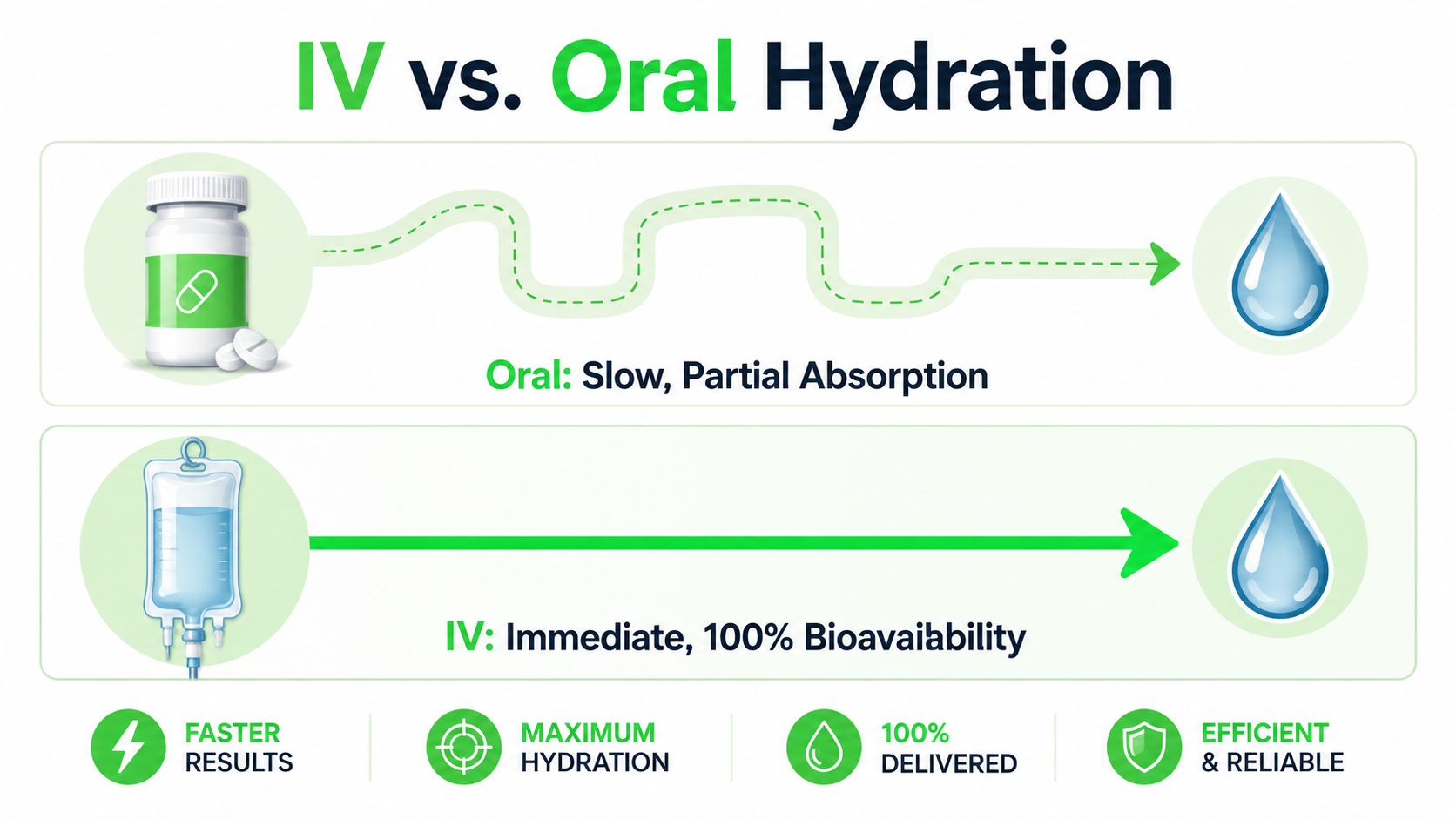
Think of oral hydration as a route through a processing centre. You drink water or an oral rehydration solution, the gastrointestinal tract absorbs it, and the body distributes it according to need. That route works well for many people, especially when dehydration is mild and the person can drink without vomiting.
IV hydration uses a direct route into the bloodstream. For clinically appropriate dehydration, fluid enters circulation without waiting for gastrointestinal absorption. This makes IV rehydration the fastest way to restore intravascular volume when vomiting, heat illness, or impaired intake makes oral replacement unreliable, as described in this Dubai home-based IV hydration guide.
Use the simplest effective route
The practical decision is usually straightforward:
- Can you drink and keep fluids down? If yes, water or an appropriate oral rehydration solution may be enough for mild dehydration.
- Are you losing fluid faster than you can replace it? Repeated vomiting, significant heat exposure, or poor intake may make oral replacement unreliable.
- Do you have warning symptoms? Confusion, fainting, severe weakness, breathing difficulty, chest pain, persistent vomiting, or a serious underlying condition requires medical assessment rather than a wellness booking.
- Would you benefit from observation or tests? A clinic or hospital may be safer when the cause is uncertain or the patient may deteriorate.
IV treatment isn't automatically superior just because it's faster. It's more invasive, requires venous access, and introduces risks that drinking fluids doesn't. The clinician must also consider conditions that affect fluid balance, including kidney or heart problems, and decide whether a particular solution is suitable.
An infusion can correct a delivery problem. It doesn't automatically correct the reason dehydration occurred. If fever, infection, gastrointestinal illness, medication effects, or heat illness is driving the symptoms, you may need diagnosis and targeted treatment as well.
For a broader comparison between intravenous fluids and commercially marketed energy products, IV hydration versus energy drinks is a useful starting point. The central question remains clinical: is the patient unable to replace fluid adequately by mouth, or are they looking for a quick boost?
Common IV Drip Formulations and Their Uses
Dubai IV menus often use appealing names, but the name tells you less than the ingredient list and the intended indication. “Energy”, “recovery”, and “beauty” may describe a service category, not a diagnosis or guaranteed outcome.
The UAE market outlook estimated IV hydration therapy revenue at USD 13.0 million in 2025 and projects USD 25.4 million by 2033, with a forecast 9% compound annual growth rate from 2026 to 2033. The same outlook identified energy boosters as the largest revenue-generating segment in 2025, while beauty and aesthetics were the fastest-growing category during the forecast period. These are market observations, not proof that a particular formulation will benefit an individual patient. Read the UAE IV hydration therapy market outlook for the underlying context.
When considering iv drip therapy, it’s important to assess your hydration needs and medical background.
Many people are now discovering the advantages of iv drip therapy for a variety of health concerns.
| Formulation Type | Key Ingredients | Common Use Cases |
|---|---|---|
| Basic hydration | Compatible intravenous fluids, with electrolytes where clinically indicated | Dehydration when oral replacement isn't reliable |
| Multivitamin infusion | Selected water-soluble vitamins and other nutrients | Nutritional support when a clinician identifies a relevant need |
| Energy-focused drip | Fluids combined with selected vitamins or minerals | Fatigue complaints after assessment, without treating an unexplained cause |
| Recovery formulation | Fluids and nutrients chosen around the patient's symptoms and history | Recovery after exertion or illness, where appropriate |
| Beauty-focused infusion | Nutrients marketed around skin or aesthetic goals | Adjunctive wellness support, not a replacement for dermatology or nutrition |
Choosing the right setting for iv drip therapy can impact your recovery experience.
Integrating iv drip therapy into your health plan can enhance overall wellness.
With more awareness, iv drip therapy is seeing a rise in popularity.
For many, iv drip therapy has become synonymous with wellness and recovery.
Modern healthcare increasingly recognises the value of iv drip therapy.
Considering iv drip therapy as part of a holistic health approach can be beneficial.
Regular assessments prior to iv drip therapy can prevent complications.
Choosing qualified providers for iv drip therapy is essential for safety.
Patients are encouraged to share their experiences with iv drip therapy for a broader understanding.
Rates of iv drip therapy are competitive and vary based on treatment type.
Post-treatment advice for iv drip therapy can enhance recovery and wellness.
With proper guidance, iv drip therapy can be a safe and effective option.
Understanding individual needs is key when considering iv drip therapy.
Many are turning to iv drip therapy as a solution for their hydration needs.
IV drip therapy is a growing trend for those seeking hydration and recovery support.
Evaluating the necessity of iv drip therapy is crucial for optimal health outcomes.
Read the formulation, not the label
A hydration bag may be the sensible choice for someone who is volume-depleted. A multivitamin infusion may be inappropriate if the patient has contraindications, unclear symptoms, or no identifiable reason for intravenous delivery. More ingredients don't necessarily mean better care.
Energy boosters are commercially prominent in the UAE, but fatigue has many possible causes, including sleep loss, infection, anaemia, medication effects, endocrine disease, and dehydration. A drip may make someone feel temporarily better while leaving the underlying problem unaddressed.
Beauty formulations require the same caution. Hydration and nutrients can support normal body functions, but IV therapy shouldn't be sold as a guaranteed transformation or a substitute for sun protection, a balanced diet, or a dermatological assessment. If a provider won't disclose the ingredients, dose, source, or clinical rationale, choose a different provider.
For patients considering a vitamin-focused option, the Vitamin C IV drip guide for Dubai home care can help frame the questions to ask before booking.
Real Benefits and Honest Limitations
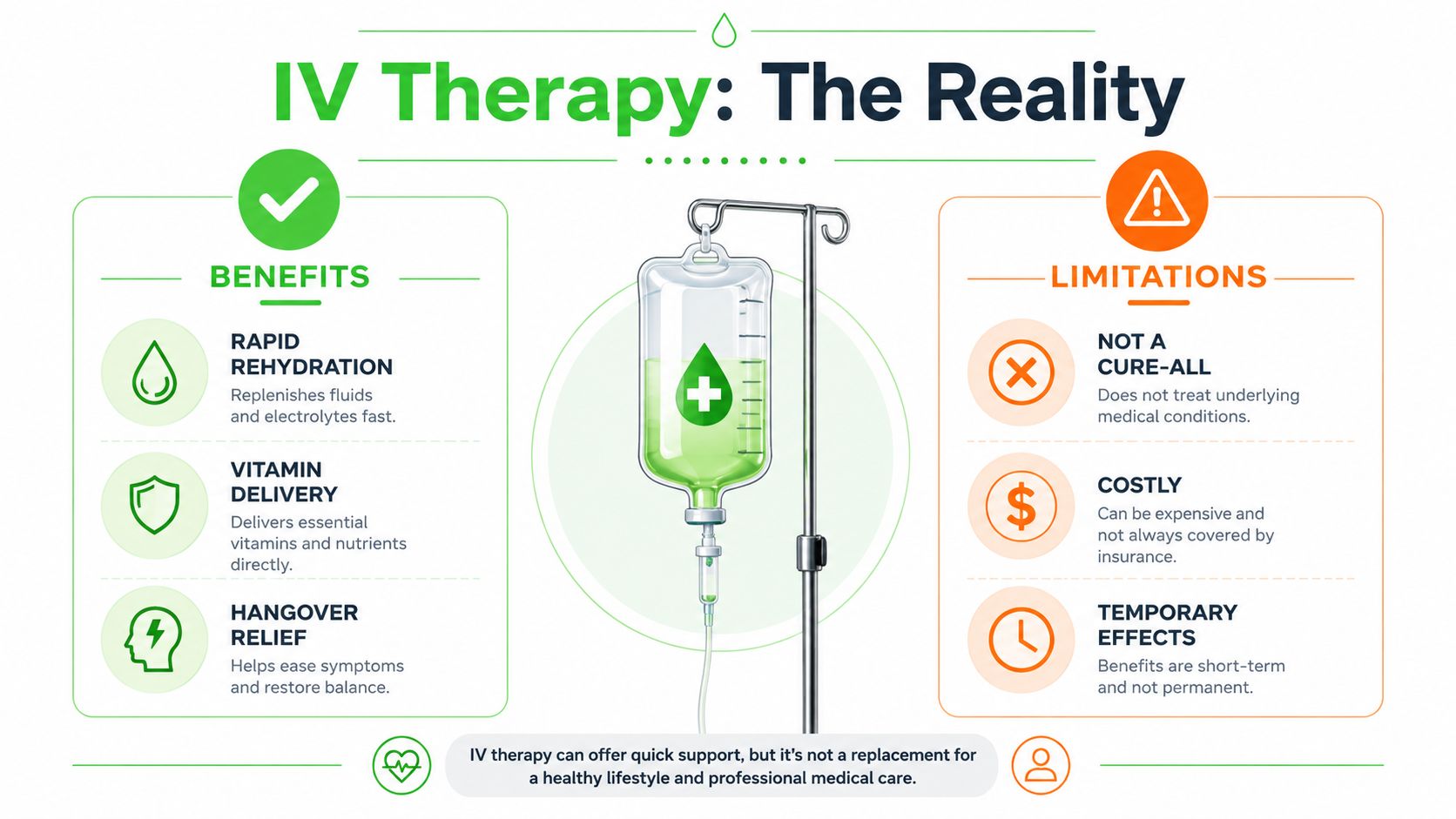
The strongest case for IV drip therapy is targeted fluid and nutrient delivery when oral intake isn't working well. Direct intravenous access can restore circulating fluid more rapidly than oral replacement in appropriate dehydration. It can also provide selected nutrients or medications when a clinician has a clear reason to use that route.
That doesn't make every wellness claim reliable. Healthy people who can eat and drink normally don't automatically gain a medical advantage from receiving vitamins through a vein. A drip also isn't a universal cure for hangovers, jet lag, chronic tiredness, poor sleep, or an unbalanced lifestyle.
Where the benefit is credible
A patient who has been vomiting may need fluid replacement because drinking isn't feasible. A person affected by heat may need assessment and rehydration. Someone with a confirmed nutritional or medical issue may require a specific intravenous component under professional direction.
The benefit is often practical rather than glamorous. A patient may be able to rest, rehydrate, and receive monitoring without travelling across Dubai while unwell. That can be valuable, particularly for an elderly person, a hotel guest, or someone with limited mobility.
Where marketing gets ahead of medicine
Claims about “detoxing”, guaranteed immunity, dramatic anti-ageing effects, or permanent energy improvement should prompt questions. The Canadian evidence review of home IV administration identified one systematic review and five non-randomised studies, with the evidence focused mainly on clinical home-care contexts rather than broad consumer wellness use. Review the Canadian evidence assessment of home IV therapy.
A realistic consultation should explain what the infusion may help, what it won't treat, and what alternatives exist. It should also tell you when the provider would recommend a clinic, emergency department, laboratory testing, or follow-up with your usual doctor.
A good infusion plan has an exit point. If symptoms persist, recur, or worsen, the next step is reassessment, not simply another bag.
Safety Standards and DHA Regulation in Dubai
The assumption that any nurse with an IV bag can provide safe treatment is wrong. Dubai has a formal healthcare regulatory framework overseen by the Dubai Health Authority, established under Law No. (6) of 2018 as the sole regulator of healthcare services in the emirate. Clinics and mobile providers offering IV infusion must hold a valid DHA facility licence, and the practitioners administering treatment must be DHA-registered. Learn more about IV drip safety in Dubai.
That requirement applies whether the infusion happens in a medical centre, hotel room, office, or private home. Licensed home-health delivery is still healthcare delivery. The setting changes, but the standards surrounding the facility, practitioner, equipment, and clinical process remain important.
What to verify before booking
Ask direct questions before agreeing to treatment:
- Facility licensing: Confirm that the organisation is authorised to provide the service in Dubai.
- Practitioner registration: Ask who will administer the infusion and whether that professional is DHA-registered.
- Clinical screening: Check whether the provider reviews symptoms, medical history, allergies, medications, pregnancy status where relevant, and known conditions before selecting a formulation.
- Ingredient transparency: Request the full ingredient list, dose, expiry information, and preparation details.
- Sterile technique: Confirm that the catheter and infusion equipment are sterile and intended for single use.
- Escalation planning: Ask what happens if the patient develops a reaction, worsening symptoms, or a problem that requires higher-level care.
Unlicensed services can expose patients to preventable hazards, including infection, incorrect dosing, poor documentation, and unverified ingredients. A polished website or attractive price doesn't answer those safety questions.
For urgent assessment at a home, hotel, or office, DHA-regulated doctor home visits in Dubai may be more appropriate than booking an infusion from a provider that offers no clear medical evaluation. The safest clinician may be the one who says IV therapy isn't necessary.
When At-Home IV Therapy Makes Sense
Home IV therapy is most useful when the patient needs a clinically appropriate infusion but travelling would add unnecessary difficulty. An elderly person with limited mobility may be more comfortable in familiar surroundings. Someone recovering after a procedure may find a home visit easier than navigating transport. A hotel guest may prefer discreet in-room care rather than trying to find an unfamiliar clinic while unwell.
The same arrangement can suit a busy professional who is stable, able to communicate clearly, and seeking assessment for a problem that doesn't require emergency diagnostics. Office visits may also reduce disruption when a clinician can assess the patient safely on site.
Compare the setting with the clinical need
| Situation | Home visit may fit | Clinic or hospital may fit better |
|---|---|---|
| Stable dehydration with unreliable oral intake | A qualified clinician can assess and provide appropriate fluid replacement | A facility is preferable if tests, observation, or treatment escalation may be needed |
| Elderly or mobility-limited patient | Familiar surroundings can reduce travel strain | Hospital care is needed for acute deterioration |
| Hotel guest with mild, stable symptoms | Discreet in-room assessment can be practical | Emergency symptoms or uncertain diagnosis require higher-level care |
| Office worker with fatigue | Assessment can identify whether hydration is relevant | Persistent or unexplained fatigue needs medical investigation |
| Severe vomiting, confusion, fainting, or breathing difficulty | Home care shouldn't delay emergency response | Emergency services or hospital assessment is the safer route |
The location isn't the main decision. Clinical stability is. A home visit should include assessment, documentation, monitoring, and clear advice about what to do next. It shouldn't be used to avoid hospital care when the patient may need imaging, laboratory testing, continuous observation, or emergency intervention.
Market data also suggests that home-based care is becoming commercially significant. One UAE estimate places the home infusion services market at around USD 180 million, while UAE IV hydration therapy estimates project continued growth. See the UAE-focused market perspective on home infusion and IV hydration. Those figures indicate demand, not that every home infusion is clinically necessary.
How Vitals Healthcare Delivers IV Drip Therapy
Vitals Healthcare Doctor On Call offers home, hotel, and office medical visits across Dubai, including IV hydration and multivitamin therapy administered by licensed professionals. The patient experience begins with a WhatsApp or phone consultation, where the team gathers the basic symptoms, location, relevant history, and reason for requesting treatment.
If a home infusion is suitable, a DHA-licensed nurse attends the location and performs a bedside assessment before starting. The clinician confirms the intended formulation, prepares the equipment, places the IV catheter, monitors the patient during the infusion, and provides post-treatment guidance. If the assessment indicates a need for diagnostics, referral, or a higher level of care, the plan should change accordingly.
Practical service details
The service is available 24/7, with an average arrival time of around 30 minutes, subject to area and demand. Coverage includes Dubai Marina, Downtown, Palm Jumeirah, JLT, Arabian Ranches, and other residential, business, and hotel districts.
Patients can coordinate digitally, receive follow-up updates, and use cash, card, or online payment options. Invoices can be provided for insurance claims, although coverage depends on the individual policy and treatment circumstances.
Public reviews can help patients compare providers, but they're only one part of due diligence. Fresha lists an average of 4.0 stars from 5,611 reviews across 28 venues in Dubai, with listed IV drip prices ranging from AED 400 to AED 1,799. Review Dubai IV drip listings on Fresha. TripAdvisor also shows publicly trackable feedback for individual providers, including the IV Wellness Lounge Clinic listing with 10 total reviews and a visible sequence of 9 of 10 reviews on one listing view. See the TripAdvisor review listing.
Reviews can indicate service experience, responsiveness, and consistency, but they can't confirm whether an infusion is appropriate for your medical condition. Check licensing, ask what's in the drip, and prioritise clinical assessment over star ratings.
For a broader view of Vitals Healthcare's medical care at your doorstep in Dubai, consider how home visits, diagnostics, nursing, and referral coordination fit together rather than viewing IV therapy as an isolated wellness purchase.
Vitals Healthcare Doctor On Call offers 24/7 DHA-regulated doctor and nurse visits to Dubai homes, hotels, and offices, including clinically assessed IV hydration and multivitamin infusions. If you're unsure whether IV drip therapy is suitable, visit Vitals Healthcare Doctor On Call to arrange an assessment and discuss the safest next step.