

A Dubai resident usually starts this search after a real disruption, a knee operation, a flare-up of back pain, or a parent who can't keep riding between the car park, lobby, and clinic reception. Then the first quote lands in WhatsApp, and the numbers don't seem to match. One provider sounds like a routine visit, another sounds like premium concierge care, and a third leaves out travel, assessment, or follow-up entirely.
That confusion is exactly why physiotherapy at home cost needs to be read as a full bill, not just a session fee. The NHS reference cost evidence shows home physiotherapy has long been priced as a distinct service line, with a home visit listed at £57.26 per unit in the 2017–18 reference schedule and a blended community rehabilitation model at £35.31 when visits from a physiotherapist and assistant were combined (NHS reference cost analysis). Private care also sits at a higher unit price than public assumptions, with one structured analysis listing £75.00 per hour for private at-home physiotherapy versus £38.53 for NHS activity (private versus public rehab cost analysis).
A clearer way to think about it is simple. The quote you see is like the base fare on a ride, but the final total can still change if the route, waiting time, and luggage are different. In home physiotherapy, the “luggage” is often the first assessment, travel, equipment, and reporting.
For more background on how home care services are organised in Dubai, see Vitals Healthcare's home care guide.
Table of Contents
- Breakdown of Home Physiotherapy Pricing in Dubai
- Factors Influencing Home Physiotherapy Cost
- Package Options Versus Single Session Rates
- How to Estimate Your Total Expense
- Customer Reviews and Price Transparency
- Conclusion and Next Steps
Breakdown of Home Physiotherapy Pricing in Dubai
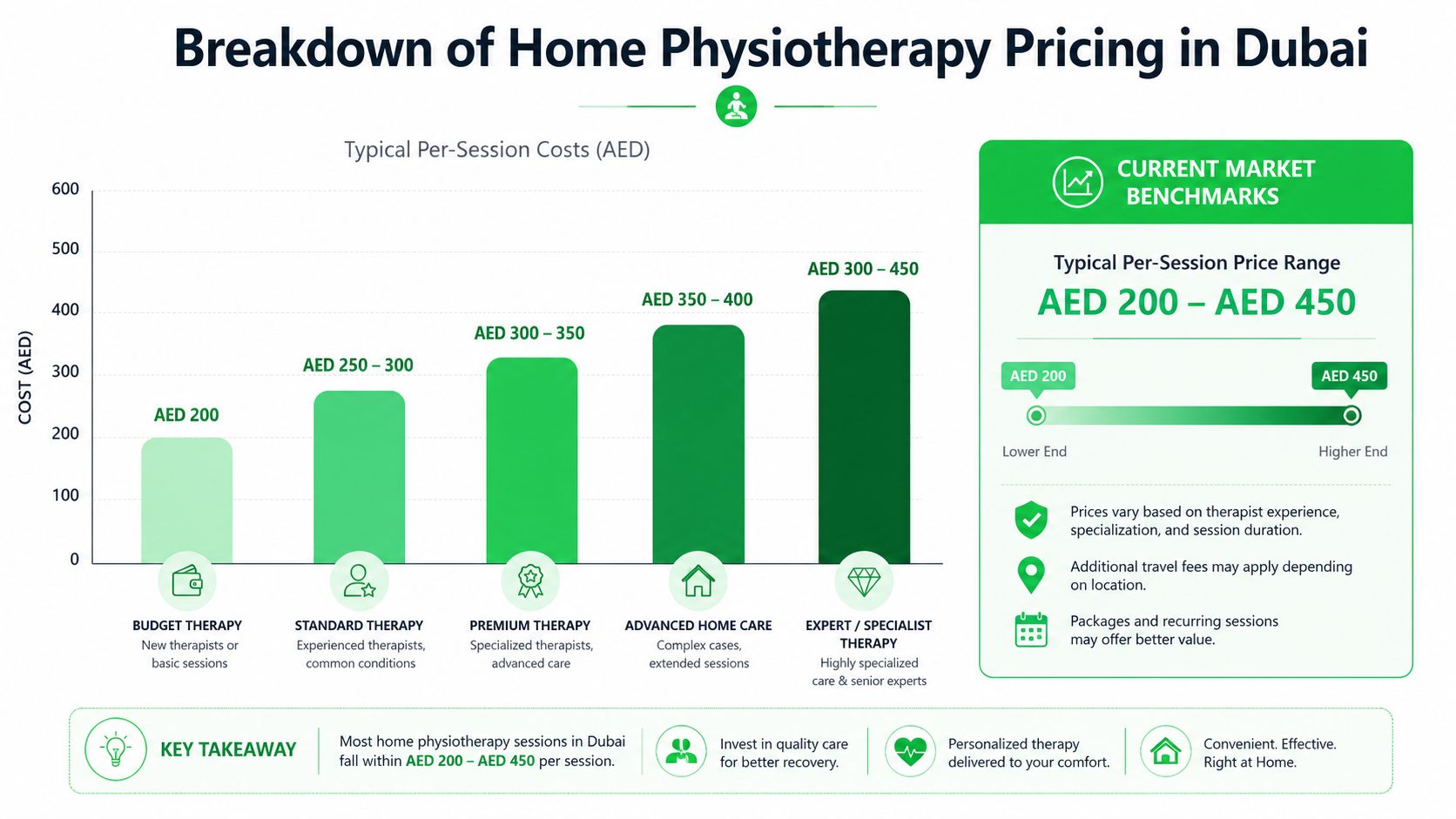
A practical way to read physiotherapy at home cost in Dubai is to split the quote into the visible session fee and the service layers tucked inside it. A provider may advertise one simple number, yet that number can still include travel, setup time, assessment, or the extra coordination needed for a home visit. That is why two quotes that look similar on WhatsApp can lead to very different final bills.
What the headline quote usually means
A headline quote often covers one appointment, but that appointment may still leave out items a patient expects by default. In Dubai, a common comparison is usually between a basic session fee and a fuller service that includes the first assessment, travel, a written plan, and any added handling for post-op recovery or limited mobility. The number can look affordable at first, then rise once those items are added.
Practical rule: if a quote only names the hourly rate, treat it as incomplete until the provider says whether the first assessment, travel, and equipment are included.
Why private home care costs more than public assumptions
Home physiotherapy is treatment delivered in the patient's own space, so the provider is not only selling exercise guidance. The therapist is also spending time on travel, arrival, setup, and adapting the session to the home environment, which is closer to a doorstep service than a standard clinic slot. A structured examination of post-injury rehabilitation found private at-home physiotherapy averaged £75.00 per hour compared with £38.53 in public outpatient settings, which helps explain why home visits are usually priced as a higher-touch delivery model (cost analysis of post-injury rehabilitation).
A second Dubai-specific point matters for anyone comparing home health services. People who look at home doctor visit pricing in Dubai often already expect doorstep care to cost more than a clinic seat, because the convenience is built into the service. Physiotherapy works the same way, but the final bill can also include small add-ons that are easy to miss if the quote is not broken down clearly.
Those hidden add-ons are usually where confusion starts. Travel coverage, first-visit assessment, equipment use, and written follow-up notes may be bundled into one provider's price and charged separately by another, so the same-looking quote can mean different things in practice. The patient who checks the fine print early usually avoids the surprise of paying for pieces that seemed included from the start.
Factors Influencing Home Physiotherapy Cost
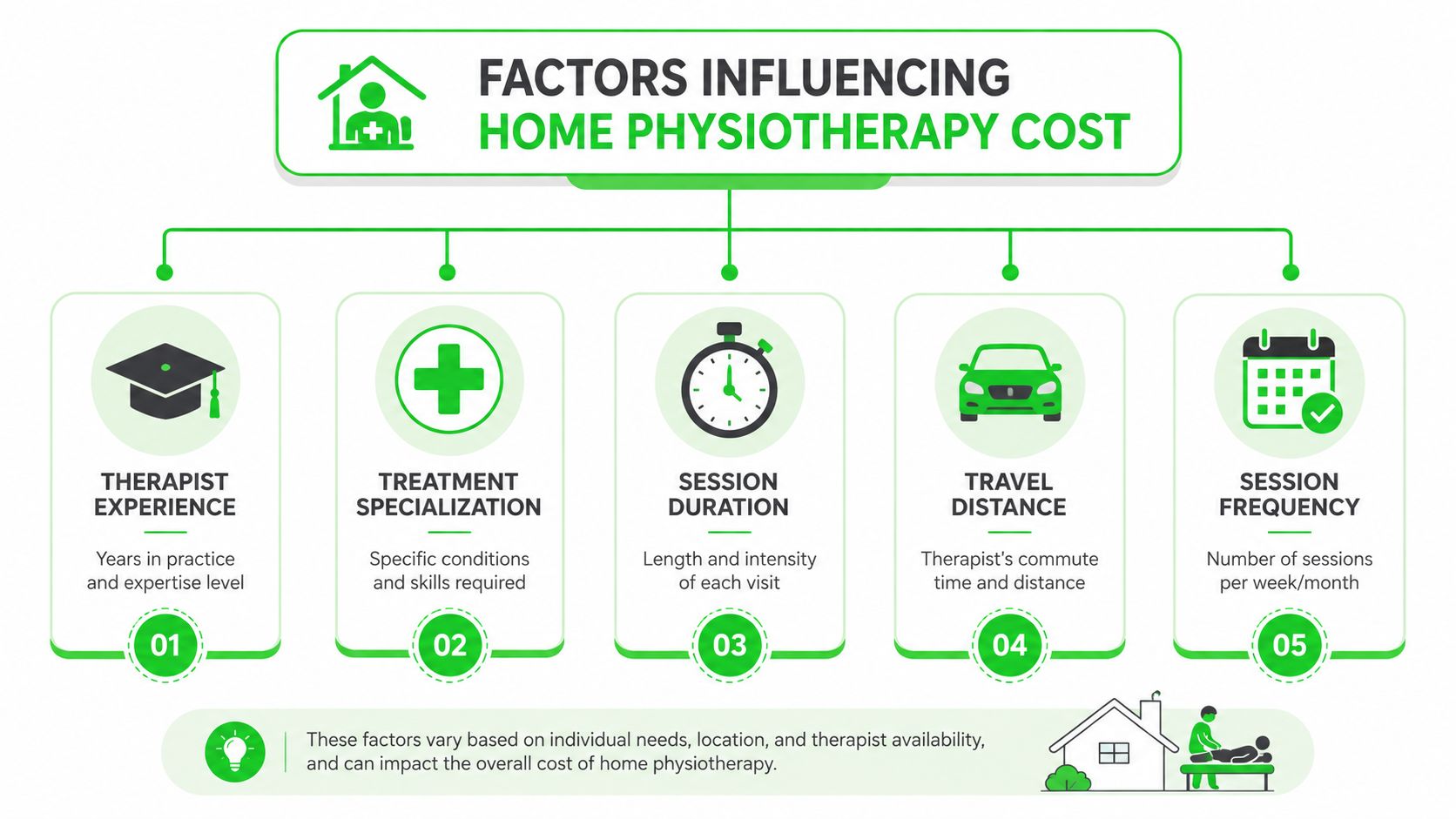
The fastest way to compare quotes is to ask what changes the invoice before the first visit is booked. Most home physiotherapy pricing differences come from practical variables, not marketing. Once you see those variables, AED 250 and AED 450 stop looking like random numbers and start looking like different service bundles.
Therapist level and clinical scope
A senior physiotherapist, an assistant, and a specialist handling post-op rehabilitation won't be priced the same way. The reason is straightforward, experience changes how much clinical judgement is being sold alongside the exercise session. For a simple follow-up, a basic visit may be enough. For a complex recovery plan, you're paying for decision-making as much as movement training.
Session length and treatment intensity
A short follow-up and a long rehabilitation block are not the same product. The longer the appointment, the more likely the provider is to build in extra observation, hands-on work, or progress checks. That matters because a quote that looks manageable for 30 minutes can feel very different once the patient needs 60 or 90 minutes of guided treatment.
Travel, timing, and equipment
Travel is one of the biggest hidden levers. Providers in the UAE often bundle a basic per-session fee but then separately charge for the initial assessment, travel, and equipment, which creates wide variance in all-inclusive quotes (price-bundle breakdown example). If the visit needs extra devices, a therapist arriving during a difficult traffic window, or a clinician moving across a wide catchment area, the fee usually reflects that.
Useful question: “Does this price include the first assessment, therapist travel, and any equipment used during the visit?”
Reporting and language needs
Some patients need a written plan, bilingual reporting, or handover notes for a surgeon, GP, or family member. Those services don't always show up in the base fee, yet they can affect the quote more than people expect. That's why the cheapest number is not always the cheapest service.
For help choosing a provider, this physiotherapist selection guide is a practical starting point.
Package Options Versus Single Session Rates
Single sessions make sense when the need is uncertain, such as a one-off reassessment or a second opinion. Packages make more sense when the treatment plan is already clear, especially after surgery or when mobility work needs consistency. The financial trade-off is simple, a package usually lowers the per-session cost, while a one-off appointment keeps flexibility.
The first bill to watch is often the assessment. Several sources note that initial evaluation fees can sit in the $100 to $400 range before lower follow-up prices begin (assessment fee benchmark). That means the first visit can distort the whole budget if you only look at the follow-up rate.
Common Home Physiotherapy Packages
| Package Type | Sessions Included | Total Price AED | Per Session AED |
|---|---|---|---|
| Starter package | 5 | Varies by provider | Lower than single visits |
| Standard course | 10 | Varies by provider | Lower than single visits |
| Extended rehab plan | 20 | Varies by provider | Lowest per session in many cases |
The exact AED figures vary too much by provider and need to be quoted case by case, so it's safer to treat the table as a planning structure rather than a fixed tariff. A package is usually the better fit if the therapist already expects repeated visits and the patient wants predictable scheduling. A single appointment is better if the main goal is assessment, not a full plan.
For sports-related recovery examples and package discussions, Vitals Healthcare's sports injury physiotherapy guide is useful background.
How to Estimate Your Total Expense
A realistic budget starts with the full treatment path, not just one session price. If you only multiply the visit fee, you miss the first assessment, any travel-related charge, and the savings that come from avoiding taxis, parking, and time spent helping the patient get to a clinic. The easiest way to think about it is like a receipt with several lines, not a single number.
Start with visit count, not just the fee
A home physiotherapy plan is usually priced by how many visits it needs. One home physiotherapy charging guide shows that a 12-week plan with two visits per week can range from $1,200 to $8,400, depending on session length and provider (home physiotherapy charging guide). That spread is wide, but the budgeting lesson is simple, the total is shaped more by the number of sessions than by the rate on a single visit.
A basic formula keeps the estimate grounded:
Total cost = assessment fee + number of sessions × session rate + any extra charges
That formula works better than a headline price because it follows how real rehab plans are billed. A therapist may quote one fee for treatment, then add a separate first assessment or another charge for travel, equipment use, or written notes. Those small items can change the total in the same way a few hidden ingredients change the final cost of a meal.
Two common planning scenarios
A post-operative knee rehab plan may look affordable if you only inspect the per-session rate. The first appointment often includes the assessment, so the opening bill can be higher than the later visits. If the patient needs repeated sessions across several weeks, the visit count becomes the primary driver of cost.
Chronic back pain can raise the total in a different way. The sessions may be shorter, but they may happen more often, which slowly pushes the course price upward even when each appointment feels manageable on its own. That is why a family should estimate the whole treatment arc before agreeing to a plan.
Budgeting rule: compare the full course of care over weeks, not the fee for one day.
Compare home care with the indirect costs of travelling
A home visit can look more expensive on the invoice and still cost less for the household. The reason is simple. A clinic trip often brings extra spending on transport, parking, and the time a caregiver loses while escorting the patient. Those indirect costs do not always appear on paper, but they still affect the budget.
A review from the NHS-backed review found that home therapy had a lower direct cost in the evidence it examined, and the same review also reported lower total spending for the home physiotherapy group than for day-hospital patients over the first eight weeks (NHS-backed review). Those figures are not Dubai tariffs, but they show the budgeting logic clearly. Once travel, parking, repeated trips, and caregiver time fall away, the home option can end up cheaper over the full episode of care.
Customer Reviews and Price Transparency
Reviews matter because they reveal what the quote didn't say. In Dubai, patients often compare the number they were first given against what showed up on the invoice, and the surprise usually comes from extras rather than the base session fee. That is why the best review reading isn't “Was the therapist nice?” It's “What did people say was included?”
What to look for in reviews
The most useful comments usually mention whether the provider charged separately for travel, the first assessment, equipment, or written reports. If multiple reviews mention the same add-on, treat that as a real pricing pattern, not a one-off complaint. Transparency is especially important in home care because the patient is buying convenience, and convenience is easy to underquote and overinvoice.
Why cheaper per visit can still cost less overall
Even when the session price is higher, the full course can still come out lower for some families because there's less spending on transport, parking, and caregiver time. That's the core reason reviews should be read alongside the quote, not instead of it. A home session that seems premium may reduce the total household burden once the hidden costs of travel disappear (indirect cost comparison).
If you want a provider that documents care clearly, Vitals Healthcare's treatment-quality page is worth checking alongside patient feedback.
Conclusion and Next Steps
The clearest way to judge physiotherapy at home cost is to ask what the fee includes, how often the therapist needs to come back, and what the total course will cost after the first assessment. Home visits usually cost more per session than clinic care, but they can still be the smarter option when travel, parking, and caregiver time are part of the total bill. The best quotes are itemised, specific, and honest about travel, equipment, and reporting.
For Dubai residents, that means comparing like with like, not just a session fee against another session fee. Ask whether the first assessment is included, whether travel is already built in, and whether a package lowers the total cost over the full rehab plan. That's how you turn a confusing quote into a fair decision.
If you want doorstep care with clear billing, Vitals Healthcare Doctor On Call offers DHA-licensed home physiotherapy alongside doctor visits, nursing, and other at-home services across Dubai. Visit Vitals Healthcare Doctor On Call to request a home physiotherapy quote, compare what's included, and book care that fits your recovery plan.