

A lot of families search what is elderly care home at the exact moment life starts to feel a little less manageable.
A father who was steady on his feet now needs help getting from bed to bathroom. A mother who once ran the household forgets her tablets, skips meals, or feels unsafe when left alone for long stretches. In Dubai, that worry often grows. One family member starts staying over more often. Another rearranges work calls. Everyone is trying to help, but no one is sure what kind of care fits.
That's where confusion usually begins. Some people picture a hospital. Others imagine a hotel with nurses. Others assume an elderly care home is the only serious option once an older parent needs daily support. In the UAE, that's not the full picture. Residential elderly care exists, but it's limited and tightly regulated, and many families end up choosing organised support at home instead.
The useful question isn't only “What is an elderly care home?” It's also, “What problem are we trying to solve for our loved one, and which care setting solves it with the most dignity, safety, and calm?”
Table of Contents
- Introduction to Elderly Care Homes and Why Families Consider Them
- What an Elderly Care Home Really Means
- How Residential Care Homes Differ From At Home Elderly Care
- Services You Can Expect Inside an Elderly Care Home
- Elderly Care Homes in the UAE and Dubai Regulatory Context
- How to Choose the Right Elderly Care Option for Your Family
- Making Confident Care Decisions for Your Loved Ones
Introduction to Elderly Care Homes and Why Families Consider Them
A family in Dubai often reaches this point gradually, not in one dramatic moment. At first, the signs are easy to dismiss. Your mother needs more help bathing. Your father becomes unsteady when walking to the kitchen. Medication boxes pile up, but the tablets inside don't seem to disappear.
Then one day, someone says it aloud. “Can we still manage this at home?”
That question carries a lot of emotion. Families may feel guilt, relief, fear, and confusion all at once. They want safety, but they also want their loved one to feel respected. They want proper medical support, but they don't want to uproot someone who feels settled in familiar surroundings.
A search for an elderly care home usually begins because families are trying to answer a practical problem:
- Safety at home: Falls, wandering, missed medicines, and difficulty using the bathroom alone.
- Caregiver strain: One daughter, son, or spouse can't do everything every day.
- Medical complexity: Nursing tasks, wound care, mobility support, or regular monitoring may be needed.
- Isolation: An older adult may spend most of the day alone even when the family is loving and involved.
If you're noticing these patterns, a guide on the signs an elderly loved one needs care can help families put words to what they're already seeing.
Families rarely struggle because they don't care enough. They struggle because care needs have grown beyond what love alone can organise.
In Dubai, that decision is rarely just about “moving to a home”. It's usually about matching the right kind of support to the level of need. Some older adults need a residential setting. Others need nursing, physiotherapy, medication help, or companionship while staying in their own flat or villa.
When families understand the difference, they stop making fear-based decisions. They start making care-based ones.
What an Elderly Care Home Really Means
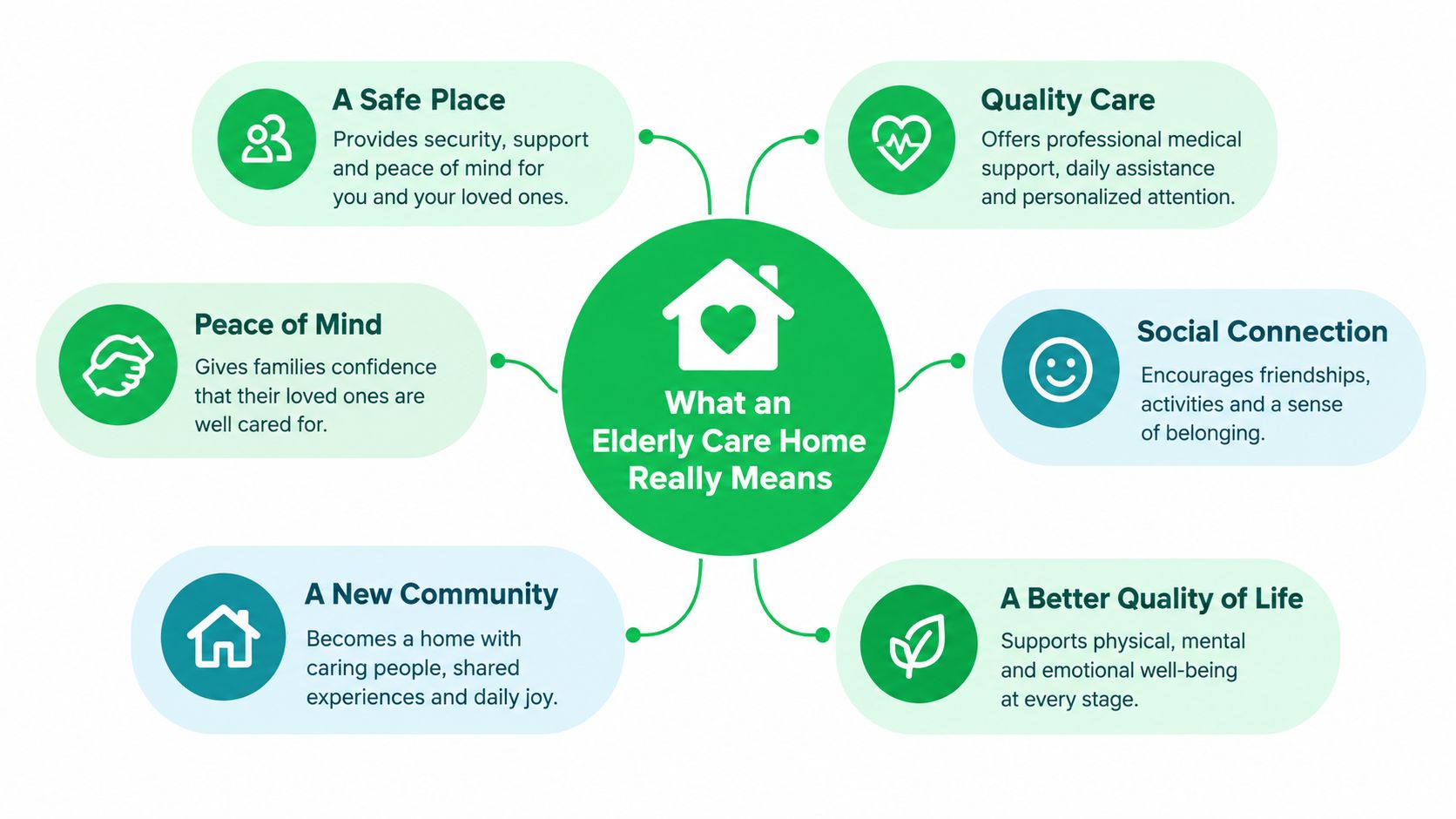
An elderly care home is a residential place where an older adult lives and receives ongoing support with daily life, safety, and health needs. The simplest way to understand it is this. It combines housing, supervision, meals, routine assistance, and organised care in one setting.
It isn't the same as a hospital. Hospitals are built for diagnosis, urgent treatment, and short-term medical management. It also isn't the same as a hotel, where comfort is offered but care is not the main purpose.
Think of an elderly care home as a supported community. A resident has a room or living space, but they're not left to manage everything alone.
What daily life usually includes
Most families expect “care” to mean medical tasks only. In reality, residential elder care often revolves around ordinary daily moments:
- Personal support: Help with bathing, dressing, grooming, toileting, and moving safely.
- Routine structure: Meals arrive on time, medicines are organised, and staff notice changes in mood or function.
- Supervision: Someone is nearby if a resident becomes confused, weak, or needs assistance.
- Social contact: Shared meals, conversation, and planned activities can reduce loneliness.
Ageing care is often less about dramatic treatment and more about preventing small daily problems from becoming major ones.
Independence doesn't disappear
Families sometimes hear “care home” and assume it means giving up freedom. That's not the right mental picture. A well-run elderly care home should support as much independence as a person can safely keep. One resident may only need reminders and standby help. Another may need hands-on support several times a day.
The right care setting doesn't replace a person's identity. It protects their routines when they can't manage those routines alone.
The environment itself also affects wellbeing. Small details such as quieter rooms, clean air, regular sleep routines, and reduced overnight disturbance can make a real difference to comfort. Families thinking about living conditions may find this practical discussion of sleep quality for assisted living useful when evaluating the day-to-day experience of residential care.
For families in Dubai, it also helps to understand how residential care compares with home-based support. This side-by-side guide on home health care vs nursing home can clarify which setting fits a parent's actual needs rather than the label alone.
How Residential Care Homes Differ From At Home Elderly Care
The decision most Dubai families face isn't abstract. It's practical. Should your loved one move into a residential care setting, or should care come to them at home?
Both models aim to keep an older adult safe and supported. The difference is where life happens. In one model, the person moves into the care system. In the other, the care system comes into the person's existing life.
The simplest difference
A residential care home gives support in a shared, organised living environment. At-home elderly care keeps the older adult in familiar surroundings while nurses, doctors, therapists, or caregivers visit according to need.
That difference changes everything from sleep habits to family visiting patterns.
Daily life feels different
At home, your loved one wakes up in their own room, hears familiar sounds, and uses their own chair, kettle, prayer space, and routine. That familiarity often reduces distress, especially for people who become unsettled by change.
In a residential setting, support is more continuously available on-site, but the person must adapt to a new environment, new schedules, and communal living norms.
Here's a clear comparison.
| Feature | Residential Care Home | At Home Elderly Care |
|---|---|---|
| Living environment | The older adult lives in a dedicated residential facility | The older adult remains in their own home |
| Daily routine | More standardised around the facility's schedule | More flexible around the person's existing habits |
| Family involvement | Visits are organised around the facility setting | Family can remain closely involved in day-to-day life |
| Level of familiarity | New room, staff, and shared environment | Familiar furniture, neighbourhood, and routines |
| Clinical support | On-site support within the facility model | Visits can include nursing, doctor reviews, physiotherapy, and monitoring at home |
| Best fit | People who need sustained supervision in a residential setting | People who need support but benefit from staying in familiar surroundings |
In Dubai, the home option often becomes the practical option
Many families assume residential care is the standard pathway because that is what they've seen in other countries. In Dubai, home-based elder support often plays the larger role in real life. A helpful overview of elderly care in Dubai shows how nursing, medical support, and daily assistance can be organised without requiring a move.
A useful rule is this. If the main problem is support with daily life and regular clinical follow-up, home care may solve it well. If the main problem is constant supervision in a residential environment, a care home may be more appropriate.
What families often get wrong
The most common mistake is choosing based on labels instead of needs.
A parent who needs medication support, wound care, mobility therapy, and regular doctor review may not need to leave home at all. Another older adult with severe confusion, repeated wandering, or a situation where no safe home support can be maintained may need a more structured residential setup.
The right answer depends less on the phrase “elderly care home” and more on these questions:
- Can your loved one stay safe overnight?
- Can medication and hygiene be managed reliably?
- Can the family sustain the current arrangement without burning out?
- Does the person become calmer at home, or safer in constant supervised residence?
When families answer those honestly, the decision becomes much clearer.
Services You Can Expect Inside an Elderly Care Home
Families often ask, “What happens inside an elderly care home all day?” That's the right question. Good elder care isn't defined by a building. It's defined by the services delivered inside it and how well those services match the person.
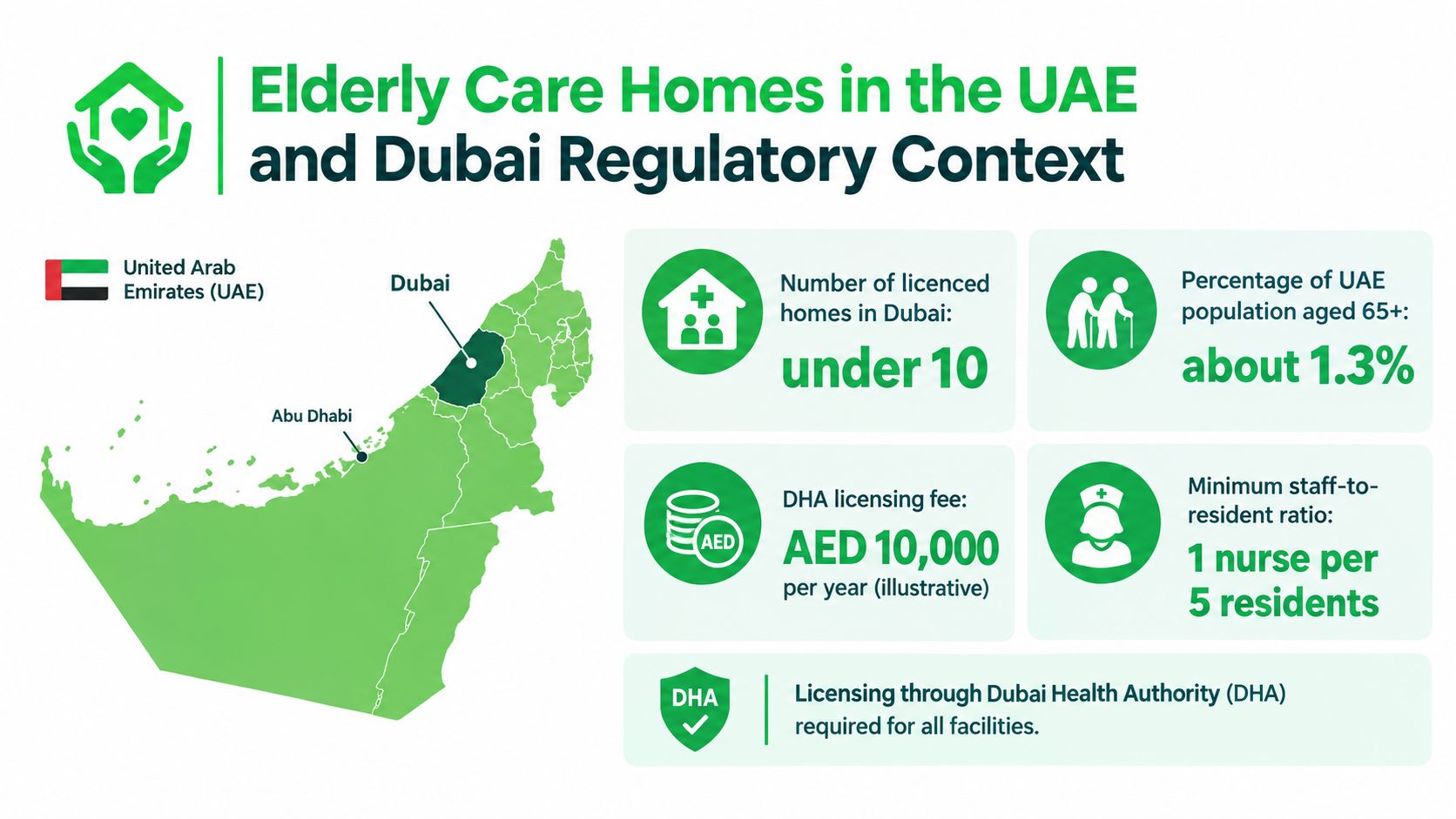
This local context matters too. One UAE study reported only two residential aged care facilities dedicated exclusively to older people, while 62% of respondents knew someone receiving care at home and 32% knew someone in a residential facility or hospital, according to the UAE aged care report. That helps explain why many families have less direct experience of care homes than of home-based support.
Daily living support
This is the backbone of elder care, and it's often the part families need most.
Residents may receive help with bathing, dressing, toileting, grooming, and moving between bed and chair. Staff also support meal routines, hydration, and basic comfort. These tasks can sound simple on paper, but they shape dignity more than almost anything else.
A good service should ask not only “Can we do this task?” but also “How does this person prefer it done?” Someone may like a shower in the evening, tea before medicine, or extra time to walk slowly rather than being rushed in a wheelchair.
Nursing and health support
Some residents need little more than reminders and observation. Others need hands-on clinical care. That may include medication administration, wound care, monitoring of chronic illness symptoms, mobility support, or coordination with doctors and therapists.
Families should ask very direct questions:
- Who gives medicines and how are they recorded?
- How are falls, confusion, or sudden illness handled?
- What happens if a resident needs urgent review?
- How are care plans updated when health changes?
For families comparing residential support with home-based nursing, this overview of nursing home services and related elder support options can help translate brochures into practical questions.
Wellbeing and social connection
An elderly care home should do more than keep someone fed and supervised. It should protect emotional health.
That may include conversation, simple group activities, mobility exercises, spiritual routines, or quiet companionship. For residents with memory decline, gentle structure can be especially important. Families exploring that aspect in more depth may find this guide on choosing dementia care for a loved one useful when thinking about supervision, environment, and communication style.
Person-centred care: The service should fit the older adult. The older adult should not be forced to fit the service.
When you tour a facility or review a care package, look for signs that staff know residents as people, not room numbers. That's often the clearest marker of quality.
Elderly Care Homes in the UAE and Dubai Regulatory Context
In some countries, asking about an elderly care home is like asking about a common neighbourhood service. In the UAE, the situation is different. Residential elder care exists, but it remains scarce, selective, and regulated, which is why many families end up exploring organised care at home.
One UAE ageing study reported that there were only two residential aged care facilities exclusively dedicated to older adults nationwide, while local senior services were mostly delivered through hospitals and home-based support, according to this UAE ageing and aged care analysis. The same study said the old-age dependency ratio in the UAE was 1.6 per 100 working-age people in 2020 and is projected to rise to 18.5 by 2050, while another estimate in that analysis found residents aged 60 and older were 5.1% in 2000 and expected to reach 23.6% by 2025. Those figures explain why long-term care planning has become a real system issue, not a niche family concern.
Why home care has become so central
Dubai has some formal elder-care infrastructure, but not a large nursing-home network. A Gulf News report citing Dubai Health Authority data said Dubai had about 22,000 elders and 2,290 disabled residents, with 619 patients registered for elderly home care in 2015, and noted that the UAE had only a few elderly residential homes, including one each in Dubai, Sharjah, and Ajman, as reported in this Gulf News coverage on unified elderly home care services.
That pattern helps families understand a local reality. In the UAE, elder care often means care delivered into the home, not necessarily relocation into a residential facility.
Regulation is not optional
This is one of the most important points for families in Dubai. Elder care services are not casual arrangements. The Dubai Health Authority requires a formal licence to operate an independent home healthcare facility, and home healthcare professionals must be DHA-licensed and registered. DHA standards also say standalone home healthcare facilities are recommended to become accredited within two years of licensure, according to the Dubai Health Authority home healthcare standards.
So when families compare options, the first filter shouldn't be marketing language. It should be governance, licensing, and clinical accountability. This checklist on how to choose quality elderly care services in Dubai can help you ask the right questions before agreeing to any plan.
In Dubai, regulated care means checking who is licensed, who supervises the care, and how the service responds when a patient's condition changes.
That local context changes the meaning of the original question. “What is an elderly care home?” in Dubai is not only a definition question. It is a system question about availability, regulation, and whether residential or home-based care is the more suitable route.
How to Choose the Right Elderly Care Option for Your Family
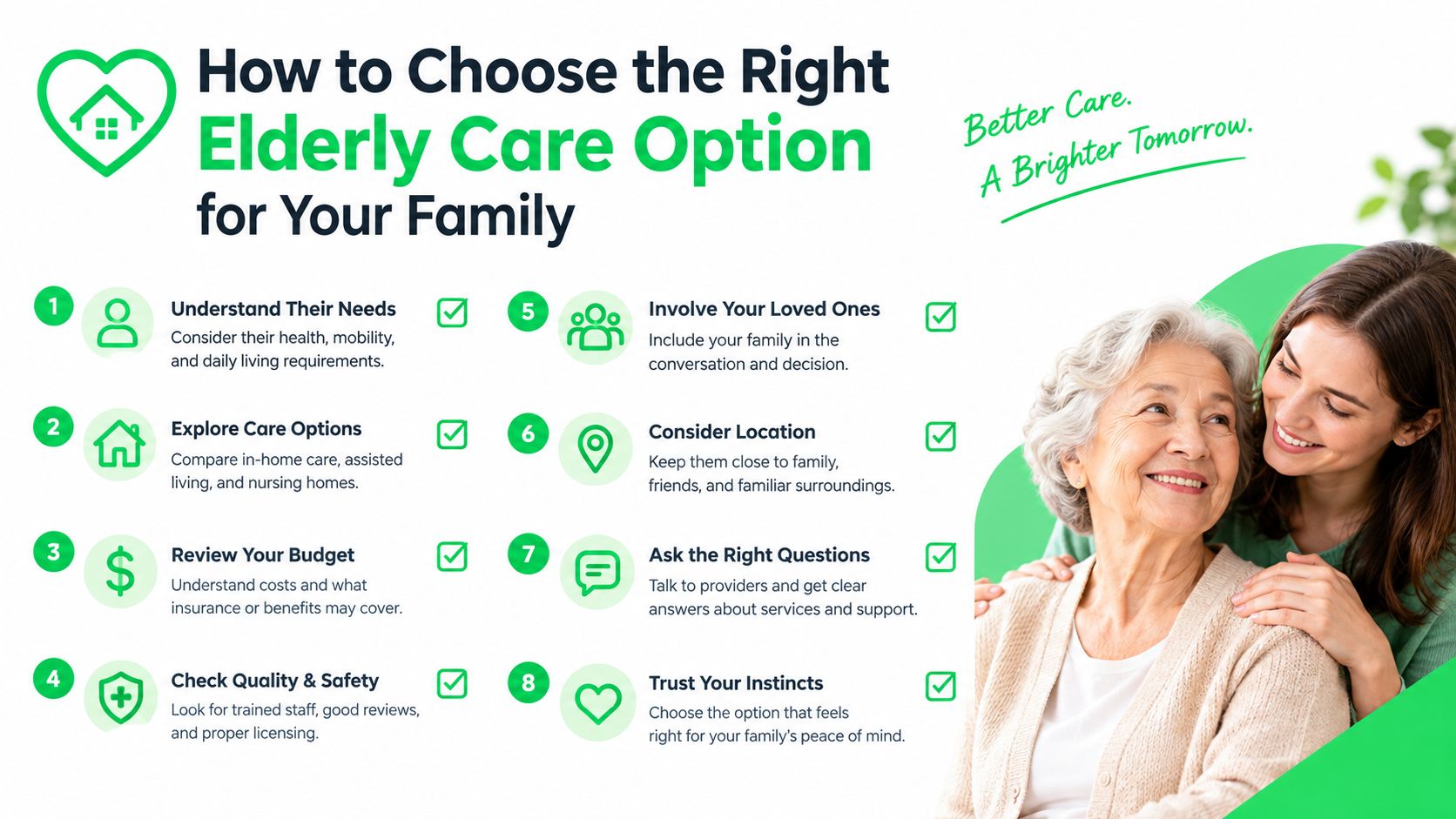
Once a family understands the care options, the next step is matching the person to the setting. Don't begin with the building. Begin with the older adult.
Start with the daily reality
Look at one ordinary day, not the family's best day.
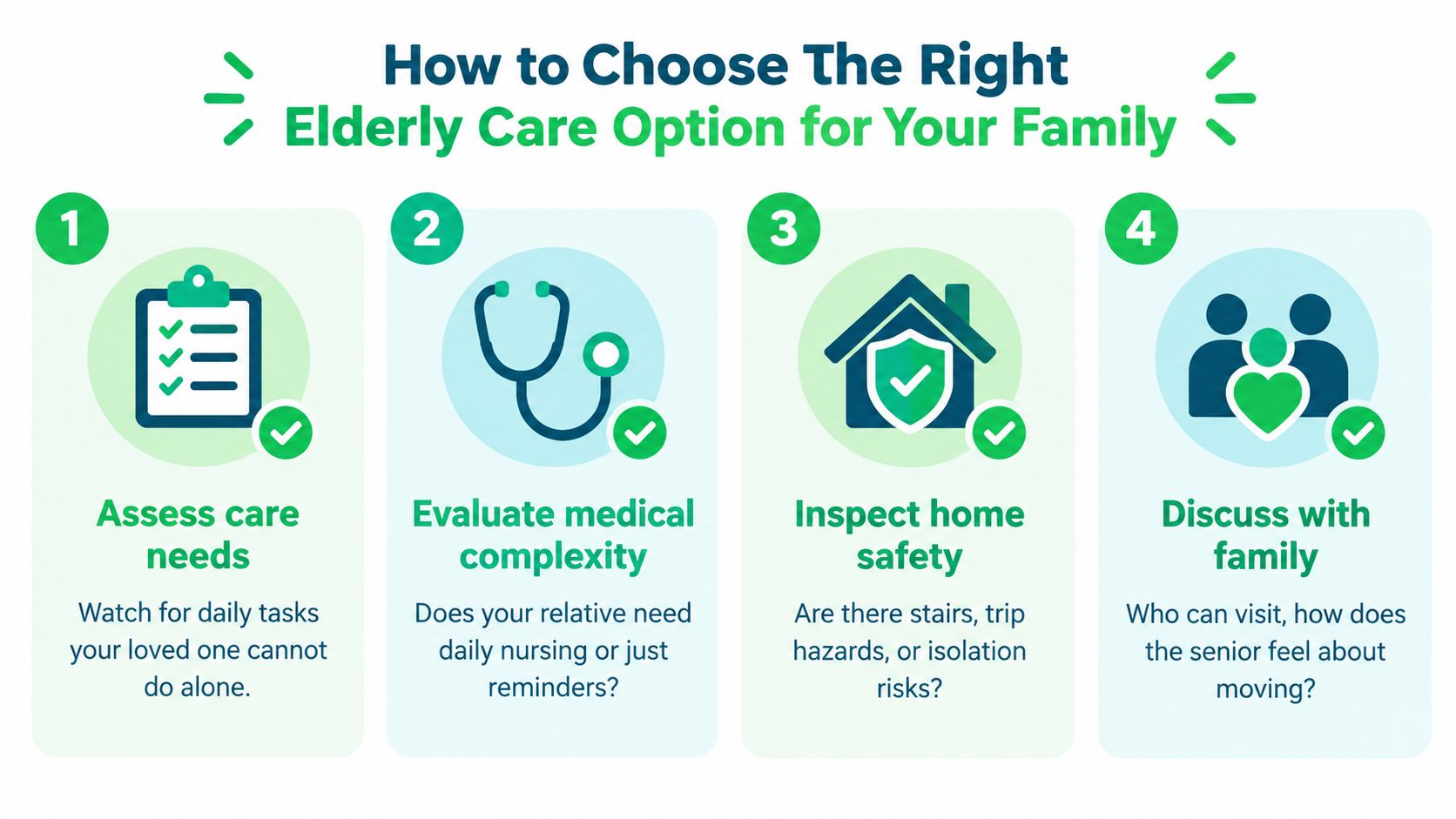
Can your loved one get to the toilet safely? Do they remember meals and medicines? Are transfers from bed to chair becoming risky? Do they become distressed when left alone? A care decision becomes much easier when the family describes actual tasks instead of speaking in broad terms like “slowing down”.
Home safety matters too. This practical resource on senior home safety guidance is useful for spotting common risks such as trip hazards, poor bathroom access, and unsafe room layouts.
Match need to setting
A simple framework helps:
- Choose home-based care when the person is more comfortable at home and the main need is organised support, nursing, rehabilitation, doctor review, or help with daily routines.
- Consider residential care when the person cannot be kept safe at home despite proper support, or when continuous supervision in a residential setting is more realistic.
- Reassess often because care needs change. The right plan today may not be the right plan six months from now.
Check the provider, not just the promise
Families should ask practical questions and write down the answers.
- Licensing: Are the clinicians DHA-licensed for the services being provided?
- Scope: Can the provider deliver nursing, doctor visits, physiotherapy, and testing if needs increase?
- Response: How quickly can help be organised when the patient worsens?
- Continuity: Will the family receive updates, care notes, and follow-up guidance?
- Fit: Does the service adapt to the older adult's routines, language, and mobility level?
For example, some Dubai families choose a structured home-care model that combines nursing, doctor home visits, physiotherapy, and lab support in one plan. Vitals Healthcare Doctor On Call is one such Dubai-based option that provides DHA-licensed doctor visits, nursing, physiotherapy, and lab tests at home, hotel, or office across the city. That kind of arrangement can suit families who want clinic-grade support without moving an older adult out of familiar surroundings.
Choose the setting that solves the real risk while preserving as much comfort and identity as possible.
The best decisions usually feel less dramatic than people expect. They feel practical, steady, and specific.
Making Confident Care Decisions for Your Loved Ones
An elderly care home is best understood as a residential support model for older adults who need help with daily living, safety, and ongoing care. That definition matters, but in Dubai, the practical reality matters just as much. Residential options are limited, regulated, and not always the first or most suitable answer for every family.
For many households, the more relevant question is whether their loved one needs to move into care or whether care can be built around them at home. When families separate those two ideas, they usually feel less overwhelmed. The conversation becomes clearer, calmer, and far more useful.
A good care decision protects three things at once:
- Safety, so risks such as falls, missed medication, or unmanaged illness don't escalate
- Dignity, so help is given in a respectful and personalised way
- Connection, so the older adult still feels part of family life, not removed from it
If you're unsure where to begin, start with observation. Watch one ordinary day closely. Note where support is needed. Then speak with a DHA-licensed provider who can assess whether residential care, home nursing, doctor visits, physiotherapy, or a blended plan makes the most sense.
Families don't need to solve everything in one conversation. They just need the next right step.
If your family is weighing an elderly care home against support at home, Vitals Healthcare Doctor On Call offers DHA-licensed doctor visits, nursing, physiotherapy, and lab tests delivered across Dubai to homes, hotels, and offices. That can help families arrange structured elder support without rushing into a residential move before it's necessary.