

At 11pm in Dubai, you're back in your Marina hotel after a spicy dinner, and a burning sensation is climbing behind your breastbone. You want relief now, not a lecture. This guide gives you a practical plan for علاج حرقة المعدة, including what to do in the first hour, which pharmacy options make sense, how to reduce repeat attacks, and when a Doctor On Call visit or emergency assessment is the safer choice.
Heartburn is often occasional, but persistent reflux deserves proper management. UAE reporting describes acid reflux and GERD as a common, recurrent digestive-health problem, with local commentary placing reported prevalence above 30% in some UAE clinical coverage and regional estimates ranging from 8.7% to 33.1%. Gulf News coverage of reflux in the UAE also notes that the condition is treated as chronic and recurrent rather than as an isolated symptom.
If you're uncomfortable tonight, start with the first-hour steps below. If symptoms are frequent, severe, or accompanied by warning signs, skip self-treatment and arrange medical care.
Table of Contents
- When Heartburn Hits and What You Need Right Now
- First-Hour Self-Care Steps You Can Do Tonight
- Choosing the Right Over-the-Counter Medication
- Everyday Habits That Prevent Heartburn From Coming Back
- Red Flags That Mean Stop Self-Treating
- When a Doctor at Home or Hotel Makes Sense
- Key Takeaways and Your Next Step in Dubai
When Heartburn Hits and What You Need Right Now
The first decision is simple. If the pain feels like pressure, squeezing, or heaviness, or comes with breathlessness, sweating, faintness, or pain spreading to the arm or jaw, treat it as an emergency rather than assuming it's reflux. Heartburn can feel similar to cardiac pain, and antacids aren't a safe test.
For a familiar, mild burning sensation after a heavy meal, stop eating and stay upright. Late-night pharmacies in Dubai, including those in major shopping centres, may help with basic over-the-counter options. Hotel guests can also ask the concierge to help contact a clinician, while regulated home healthcare services can assess patients at home, in hotels, or at offices.
The four problems this guide solves
- Relief tonight: Use posture, careful hydration, trigger avoidance, and an appropriate pharmacy medicine.
- Choosing an OTC option: Understand the difference between antacids, H2 blockers, and PPIs instead of taking random tablets.
- Preventing repeat episodes: Adjust meal timing, portions, smoking, and sleep positioning.
- Knowing when to escalate: Recognise alarm symptoms that need an ER or same-day clinician review.
Dubai's home healthcare market also includes DHA-regulated services. Dubai Health Authority home healthcare regulations require independent home healthcare facilities to hold a DHA licence and specify permitted healthcare professionals, including physicians, registered nurses, assistant nurses, and physiotherapists.
Practical rule: Mild, familiar reflux can often be managed initially. New, severe, persistent, or unexplained chest pain shouldn't be self-diagnosed.
Relief is realistic tonight, but the longer fix comes from reviewing recurring symptoms and following a structured treatment plan rather than repeatedly reaching for quick relief.
First-Hour Self-Care Steps You Can Do Tonight
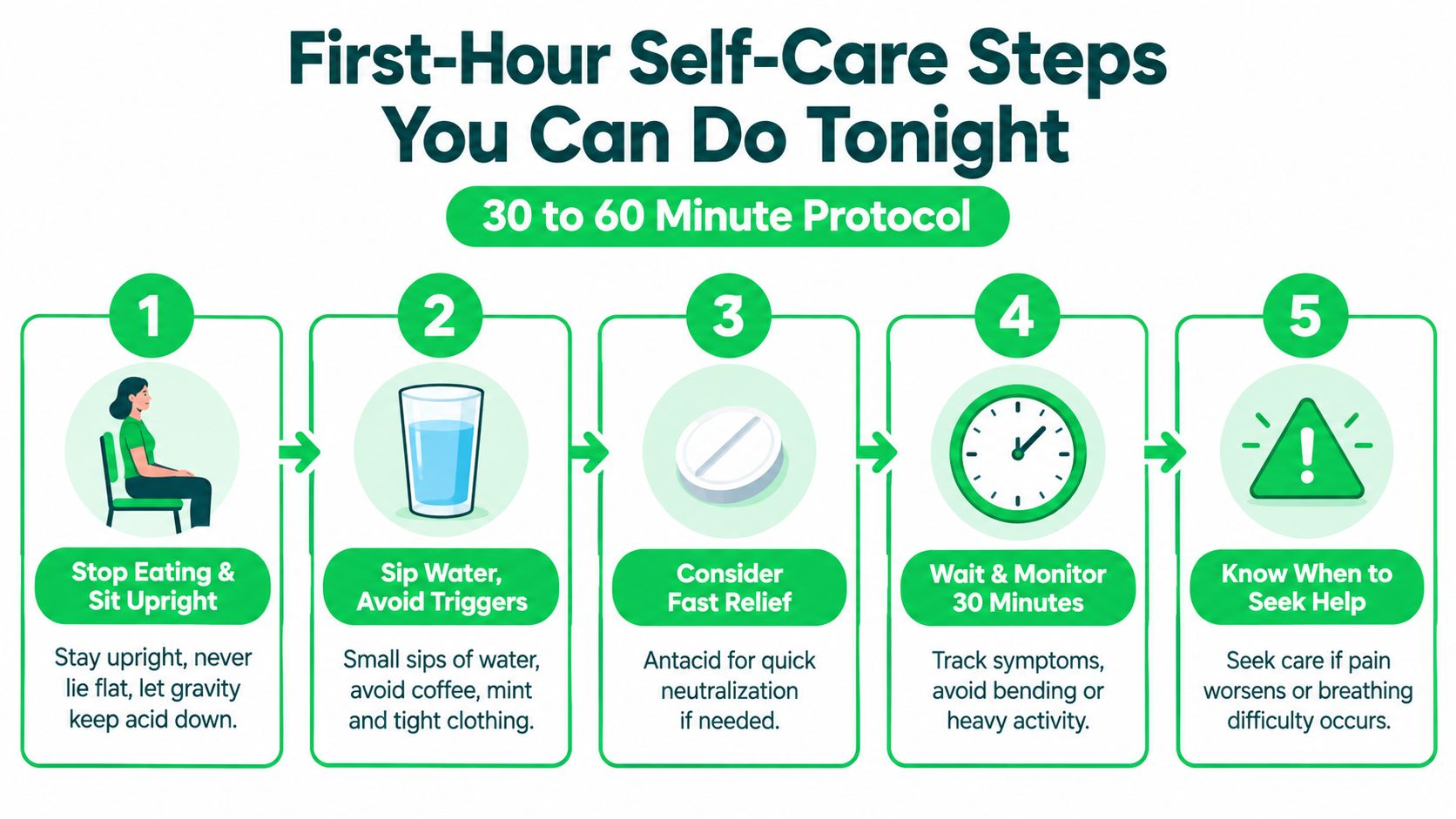
Start with the position of your body. Stop eating, sit upright, or stand and walk gently. Don't lie flat, because staying upright uses gravity to reduce the movement of stomach contents towards the oesophagus.
Sip carefully. Take small sips of room-temperature water. Plain milk may feel soothing for some people, but don't use large amounts of liquid as a treatment. Avoid coffee, citrus juice, and fizzy drinks during the flare.
Release pressure. Loosen a belt, waistband, or tight clothing around your abdomen. Sit tall rather than bending forward, and use slow diaphragmatic breathing. A calm rhythm of roughly six relaxed breaths per minute may reduce straining and help you avoid gulping air.
Use sugar-free gum. Chew it for around 20 minutes if you can tolerate it. Saliva helps clear irritating material from the oesophagus, although gum won't replace medical treatment when symptoms are severe.
Dubai triggers to avoid
Arabic coffee, mint tea, shisha, chocolate, rich desserts, and another late snack can all make a night-time episode worse for some people. Don't assume a drink is harmless because it feels warm or calming. Caffeine, mint, smoking, and large meals commonly appear in reflux advice because they can aggravate symptoms.
If you need to sleep, raise the head end of the mattress with a wedge or a stable support. This guide to health issues that may be treated safely at home in Dubai may help you decide whether your symptoms fit home care, but it isn't a substitute for urgent assessment when red flags appear.
Extra pillows alone usually bend you at the waist instead of lifting your upper body evenly. If the burning doesn't settle, keeps returning during the night, or comes with vomiting, chest pressure, or breathing difficulty, stop the home protocol and seek care.
Choosing the Right Over-the-Counter Medication
At a Dubai pharmacy, choose the medicine based on how often symptoms occur and how quickly you need relief. Antacids work quickly but briefly. H2 blockers last longer. PPIs reduce acid over a treatment course, so they are not instant rescue tablets.
| Medication class | Examples sold in Dubai | Onset of relief | Duration | Best use case |
|---|---|---|---|---|
| Antacids and alginate products | Calcium carbonate products, Gaviscon, Rennie | Fast relief, often within minutes | Short duration | Occasional flare after a known trigger |
| H2 receptor blockers | Famotidine, cimetidine | Slower than antacids | Longer relief than a simple antacid | Predictable evening symptoms |
| Proton pump inhibitors | Omeprazole, esomeprazole | Not an immediate rescue option | Sustained suppression during a course | Frequent or confirmed reflux under suitable medical guidance |
Product strength, stock, and dispensing rules differ between Life Pharmacy, Boots, Aster, and other Dubai pharmacies. Follow the label. Ask the pharmacist about pregnancy, kidney disease, medicine interactions, and existing conditions before choosing a product.
The PPI mistake I see most often
Take a PPI 30 to 60 minutes before a meal, not at bedtime. UAE clinical guidance recommends an 8-week empiric once-daily PPI trial before meals (The UAE GERD pathway) for adults with classic heartburn or regurgitation and no alarm symptoms, alongside lifestyle changes. Reassess when symptoms improve, and arrange investigation if they persist.
Do not continue a PPI indefinitely because an antacid failed during one late-night episode. If symptoms return after stopping, or you need repeated courses, book a clinical review. A doctor should assess persistent or unusual symptoms, and higher-strength or prescription treatment may require medical approval in the UAE. For a hotel guest or tourist who cannot wait until morning, ask the pharmacy whether the product is suitable, or arrange a doctor-on-call visit when symptoms keep returning or the diagnosis is unclear.
Everyday Habits That Prevent Heartburn From Coming Back
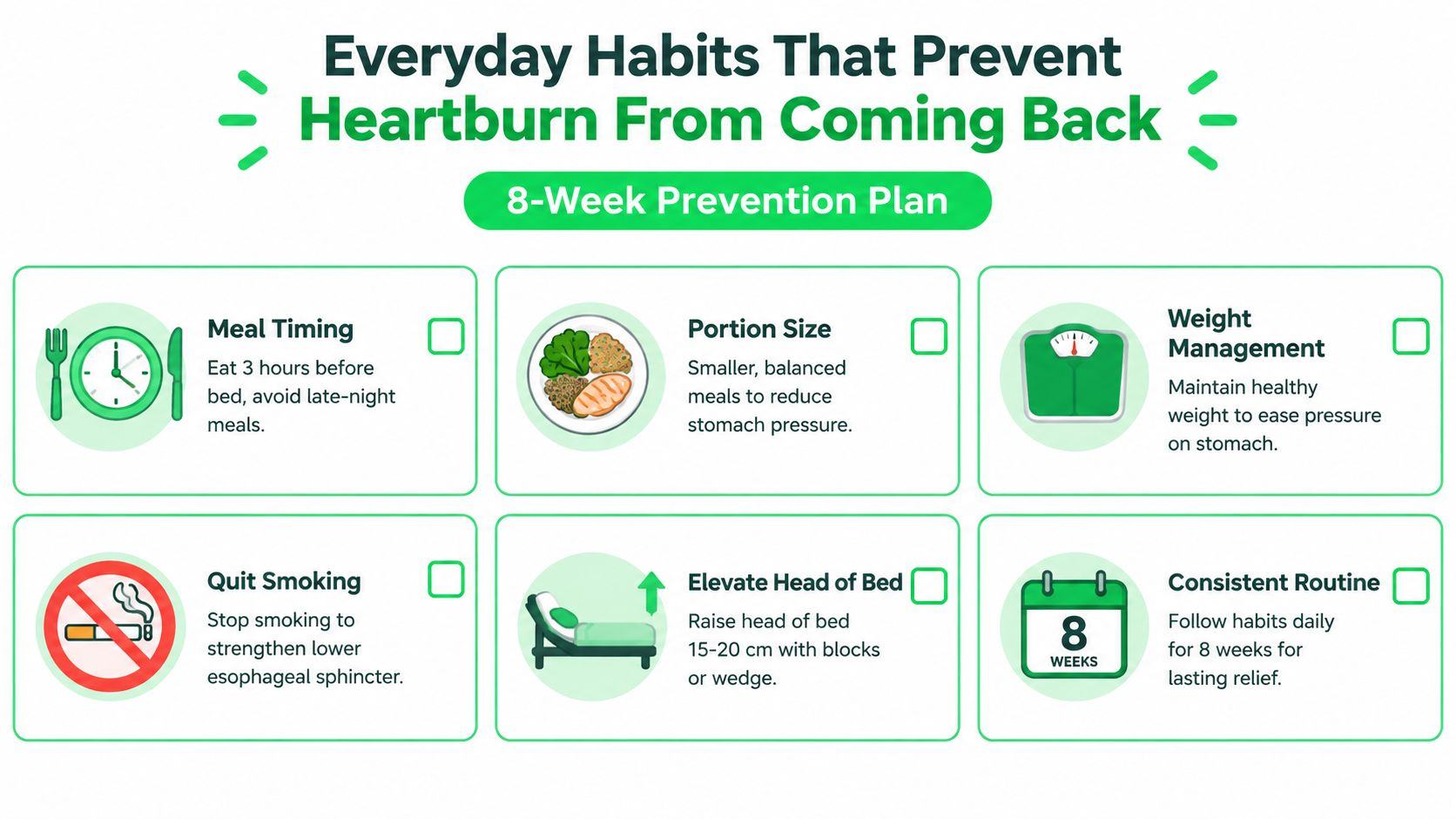
The most useful prevention rule is meal timing. Finish dinner at least 2 to 3 hours before lying down, a measure included in regional GERD management guidance. Published regional management recommendations combine this approach with weight management where relevant, smoking cessation, and head-of-bed elevation.
Large Dubai buffet meals create a predictable problem. A plate loaded with spicy kebabs, fried food, rich sauces, citrus juice, mint tea, and chocolate dates is more likely to provoke symptoms than a smaller, simpler meal. You don't need to ban every food forever. Identify your personal triggers, reduce portion size, and avoid testing several triggers in the same late meal.
Build a sleep setup that works
Raise the head of the bed by 15 to 20 centimetres with a wedge or a stable bed elevation system. This is more reliable than stacking pillows, which can compress the abdomen when your body folds at the waist.
For a night-shift worker in Jebel Ali or Downtown hospitality, the schedule needs adapting rather than abandoning. Finish the main meal before the sleep window, use blackout curtains to protect daytime sleep, and keep the upper body propped up. The same plan works for a hotel guest who sleeps after a late flight, although room-service timing may require more discipline.
A simple one-week starter routine
- Morning: Record whether you woke with burning, sour taste, cough, or throat irritation.
- Meals: Use smaller portions and eat slowly. Note the food, time, and symptoms.
- Evening: Finish the final meal before your planned sleep period.
- Night: Use the wedge or elevated bed position.
- Every day: Avoid smoking and reduce drinks or foods that repeatedly trigger symptoms.
For broader support with food planning and recovery routines, see essential nutrition and wellness support at home. Prevention should be consistent, but it shouldn't delay assessment when symptoms are escalating.
Red Flags That Mean Stop Self-Treating
Some symptoms indicate bleeding, obstruction, significant inflammation, or a problem outside the digestive system. If any alarm feature is present, don't keep increasing antacids or extending self-treatment.
| Symptom | Action level |
|---|---|
| Severe pressure-like chest pain, breathlessness, faintness, sweating, or pain spreading to the arm or jaw | Go to the ER now |
| Vomiting blood or material that looks like coffee grounds | Go to the ER now |
| Black, tarry stools | Go to the ER now |
| Persistent vomiting with inability to keep fluids down | Urgent assessment, often ER |
| New or worsening difficulty swallowing | Same-day clinician assessment |
| Unexplained weight loss | Same-day clinician assessment |
| Dizziness, marked pallor, or unusual weakness suggesting anaemia | Same-day clinician assessment, urgent if severe |
A same-day Doctor On Call visit can be practical for new swallowing difficulty, recurring symptoms that no longer respond to your usual plan, or symptoms in an older adult with diabetes or other chronic disease. The clinician can assess whether you need a clinic, hospital, prescription adjustment, or further testing.
Chest pain needs a cautious approach
If you're over 40 and have cardiovascular risk factors, including diabetes, hypertension, smoking, or a strong personal risk history, chest discomfort needs medical assessment before you assume it's heartburn. An ECG and appropriate urgent evaluation are safer than using an antacid as a diagnostic experiment.
Persistent symptoms may require endoscopy and oesophageal physiology testing to confirm GERD or identify another cause. The UAE pathway specifically recommends investigation when symptoms continue despite optimisation of adherence and medicine timing. This practical resource on preserving care during dietary changes may support general planning, but it doesn't replace urgent medical care.
Stop self-treating and seek urgent help if the pain is severe, unusual, worsening, or associated with bleeding, swallowing difficulty, faintness, or breathing problems.
When a Doctor at Home or Hotel Makes Sense
A home or hotel visit is useful when you need an examination but don't need to begin by travelling to a hospital. Consider a tourist staying in a Marina hotel who has had several episodes during a business trip. Antacids no longer provide enough relief, the guest can't safely drive, and the concierge needs a discreet medical option.
A licensed clinician can assess the symptom pattern, check vital signs, review current medicines, and decide whether treatment at the hotel is appropriate or whether hospital transfer is safer. Some home-visit providers advertise arrival benchmarks of around 30 to 45 minutes, while other Dubai providers market 30 to 60 minutes or shorter times in selected areas. These are provider marketing benchmarks, not government guarantees. Dubai Doctor On Call service benchmarks illustrate why arrival speed is a major part of the local market.
Now consider a 72-year-old resident in Al Wasl with diabetes, recurrent reflux, and new swallowing difficulty. That person shouldn't keep changing pharmacy medicines. A same-day home assessment can reduce travel stress while allowing the clinician to identify alarm symptoms and arrange escalation when needed.
What to prepare before the clinician arrives
Have your Emirates ID or passport available, list every medicine and supplement you take, and write down when the symptoms began. Keep the names or photographs of any tablets already taken, and tell the clinician about black stools, vomiting, weight change, swallowing problems, or chest symptoms.
Home healthcare in Dubai is regulated, and the DHA-aligned home healthcare standard requires healthcare professionals providing these services to be licensed. A home visit isn't automatically better than an ER. It's a convenient assessment route when the patient is stable and the clinician can safely manage the next step.
Use doctor home visits for common illnesses in Dubai when you need a clinician at your location, including a hotel or residence. Confirm the response time, consultation fee, treatment plan, and whether medicines or follow-up are included before booking.
Key Takeaways and Your Next Step in Dubai
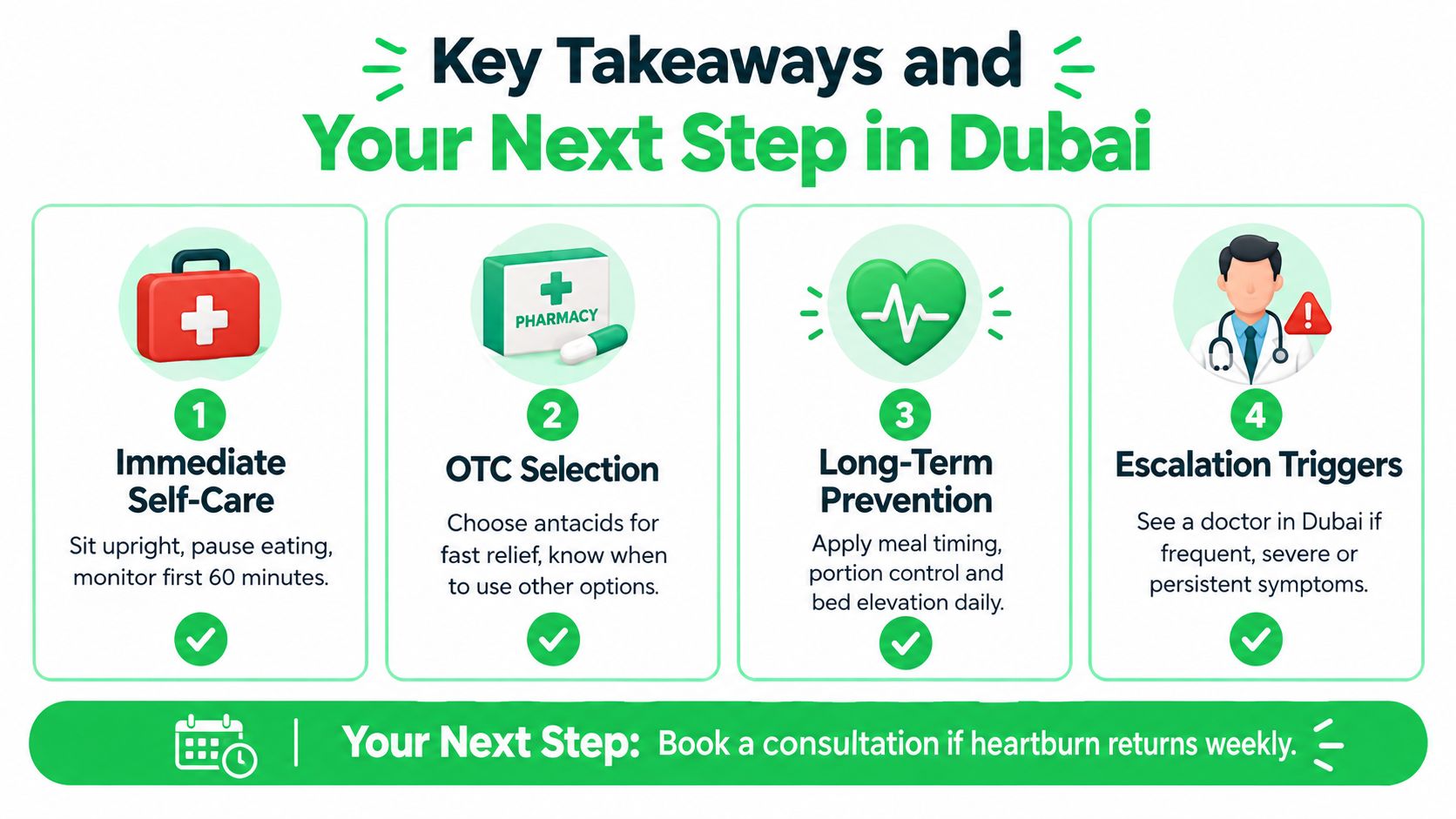
At 11pm in a Dubai hotel, start with safe self-care. Sit upright, stop eating, loosen tight clothing, and avoid coffee, mint, shisha, citrus, and fizzy drinks. Use an antacid or alginate for occasional rapid relief, and ask a pharmacist or clinician before taking acid-suppressing medicine repeatedly.
Prevent recurrence by finishing meals before lying down, choosing smaller portions, addressing weight if relevant, avoiding smoking, and raising the head of the bed. Correct timing matters as much as the medicine.
Seek urgent care for severe chest pressure, bleeding, black stools, breathing difficulty, faintness, or persistent vomiting. Treat new swallowing difficulty or a major change in your usual pattern as a reason to stop self-treating.
If symptoms continue or keep returning despite correct use and lifestyle changes, arrange a clinical assessment. For appropriate adults without alarm symptoms, the UAE pathway uses an 8-week empiric PPI trial, followed by reassessment rather than indefinite unsupervised treatment. The UAE GERD clinical recommendations describe this milestone-based approach.
A Doctor On Call visit suits a stable resident, tourist, or hotel guest who needs assessment without travelling. Review when to call a doctor home in Dubai and choose emergency services when red flags are present.
Vitals Healthcare Doctor On Call provides DHA-licensed clinician visits to Dubai homes, hotels, and offices for heartburn assessment and follow-up guidance when appropriate. For persistent or returning reflux, visit Vitals Healthcare Doctor On Call to arrange a consultation at your location.