

You're between board calls, travelling again next week, and trying to decide whether a health check deserves a place in your calendar. A routine appointment may identify an immediate concern, but it often leaves busy professionals with separate referrals, delayed results, and no clear owner for what happens next.
A well-designed executive health check solves a different problem. It brings relevant screening, clinical interpretation, and follow-up planning into one organised prevention pathway. In Dubai, that pathway should be built around local cardiometabolic risk, not a fashionable list of tests. The important question isn't whether a package looks thorough. It's whether the format helps you complete the assessment, understand the findings, and act on them.
Table of Contents
- Why Dubai Executives Are Rethinking the Annual Checkup
- What an Executive Health Check Actually Covers
- Screening Panels and Risk Assessments Explained
- Who Should Book One and How Often
- Inside a Dubai Executive Screening Day
- Home, Hotel, Office, or Clinic
- Prep, Follow-Up, and What to Do With Results
- Choosing the Right Executive Health Check for You
Why Dubai Executives Are Rethinking the Annual Checkup
A finance director in DIFC books a fasting blood draw between two board calls. She leaves the office, returns to a full meeting schedule, and receives a results email weeks later. The message sits unopened because nobody has made the findings relevant to her next decision, her travel schedule, or her treatment plan.
That pattern is common in executive medicine. The traditional annual physical assumes you can attend a clinic, move between departments, answer follow-up calls, and absorb a report later. Dubai professionals often work across offices, time zones, hotels, and flights. A fragmented appointment can be clinically adequate yet practically ineffective if the patient never completes the next step.
Dubai's risk profile changes the conversation
The UAE has a substantial burden of silent cardiometabolic risk. A Dubai clinical source reports cardiovascular disease as responsible for approximately 34–40% of deaths nationally, diabetes affecting an estimated 20–40% of the population, hypertension exceeding 30%, and metabolic syndrome approaching 40% of residents. These figures are summarised by Echelon Health's Dubai executive health check guidance.
That context explains why a serious assessment includes blood pressure, glucose, HbA1c, lipid testing, ECG, and body-composition analysis. The purpose isn't to make a healthy person feel unwell. It's to identify risks that may be advancing without symptoms, then decide which ones require action.
Convenience has clinical value, but only when it leads to follow-up
Dubai providers have positioned executive packages as preventive programmes that extend beyond a standard GP visit. Gulf News reported packages priced at Dh3,665 for men above 40 and Dh4,205 for women, showing how premium screening became an established healthcare segment in the emirate (Gulf News).
My view is straightforward. An executive health check isn't a luxury purchase when it creates a usable baseline and a documented plan. It becomes an expensive luxury when it produces a thick report that nobody reviews with you.
What an Executive Health Check Actually Covers
An executive health check is a coordinated, multi-system assessment rather than an extended GP consultation. The programme may take part of a day or a full day, depending on the imaging, specialist reviews, and complexity of your medical history.
A routine GP appointment usually starts with a presenting concern. You may discuss fatigue, headaches, blood pressure, or a medication review, and the doctor orders targeted tests. A basic employment medical has a different purpose, it checks fitness or compliance requirements for work. An executive assessment looks across your personal risk profile, even when you feel well.
The structure matters more than the test count
A credible package usually includes:
- Pre-visit risk profiling: A health questionnaire, family history, lifestyle review, medication list, and previous results help the clinician select appropriate tests.
- Core laboratory work: Blood and urine testing assesses glucose regulation, lipids, kidney function, liver function, thyroid status, and other relevant markers. A full blood test service can form part of this foundation when the clinician has defined what should be measured.
- Cardiovascular assessment: Blood pressure, resting ECG, and further cardiac testing when clinically indicated help establish a cardiovascular baseline.
- Body and lifestyle review: Weight, waist measurement, body composition, activity, sleep, smoking, alcohol use, and psychological wellbeing add context to the laboratory findings.
- Age- and sex-appropriate screening: Breast, cervical, colorectal, prostate, or other screening should be recommended according to personal risk and established clinical guidance, not added automatically to inflate a package.
- Physician interpretation: An internal medicine physician or suitably experienced clinician should review the results as a system, identify priorities, and explain uncertainty.
- Written action plan: The final report should record findings, risk priorities, referrals, repeat testing, and the clinician responsible for follow-up.
Practical rule: A premium assessment should give you a baseline, a risk interpretation, and a next appointment. A list of tests alone isn't a care plan.
Integration is the core value. A mildly abnormal lipid profile may matter more when combined with high blood pressure, central obesity, family history, and poor sleep. Conversely, an isolated result may need confirmation rather than an immediate diagnosis. The assessment should help you compare results over time, not encourage you to chase every borderline marker.
Screening Panels and Risk Assessments Explained
A busy Dubai executive can have no obvious symptoms while diabetes, abnormal cholesterol, or high blood pressure develops. The right screening panel should answer a defined clinical question and show how those risks interact. More biomarkers do not automatically produce better care.
Dubai's cardiometabolic profile makes metabolic testing a priority. A national survey reported adult diabetes prevalence of 11.8%, high total cholesterol of 43.7%, and hypertension of 28.8%, according to population benchmarks summarised by Aafiyah Care's Dubai executive check guidance. An Abu Dhabi cardiovascular screening programme reported obesity at 35%, overweight at 32%, central obesity at 55%, diabetes at 18%, prediabetes at 27%, dyslipidaemia at 44%, and hypertension at 23.1%, according to the Abu Dhabi cardiovascular screening programme.
These figures support a focused approach. Measure risks that often remain silent, then interpret the results as a connected clinical picture.
The core panels
- Metabolic health: Fasting glucose and HbA1c assess current and longer-term glucose control. Lipids examine cholesterol-related cardiovascular risk. Uric acid adds context when diet, metabolic risk, or a gout history makes it relevant. A blood test package can be structured around these markers rather than presented as an undifferentiated panel.
- Cardiovascular risk: A resting ECG provides a useful baseline. Echocardiography or a stress test belongs in the assessment only when symptoms, examination findings, medical history, or calculated risk support it. In selected cases, inflammatory markers or an ASCVD risk score may help if the result will change management.
- Organ function: Liver enzymes, kidney function including eGFR and ACR, thyroid testing, and selected nutritional markers can identify conditions affecting energy, medication safety, and longer-term risk.
- Cancer screening: FIT or referral for colonoscopy, cervical screening, breast imaging, and a PSA discussion may be appropriate according to age, sex, symptoms, family history, and local clinical recommendations. These tests require clinical selection and do not replace specialist assessment.
- Lifestyle and performance risks: Waist circumference, body composition, sleep apnoea screening, mental health questions, and smoking or alcohol review can explain abnormal results and identify barriers to prevention.
A table can organise the information, but it cannot decide which tests matter for you.
| Panel | Key tests | What it screens for | UAE relevance |
|---|---|---|---|
| Metabolic | Fasting glucose, HbA1c, lipid profile, selected uric acid testing | Diabetes, prediabetes, dyslipidaemia, metabolic risk | Local population benchmarks show a significant burden of glucose and cholesterol abnormalities |
| Cardiovascular | Blood pressure, ECG, risk scoring, further testing when indicated | Rhythm problems and cardiovascular risk | Cardiovascular disease is a major national cause of death |
| Kidney and liver | Creatinine, eGFR, ACR, liver enzymes | Organ function and treatment safety | Useful for interpreting metabolic risk and medication decisions |
| Thyroid and nutritional | Thyroid panel and selected vitamin testing | Thyroid dysfunction and relevant deficiencies | Helps investigate fatigue and contextualise abnormal findings |
| Cancer prevention | FIT, referrals, cervical screening, breast imaging, PSA discussion | Age- and risk-appropriate cancer screening | The correct test depends on personal risk, not package size |
| Lifestyle | Waist, body composition, sleep, mental health, smoking and alcohol review | Behavioural and functional contributors | Converts laboratory findings into an actionable prevention plan |
For broader, non-diagnostic guidance on long-term health choices, practical longevity education can support prevention planning. It does not replace a clinician's risk assessment or justify unvalidated add-ons.
The useful output is a connected explanation of what your results mean, which findings require action, and which should be monitored.
Who Should Book One and How Often
You don't need an executive title to benefit from an executive health check. You need a meaningful risk profile, limited time, or a history that makes fragmented care unlikely to work.
A baseline assessment is reasonable for adults over 35, people with a family history of diabetes or cardiovascular disease, and professionals dealing with central obesity, sedentary work, disrupted sleep, inconsistent meals, or sustained stress. It's also useful when previous results were abnormal but never converted into a structured plan.
Dubai guidance advises periodic screening for adults aged 18 and above without chronic disease, with routine screening every 3 years unless risk factors justify earlier testing. For diabetes, the guidance specifies fasting blood sugar or HbA1c at three-year intervals, or annually when risk factors are present, as outlined by Doctors Clinic Dubai.
The cadence should follow risk, not the sales calendar.
| Risk tier | Profile indicators | Recommended interval | Core panels to repeat |
|---|---|---|---|
| Lower risk | No known chronic disease, reassuring baseline, no major family or lifestyle risks | Follow the applicable DHA interval, with earlier review if circumstances change | Blood pressure, glucose assessment, lipids, and clinician-selected basics |
| Moderate risk | Family history, central obesity, sedentary work, prediabetes, hypertension, or abnormal lipids | More often than the routine interval, commonly annual review based on clinician advice | Blood pressure, glucose or HbA1c, lipids, kidney function, and relevant lifestyle assessment |
| Higher risk | Active treatment, persistent abnormalities, multiple risk factors, or previous cardiovascular concern | Structured review set by the treating clinician, potentially several times through the year | Targeted repeat panels, medication monitoring, and specialist-led testing |
Six-monthly testing may be appropriate for some people with prediabetes, hypertension, or abnormal lipids, but it shouldn't be imposed on everyone. Active treatment, pregnancy, symptoms, or recovery after a cardiovascular event requires individual medical planning.
Inside a Dubai Executive Screening Day
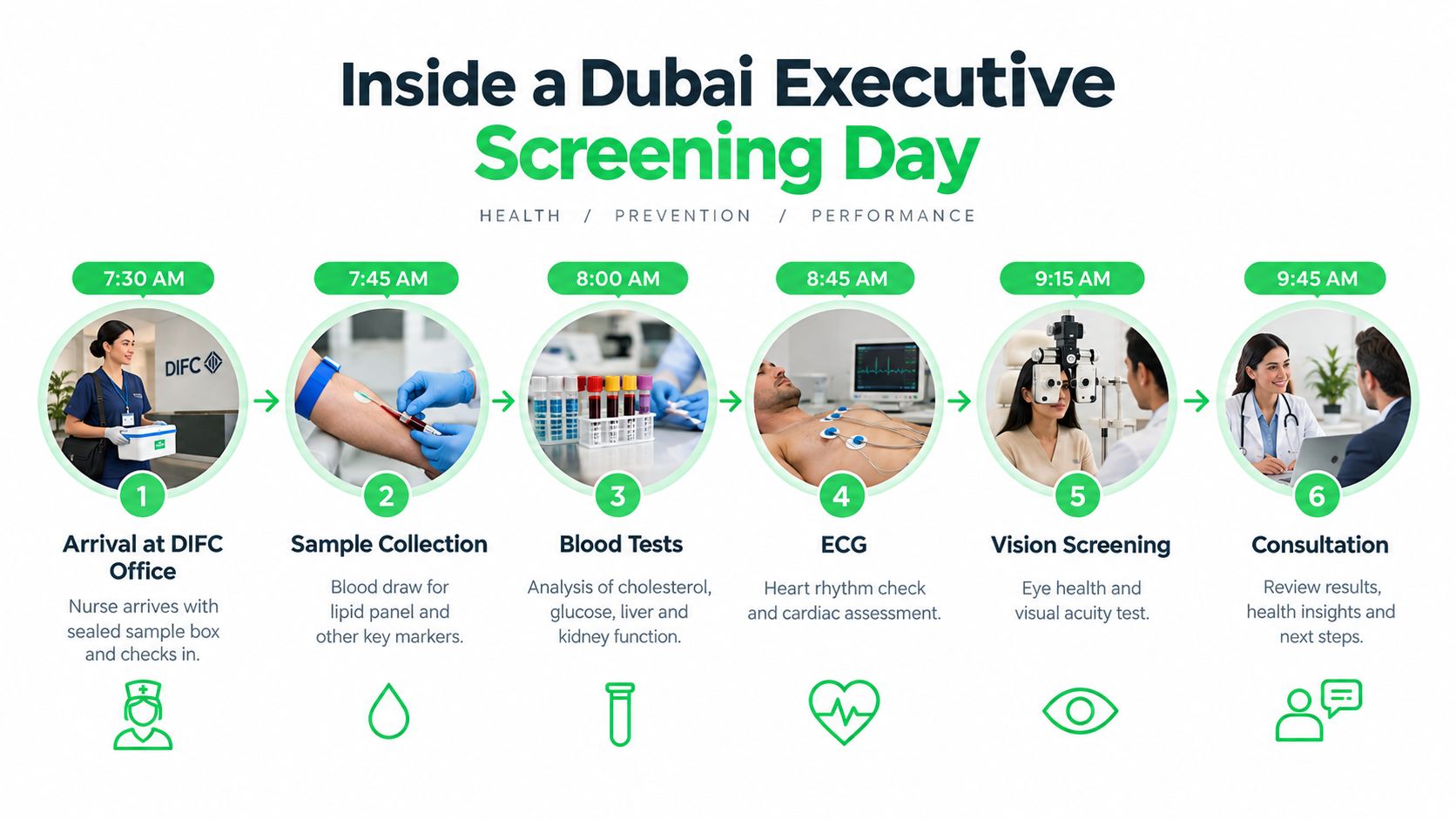
A mobile screening pathway can fit around work, but it still needs clinical discipline. Consider a Tuesday morning in DIFC. At 7:30am, a nurse arrives at the office with a sealed sample box and portable ECG equipment. By 8:30am, the executive has completed vital signs, fasting blood collection, ECG, and body-composition assessment without leaving the building.
The convenience isn't the medical benefit by itself. The benefit is that the patient completes the first step while the appointment is protected in the calendar. A same-afternoon video consultation then gives the clinician an opportunity to explain the findings, identify a high HbA1c or LDL, and arrange a clinically appropriate follow-up rather than sending an isolated email.
The clinic route may offer broader imaging and direct access to several specialists, but it can also involve travel, waiting, separate departments, and a delayed results review. That makes the choice practical, not glamorous. If a clinic visit is the only route to necessary imaging, use it. If the main barrier is completing baseline bloodwork and receiving a physician review, on-site delivery may be more effective.
The process should look something like this:
A provider offering blood tests at home in Dubai should still explain fasting requirements, sample handling, reporting, clinician review, and escalation. Mobile collection improves access only when the result enters a defined care pathway.
Home, Hotel, Office, or Clinic
There isn't one universally superior delivery model. Match the setting to the tests you need, your schedule, and the likelihood that you'll complete follow-up.
Home screening
Home delivery suits parents, shift workers, people who value privacy, and executives who can't afford a commute for routine measurements. A nurse can collect samples and perform selected portable assessments, but advanced imaging and complex specialist workups usually require a clinic. Home care is a strong starting point when your main need is a structured baseline with minimal disruption.
Hotel screening
Hotel-based care works for travelling executives who need discreet access without navigating an unfamiliar healthcare system. It can make scheduling easier during a short Dubai visit, although concierge logistics may affect the price. Confirm that a doctor reviews the results and that the provider can arrange referrals after you leave the hotel.
Office screening
On-site office programmes are practical for leadership groups and teams. They reduce individual travel and can standardise collection, but quality varies. Ask who performs the clinical review, how privacy is protected, whether every participant receives an individual report, and how abnormal findings are handled. A group booking shouldn't turn personal medical care into an anonymous spreadsheet.
Clinic screening
A clinic remains the right choice for advanced imaging, stress echocardiography, CT calcium scoring, MRI, multiple same-day specialist consultations, or a complex diagnostic workup. It also offers the most complete environment when an abnormal result needs immediate examination or additional testing.
| Model | Best for | Time required | Imaging capability | Typical cost band |
|---|---|---|---|---|
| Home | Privacy, families, shift workers, routine baseline screening | Shorter appointment with no travel | Portable ECG and selected portable assessments; advanced imaging usually needs a clinic | Basic to premium, depending on scope |
| Hotel | Travelling executives and discreet visitor care | Appointment-based, coordinated around travel | Usually limited on site, with referral for advanced imaging | Often premium due to concierge logistics |
| Office | Leadership groups and organised workplace programmes | Efficient group scheduling | Varies by provider and equipment | May support bundled corporate pricing |
| Clinic | Advanced imaging, specialist access, complex workups | Longer visit and possible waiting | Broadest imaging and diagnostic capability | Basic private packages to premium comprehensive programmes |
If you're comparing collection points, the guide to compare blood test centres is useful for checking accreditation, sample handling, reporting, and clinician involvement rather than choosing on location alone. For a deeper look at mobile logistics, review this Dubai mobile lab test guide.
The correct decision is simple. Choose home or office delivery when convenience is the obstacle. Choose a clinic when the clinical question requires equipment, specialists, or immediate diagnostic depth.
Prep, Follow-Up, and What to Do With Results
Preparation affects the quality of the assessment. It also prevents a busy schedule from undermining the appointment before it begins.
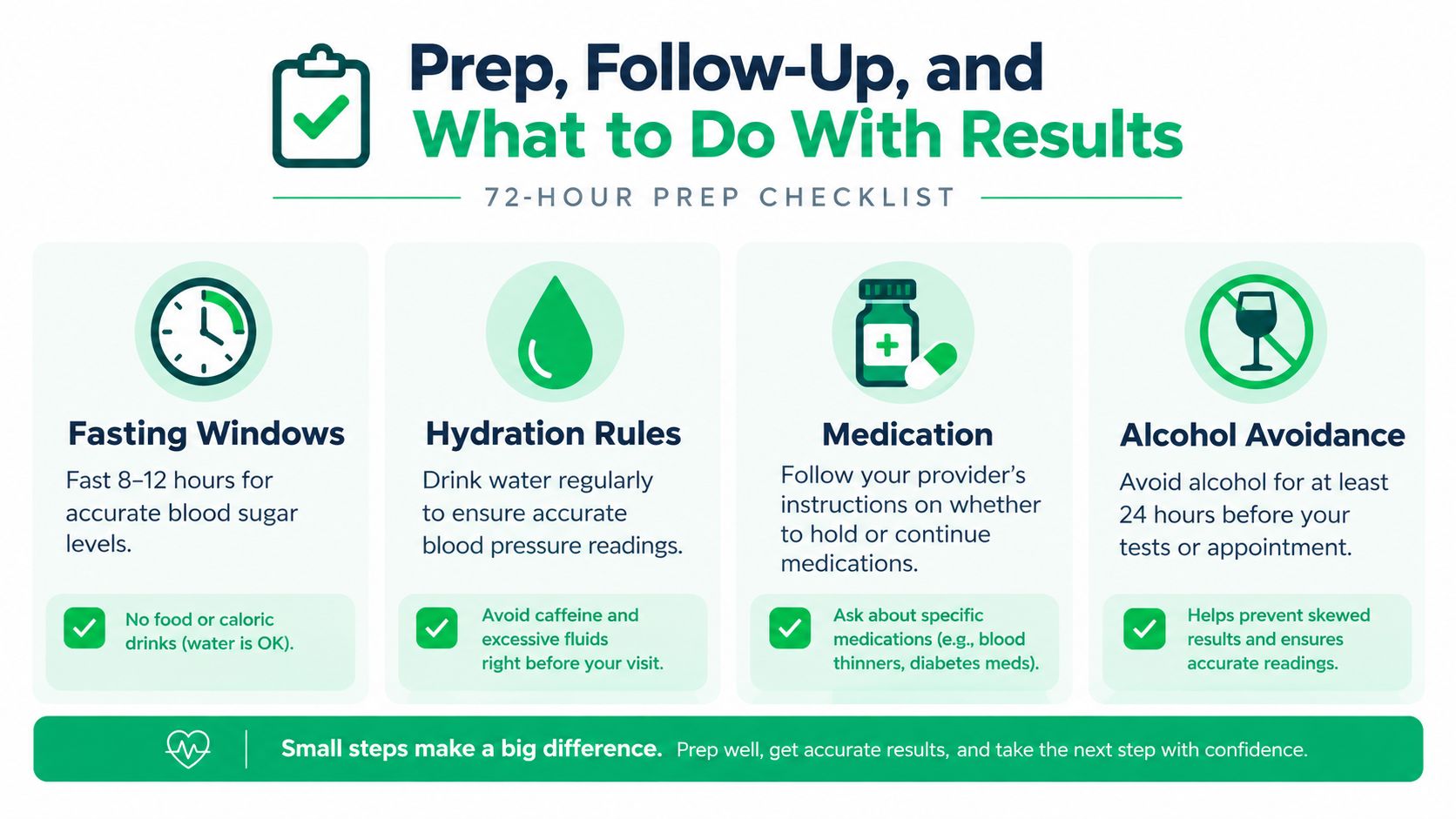
The 72-hour checklist
- Confirm fasting instructions: Ask exactly whether glucose and lipid testing requires fasting, and follow the provider's stated window rather than assuming every test has the same requirement.
- Hydrate sensibly: Maintain normal water intake unless a clinician has told you otherwise. Dehydration can complicate blood collection and affect clinical measurements.
- Clarify medication decisions: Don't stop blood pressure, diabetes, thyroid, or other prescribed medication without explicit medical advice. Ask whether supplements should be recorded or temporarily paused.
- Avoid unusual exertion and alcohol: Tell the provider about recent heavy exercise, alcohol intake, illness, or poor sleep, because these details can affect interpretation.
- Bring your history: Have previous reports, medication names, supplement details, family history, allergies, and relevant symptoms ready.
Follow-up is where prevention becomes care
Before booking, ask how quickly a clinician reviews results, how urgent abnormalities are communicated, and who owns the record. A good programme should explain whether a doctor will contact you, what triggers a same-week appointment, and how imaging or laboratory abnormalities are escalated.
Use a clear pathway:
- Cardiac concern: New symptoms, concerning ECG findings, or markedly abnormal risk indicators should prompt clinical assessment and appropriate escalation.
- Glycaemic concern: An abnormal glucose or HbA1c result should lead to confirmation, risk discussion, and a plan for monitoring or treatment.
- Imaging concern: An unexpected lesion or structural finding needs documented referral, not vague reassurance or an automated report.
Ask the provider: “Which clinician reviews my complete record, who contacts me if a result is abnormal, and where will my year-on-year results be stored?” A practical guide to patient-provider talks can help you prepare for that conversation.
Your report should start a prevention loop. Record the baseline, complete the recommended follow-up, repeat only what needs monitoring, and update the plan when your work, medication, weight, sleep, or family history changes.
Choosing the Right Executive Health Check for You
Package selection becomes easier when you start with the person, not the brochure.
| Profile | Best delivery mode | Minimum panel | Cadence |
|---|---|---|---|
| Frequent-flyer C-suite leader | Home, hotel, or a clinic hybrid | Cardiometabolic bloodwork, blood pressure, ECG, body composition, risk review, and cardiology depth when indicated | Clinician-directed review based on findings and travel demands |
| Founder aged 35 to 45 balancing cost and risk | Home or office baseline, clinic referral when needed | Glucose or HbA1c, lipid profile, blood pressure, kidney and liver function, family history, waist measurement, and lifestyle review | Baseline first, then follow the risk-based interval |
| Corporate team lead arranging group screening | Office delivery with individual physician review | Core bloodwork, blood pressure, ECG where appropriate, body composition, and personal follow-up plan | Organised periodic screening, with individual intervals after abnormal findings |
The frequent traveller should prioritise a provider that can collect samples discreetly, coordinate remote review, and arrange clinic imaging when necessary. The cost-conscious founder should avoid automatic advanced add-ons and spend first on the core cardiometabolic assessment and physician interpretation. The team lead should insist on confidential individual reports, even when collection is organised as a group.
For any pathway, use a clinician who can explain credentials, scope, referrals, and continuity. This guide to finding a good doctor in Dubai offers a practical starting point.
My rule is firm: if the provider can't tell you who reviews your results and what happens after an abnormal finding, the package is too cheap to be useful, regardless of how many tests it lists.
Vitals Healthcare Doctor On Call offers DHA-licensed doctor visits, nursing support, and mobile laboratory sample collection at homes, hotels, and offices across Dubai. For an executive health check that fits around work or travel, visit Vitals Healthcare Doctor On Call to discuss an on-site assessment and the follow-up pathway for your results.