

Vitamin D deficiency isn't a rare lab finding in the UAE, it's a population-wide clinical issue. In one UAE analysis, 85.4% of the sample was deficient, 12.5% was insufficient, and only 2.1% had an adequate serum vitamin D level, which is why vitamin D therapy here is a real treatment pathway, not a casual supplement habit. A later Abu Dhabi study found that 72% of adults were deficient and another 10% were insufficient, so the country's sunshine hasn't translated into reliable vitamin D status for the majority WHO Eastern Mediterranean journal article.
That gap between bright weather and low blood levels is the whole UAE paradox. People spend time indoors, avoid peak heat, wear sun-covering clothing, or live routines that make regular UVB exposure unrealistic, so a structured plan matters more than wishful thinking. In practice, good care means testing, correcting, and maintaining, with the aim of restoring a stable level rather than chasing “more” forever.
Table of Contents
- Why Vitamin D Therapy Matters in the UAE
- How Vitamin D Works Inside the Body
- Who Is Most at Risk in the UAE
- Testing and Reading Your Vitamin D Results
- Forms of Vitamin D Replacement Compared
- Dosing Guidelines and Maintenance Therapy
- When Home-Based Therapy Makes Sense
- Safety, Monitoring, and When to Seek Help
Why Vitamin D Therapy Matters in the UAE
The UAE's clinical response reflects a practical reality: abundant sunshine does not guarantee adequate vitamin D. UAE research has examined this gap between the region's bright climate and residents' actual vitamin D status WHO Eastern Mediterranean journal article. For many people, indoor routines, heat avoidance, covered clothing, and limited time outdoors make consistent UVB exposure difficult. Therapy therefore needs to fit real daily life.
The clinical problem behind the sunshine
PubMed-indexed UAE guidance recommends 400 IU/day for breastfed infants up to 6 months, 600 to 1,000 IU/day for children and adolescents aged 1 to 18 years, 1,000 to 2,000 IU/day for adults, and 2,000 IU/day for adults over 65, pregnant or breastfeeding women, obese individuals, people with metabolic syndrome, dark skin complexions, or night workers. It gives a therapeutic target of 30 to 50 ng/mL for serum 25(OH)D PubMed guideline.
These figures are starting points, not a substitute for clinical judgement. Age, pregnancy, body size, medical conditions, medicines, and the severity of deficiency can affect the plan. A measured blood level helps the clinician choose whether replacement, follow-up testing, or maintenance therapy is appropriate.
Persistently low vitamin D can trigger secondary hyperparathyroidism, a compensatory response that may contribute to bone loss and muscle weakness. The concern is greater for older adults and people whose mobility is limited.
For Dubai residents, hotel guests, and elderly patients, home-based assessment can make this pathway easier to follow. Vitals Healthcare clinicians can help organise evaluation, treatment, and follow-up where travelling to a clinic is difficult.
Practical rule: vitamin D therapy works best as a monitored treatment plan, not as a random bottle kept in a kitchen drawer.
Fatigue, aches, and low mood have many possible causes. Testing helps separate a possible vitamin D problem from conditions that require a different evaluation.
How Vitamin D Works Inside the Body
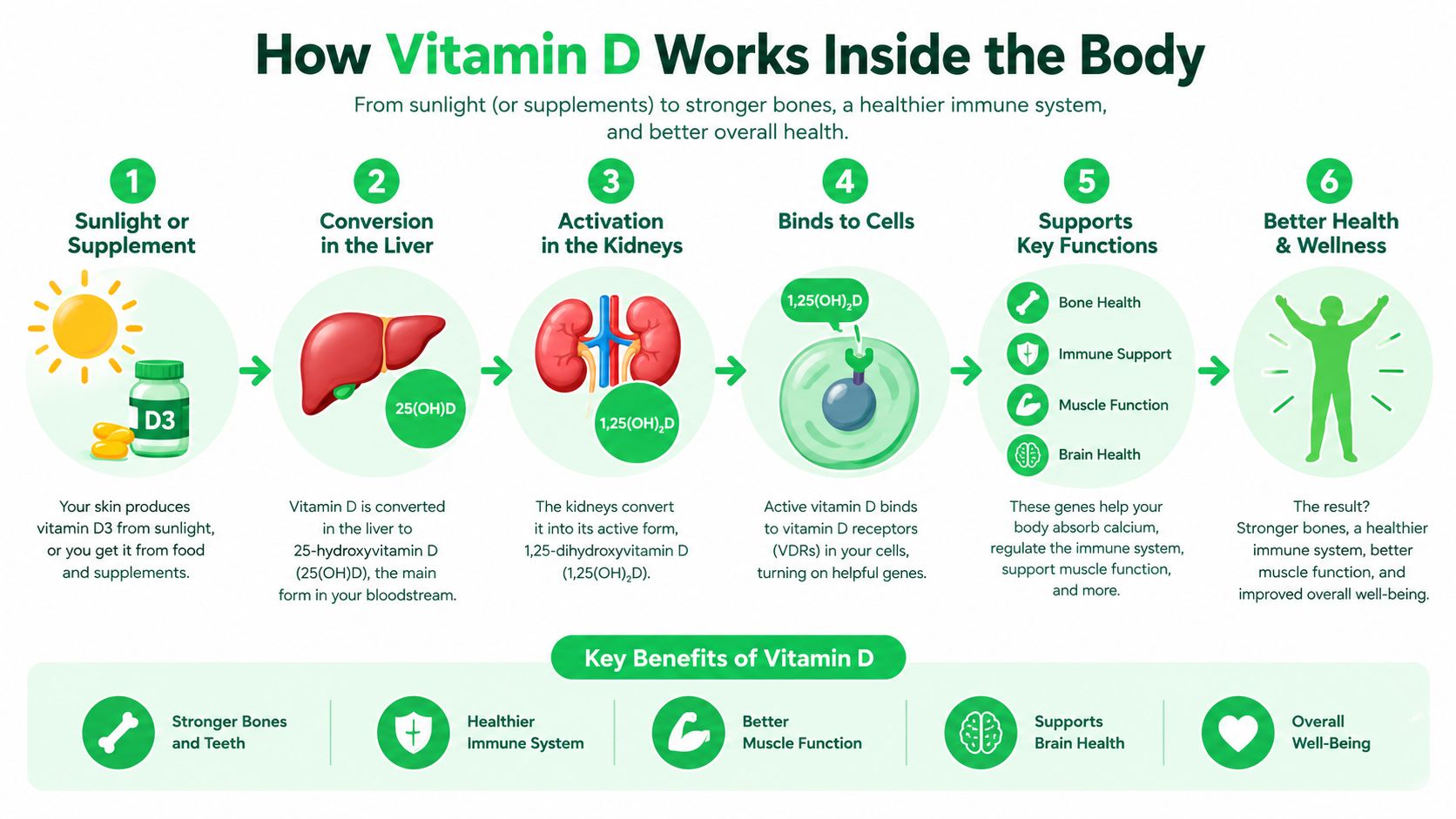
Vitamin D behaves more like a hormone precursor than a simple vitamin. Your skin, liver, and kidneys each handle a different step, and each step matters for calcium balance and bone health. The easiest way to think about it is as a delivery system, where the body has to receive, convert, and activate the nutrient before it can do its work.
From skin to active hormone
Under UVB light, cholesterol-derived 7-dehydrocholesterol in the skin becomes cholecalciferol, also called vitamin D3. The liver then converts it into 25-hydroxyvitamin D [25(OH)D], which is the form clinicians measure in blood. After that, the kidneys perform the final activation step and make calcitriol, the active hormone that binds receptors and helps the intestines absorb calcium and phosphate.
That's why the blood test matters so much. A supplement dose doesn't tell you what your body has done with it. The measured storage form, 25(OH)D, gives a clearer view of overall status than a rough guess based on sunlight, diet, or pill use alone.
Why the target range is specific
When 25(OH)D is too low, calcium absorption falls and the body may pull calcium from bone to keep blood calcium stable. Parathyroid hormone, or PTH, rises to help maintain balance, which is why vitamin D deficiency and secondary hyperparathyroidism often travel together. That's also why UAE guidance uses a 30 to 50 ng/mL target rather than “as high as possible” PubMed guideline.
The goal is hormonal sufficiency, not endless supplementation.
That distinction matters in real life. A patient who raises 25(OH)D into the target range often needs less follow-up drama and fewer trial-and-error adjustments than someone taking an unmeasured dose for months.
Who Is Most at Risk in the UAE
Not every low vitamin D result comes from the same cause. In the UAE, risk is layered. Dress, work pattern, skin tone, age, body composition, and gut health all shape how much vitamin D a person can make or maintain.
Risk groups that need proactive attention
A 2025 systematic review of 35 UAE studies involving 28,260 participants found a pooled adult mean 25(OH)D of 17.63 ng/mL, and it linked low status to cultural clothing practices, limited outdoor activity, darker skin pigmentation, and low dietary intake Frontiers review. That's a useful reminder that a single recommendation won't fit everyone. It also helps explain why women wearing abaya and hijab, indoor office workers, older adults, and people with obesity often show up with lower levels in screening.
| High-Risk Group for Vitamin D Deficiency in the UAE | Primary Reason | Approximate 25(OH)D Reduction |
|---|---|---|
| Women wearing abaya and hijab | Less skin exposed to UVB | Lower than Western-dressed peers |
| Indoor office workers | Limited daytime sun exposure | Lower than outdoor-active peers |
| Older adults | Less skin production and less outdoor time | Lower with age-related decline |
| People with obesity | Fat-soluble vitamin stored in adipose tissue | Lower circulating availability |
| People with malabsorption | Reduced absorption in the gut | Lower and harder to correct |
When proactive screening makes sense
Some groups need screening before symptoms become obvious. Those include pregnant and breastfeeding women, infants who are exclusively breastfed, people after bariatric surgery, and patients with inflammatory bowel disease or coeliac disease. The same is true for dark skin types, because more melanin means less efficient UVB-driven synthesis under the same sun exposure.
Cultural and practical habits matter too. An office worker who spends most of the day in air conditioning, then moves from parking garage to building to home, may get little meaningful UVB exposure despite living in a sunny city. That's why risk assessment in the UAE should be personal, not generic.
Testing and Reading Your Vitamin D Results
The right test is 25-hydroxyvitamin D [25(OH)D]. It reflects both what you absorbed from food and supplements, and what your skin made over time, so it's the best marker for vitamin D status in routine care. A simple venous blood draw is enough, and some DHA-licensed labs in Dubai and Abu Dhabi report results within a short turnaround depending on workflow.
What the result means
A result in ng/mL is the clearest format for many patients, while some labs use nmol/L. If your report uses nmol/L, the unit is different but the meaning is the same, and your clinician can interpret it against the UAE target range. For this reason, a result should never be read in isolation. It should be compared with the symptoms, the risk profile, and any accompanying calcium or PTH abnormalities.
| UAE 25(OH)D Reference Range and Clinical Interpretation | Serum 25(OH)D (ng/mL) | Serum 25(OH)D (nmol/L) | Typical Clinical Action |
|---|---|---|---|
| Deficient | Below 20 | Below 50 | Start correction and check for related abnormalities |
| Insufficient | 20 to 29 | 50 to 74 | Consider structured supplementation and repeat testing |
| Sufficient | 30 to 50 | 75 to 125 | Maintain with an appropriate long-term plan |
| Above target | Above 50 | Above 125 | Review dose, symptoms, and overall context |
For many patients, PTH, calcium, and sometimes phosphate are ordered at the same time, because the pattern helps show whether deficiency is driving a compensatory increase in parathyroid hormone. One high vitamin D result doesn't automatically mean better health. The target is the clinically useful band, not an unchecked climb.
If you're arranging a check at home, this guide on simple steps to get a vitamin D test at home in Dubai gives a practical sense of how the process is usually handled.
Forms of Vitamin D Replacement Compared
For Dubai residents, hotel guests, and elderly patients, the best replacement route is the one that fits absorption, mobility, travel, and daily routines. Oral therapy is often practical, while supervised options help when tablets are difficult to absorb or remember.
Oral dosing, boluses, and injections
Oral cholecalciferol (D3) is the usual starting point for adults. It is familiar, can be taken with food, and works with daily or weekly schedules. Intermittent high-dose oral treatment may suit confirmed deficiency when a patient prefers fewer doses during the correction phase.
| Comparing Forms of Vitamin D Replacement | Typical Use Case | Onset | Frequency | Key Limitation |
|---|---|---|---|---|
| Daily oral D3 | Routine replacement and maintenance | Gradual | Daily | Needs consistency |
| Weekly oral D3 | Correction phase in deficiency | Moderate | Weekly | Missed doses slow progress |
| Intramuscular injection | Malabsorption, post-bariatric surgery, or non-adherence | Slower but dependable | Infrequent | Requires clinical administration |
| Drops, sprays, sachets | Swallowing difficulty or preference | Similar to oral routes | Daily or weekly | Still depends on adherence |
D2, or ergocalciferol, is used less often because clinicians generally prefer D3 for raising and maintaining 25(OH)D. Drops, sprays, and sachets can provide reasonable alternatives when swallowing tablets is difficult. The delivery format changes convenience, not the need for an appropriate clinical plan.
For readers comparing oral options across markets, this guide to the best Canadian vitamin D supplements offers a reference for formulation and dosing differences. Patients considering wider IV care can review the real benefits of vitamin IV therapy to understand what IV delivery may and may not address. An overview of IV infusion protocols for fatigue provides broader context, although IV treatment is not routine vitamin D replacement.
Clinical note: An injection is not automatically “stronger.” It may be more reliable when gut absorption, schedule, or adherence prevents effective oral treatment.
If a patient absorbs tablets and can remember them, oral D3 usually offers the simplest path. A supervised route becomes more practical when absorption or consistent use remains difficult.
Dosing Guidelines and Maintenance Therapy
Vitamin D therapy works best as a two-phase plan. Correction raises a low level, while maintenance helps keep it from falling again. Think of correction as filling a tank and maintenance as keeping a steady supply. A satisfactory result after the first phase does not remove the factors that caused deficiency.
Correction first, then maintenance
For adults with confirmed deficiency, a clinician-directed correction plan may use 50,000 IU cholecalciferol weekly for 8 to 10 weeks, aiming to bring 25(OH)D into the 30 to 50 ng/mL band. Milder insufficiency may respond to 1,000 to 2,000 IU daily. Children, pregnant women, and people with obesity may need a different or weight-adjusted plan. The right dose depends on the patient's results, medical history, absorption, and risk of complications.
The Abu Dhabi Thiqa policy describes treatment below 30 nmol/L as an 8 to 10 week course followed by indefinite daily maintenance Thiqa policy. Follow-up testing helps the clinician decide whether correction has worked and whether the maintenance plan should continue, change, or stop.
| Vitamin D Therapy Dosing and Maintenance Summary | Typical Approach | Usual Duration | Follow-Up |
|---|---|---|---|
| Correction phase | High-dose oral D3 or clinician-directed regimen | 8 to 10 weeks | Recheck 25(OH)D and PTH |
| Maintenance phase | Daily lower-dose replacement | Long term | Repeat blood monitoring periodically |
| Higher-risk patients | Adjusted maintenance or closer follow-up | Ongoing | More frequent review if needed |
Why maintenance matters
The UAE's abundant sunshine can create false reassurance. Heat, indoor routines, covered clothing, sunscreen use, and limited midday exposure may still leave a person vulnerable. Once supplementation stops, low status can return, particularly when the original dietary or metabolic risks remain.
A DHA-licensed clinician can help Dubai residents, hotel guests, and elderly patients follow the plan at home, reducing missed doses and delayed reviews. The same principle applies to related services such as vitamin B-12 therapy, although vitamin D requires its own dose, target, and follow-up. Broader IV care is a separate topic, and IV infusion protocols for fatigue should not be treated as a substitute for routine vitamin D replacement.
When Home-Based Therapy Makes Sense
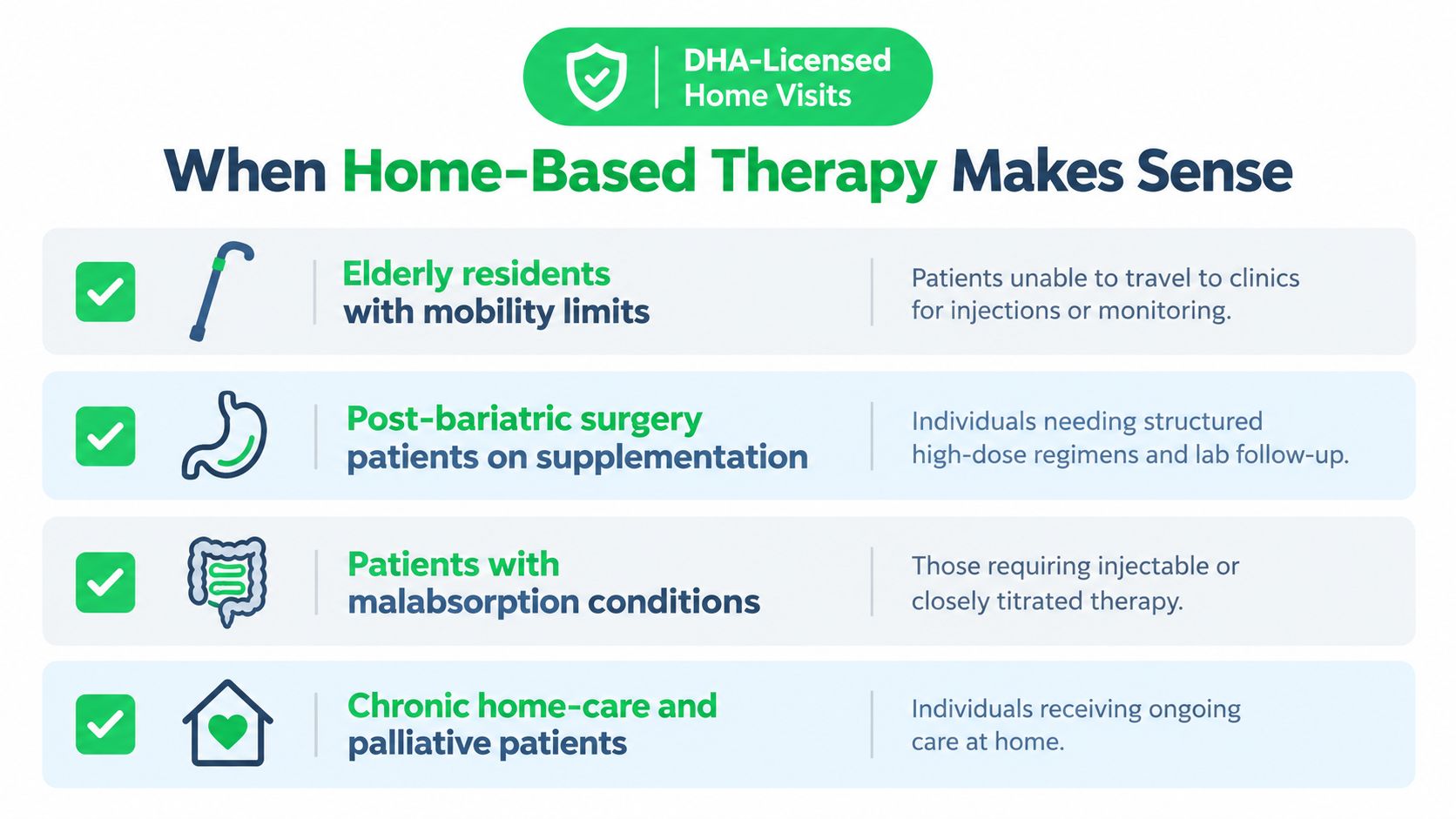
Home-based vitamin D care fits the UAE better than many people expect. It's especially practical for elderly residents with mobility limits, post-bariatric surgery patients, hotel guests who need continuity while travelling, and busy professionals who keep postponing clinic visits. In those situations, the problem is rarely willingness. It's logistics.
What a clinician checks at home
A DHA-licensed clinician should confirm identity, review recent 25(OH)D, calcium, creatinine, and PTH results, and check for red flags like hypercalcaemia or granulomatous disease before any treatment goes ahead. The right formulation is then matched to the patient's history, whether that means an oral loading course, a maintenance schedule, or a supervised injection. That same logic is relevant for patients who need broader mobile care, including blood test at home in Dubai.
For patients who need injection education or are comparing treatment workflows, a practical resource like how to self inject medication can make the process feel less intimidating, although self-administration is not appropriate for every case.
Why this route improves adherence
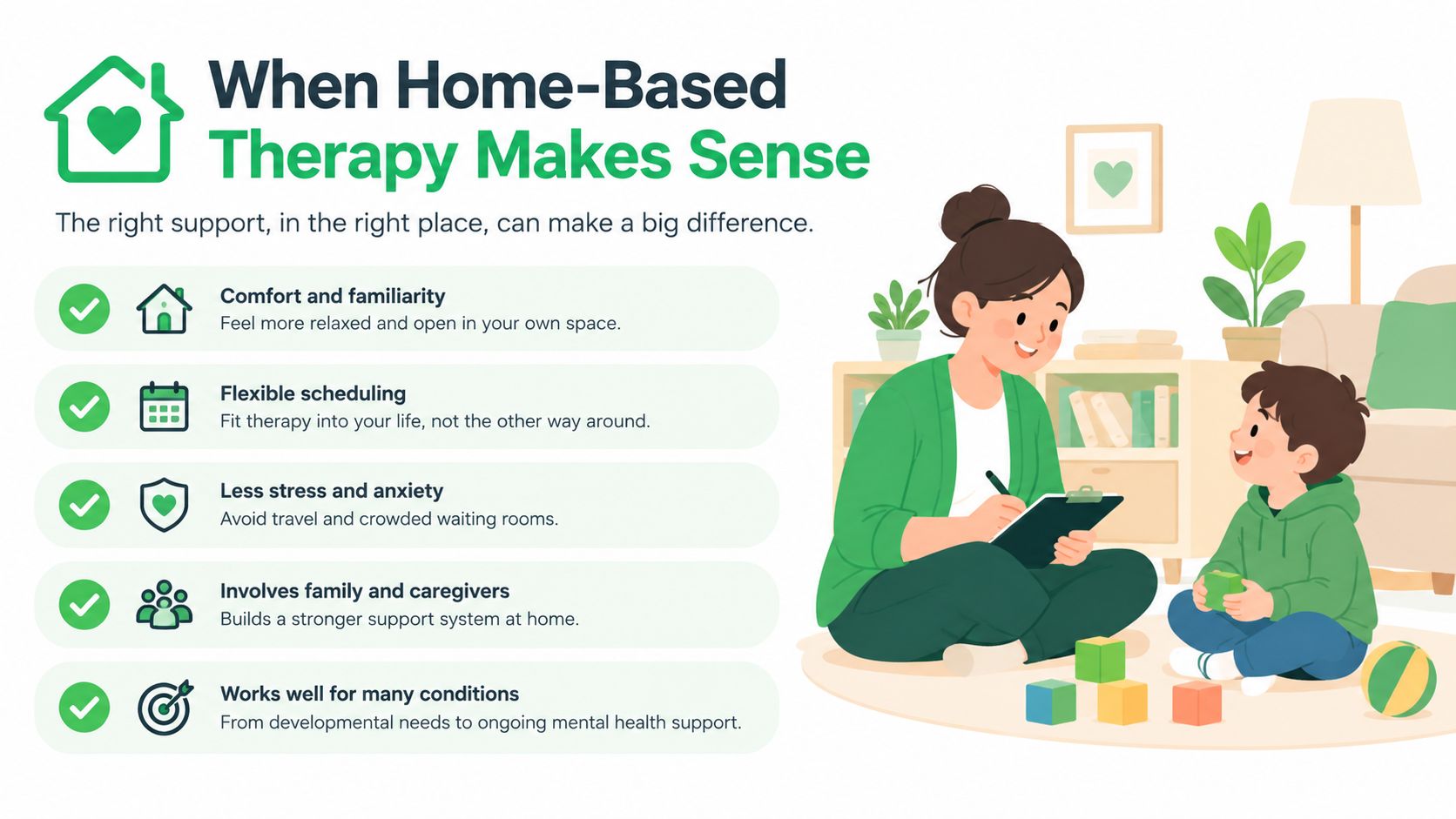
The advantage of home treatment is simple. The patient doesn't need to arrange transport, wait in a clinic, or postpone care because of a hectic schedule. The clinician can document the dose, explain the follow-up plan clearly, and schedule the repeat blood draw so the patient isn't left guessing.
It's a regulated way to deliver the same clinical standard in a place where the patient can complete it.
Good home care does not skip the labs. It makes the labs easier to finish.
I also see it work well for hotel guests who are in Dubai for a short stay and can't afford to lose a day to a clinic queue. One option for regulated in-home support is Vitals Healthcare Doctor On Call, which provides home, hotel, and office visits by DHA-licensed clinicians in Dubai.
Safety, Monitoring, and When to Seek Help
Safe vitamin D therapy starts with baseline bloodwork and ends with follow-up. The usual starting panel includes 25(OH)D, serum calcium, creatinine, and PTH, because the blood level alone doesn't show the whole picture. Repeat testing after a loading course, then periodic maintenance checks, helps confirm that the plan is doing what it should.
What monitoring should look like
A useful schedule is to recheck after the correction phase, then every few months during maintenance if the patient is high risk or has had unstable levels before. The goal is to avoid both under-treatment and over-treatment, especially in people taking multiple supplements or receiving concurrent medical treatment. If there's concern about overshooting, the clinician should review the dose before continuing the same regimen.
| Vitamin D Therapy Monitoring Schedule | Timing | Tests to Order | Action If Abnormal |
|---|---|---|---|
| Baseline | Before treatment | 25(OH)D, calcium, creatinine, PTH | Confirm suitability for therapy |
| After loading | 8 to 12 weeks | 25(OH)D, calcium, PTH | Adjust dose or review adherence |
| Maintenance follow-up | Every 6 to 12 months | 25(OH)D, calcium, as needed creatinine | Continue, reduce, or escalate depending on result |
The internal resource on how safe are home blood tests in Dubai is useful if you're unsure whether at-home monitoring fits your situation.
When to escalate urgently
Seek urgent in-clinic review if you develop persistent nausea, vomiting, polyuria, confusion, kidney stones, or significant muscle weakness. A calcium level above 10.5 mg/dL also needs clinician review rather than routine home continuation. Medication interactions matter too, especially with thiazide diuretics, anticonvulsants, and orlistat.
The expected outcome for most UAE patients is steady improvement over 8 to 12 weeks, then stable maintenance with periodic checks. That's the rhythm that works. Not a one-off dose, not guesswork, and not “more is better”.
If you'd like a clinician-led, home-based assessment, Vitals Healthcare Doctor On Call can arrange vitamin D testing, follow-up monitoring, and treatment support in Dubai through DHA-licensed care. Visit Vitals Healthcare Doctor On Call to arrange a home, hotel, or office visit that fits your schedule and your lab results.