
A vitamin IV infusion itself usually takes 30–60 minutes, while perceived symptom relief may reach its fullest effect within 12–24 hours and can last from about 8 days to 3 weeks, depending on the patient and formula. If you’re in Dubai considering a drip after a flight, a bout of illness, or a day in the heat, those timings are useful starting points, not a promise that you’ll feel better for a set period. Understanding how long the effects of Vitamin IV Therapy last is crucial for making informed decisions.
The confusion comes from using “how long it lasts” to mean several different things. The time connected to the IV, the time you notice symptom relief, and the period when nutrients remain available or active in your body are separate. Each depends on the treatment and your health, so a clinician should assess the reason for treatment before suggesting an infusion or a repeat session.
Understanding the benefits and duration of Vitamin IV Therapy can enhance your wellness journey effectively.
Whether for recovery or wellness, Vitamin IV Therapy provides unique advantages that should be considered.
Table of Contents
- Why the Question Has More Than One Answer
- The Three Timelines Most Articles Mix Up
- What Actually Changes How Long the Benefit Lasts
- Common Formulations and Their Reported Effect Windows
- What a Home IV Session in Dubai Actually Looks Like
- Who Should Think Twice Before Booking a Repeat Session
- Building a Safe Repeat Schedule and Knowing When to Escalate
- Putting the Three Timelines Together
Why the Question Has More Than One Answer
After a flight or a bout of vomiting, you might book a vitamin IV because you feel depleted and want to know when you’ll feel normal again. The answer depends on what you mean by “last.” Dubai vitamin therapy guidance describes an infusion lasting 30–60 minutes, with perceived effects sometimes emerging over 12–24 hours and lasting from 8 days to 3 weeks in some patients. These reported windows vary by patient and formula; they are not a reliable forecast for any one person. Dubai vitamin therapy guidance
One question can refer to three different things:
- How long does the appointment take? The infusion runs at a controlled rate. Assessment, cannula placement, monitoring, and line removal may add time.
- When might I feel a change? Relief may be noticeable soon, especially if hydration is part of the treatment. Whether symptoms improve depends on their cause and whether the infusion addresses it.
- How long do nutrients remain useful? That depends on the nutrient, dose, your starting levels, metabolism, and how your body uses or clears it.
The distinction matters at home, too. If you feel weak after vomiting, an infusion may help replace fluid, but continued vomiting can cause further losses. If fatigue has another cause, a vitamin mixture may not resolve it. Completing the session does not establish that the underlying problem has been treated.
Vitals Healthcare On-Call Doctor is a clinician-led option. A licensed clinician can review your symptoms and relevant health history before deciding whether IV therapy is appropriate. If the cause is unclear or symptoms persist, medical assessment may be more useful than booking another infusion. A clinical review can also help match the treatment choice to your symptoms, rather than selecting a formula based only on its advertised effect window.
The Three Timelines Most Articles Mix Up
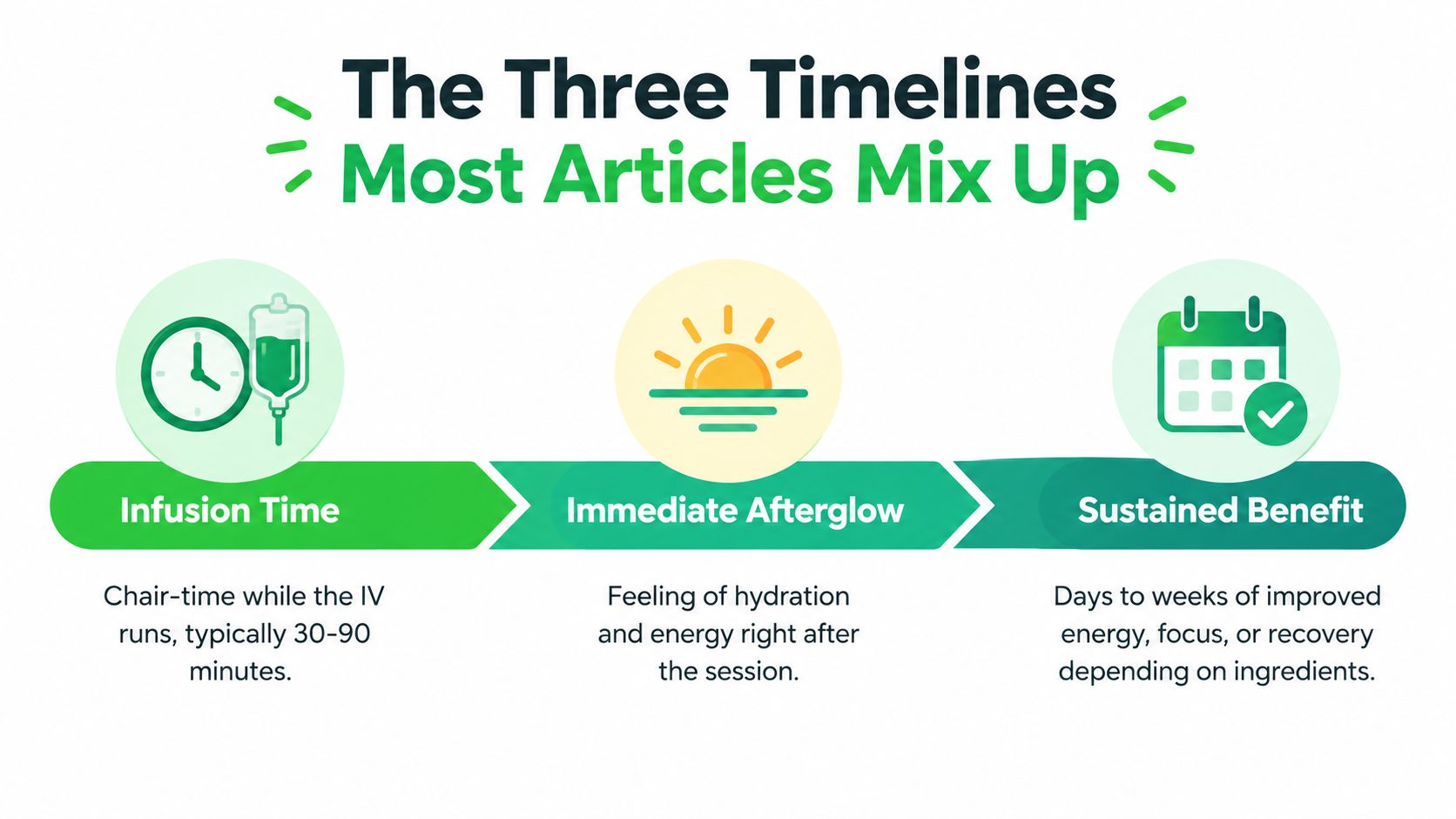
After a vitamin IV session, you may be wondering whether the appointment length, the time until you feel better, and the duration of a nutrient’s effects all mean the same thing. They describe three separate timelines: infusion time, symptom relief, and biological persistence. Dubai clinical descriptions put a standard infusion at about 30–60 minutes. Larger-volume or more concentrated formulations may need slower delivery.
Infusion time is the appointment’s treatment phase
The drip runs at a controlled rate chosen for the prescribed formula and your clinical response. A clinician monitors you during administration. The infusion is one stage of the appointment, much like airport security is one stage of a journey. Preparation and any waiting around it are separate from the time the fluid runs.
Symptom relief is your felt experience
This timeline begins when you notice a change, such as less thirst or a lighter feeling of fatigue. A Dubai clinic describes perceived effects as potentially reaching their fullest point within 12–24 hours and lasting 8 days to 3 weeks, depending on the formula and patient. These are reported windows, not a promise that you will feel better for that long or that every ingredient will benefit you.
Relief can feel like the first sip of water on a hot day. It may come quickly, yet it does not explain why you felt unwell or show that the cause has gone away. If fluid loss continues, the relief may not last.
Biological persistence isn’t the same as feeling better
A nutrient may remain available in your body without causing a noticeable sensation. The reverse can happen, too: you may feel less thirsty for a while, but that feeling does not show that every vitamin in the infusion is still having a useful effect. When considering questions about IV therapy for dehydration, separate fluid-related relief from the effects of individual nutrients. These timelines answer different questions, so one duration cannot stand in for the others.
What Actually Changes How Long the Benefit Lasts
A benefit window depends first on what went into the IV and how it was prescribed. Fluid volume, ingredient mix, concentration, and infusion rate all affect the treatment. A larger or more concentrated formulation may need to run more slowly, while a session’s perceived effects depend on whether the ingredients address a genuine clinical need. An infusion that doesn’t match the reason for your symptoms may have little or no noticeable benefit.

Your starting point matters
If a clinician identifies a deficiency, the question of benefit is different from a wellness infusion for someone whose nutrient levels are already adequate. The rationale for IV delivery is strongest when there’s a documented deficiency, malabsorption, or a condition that calls for rapid treatment by the parenteral route. Evidence for improved energy, immunity, or cognition in otherwise healthy, vitamin-replete adults remains limited, and reported experiences shouldn’t be mistaken for proof of a lasting effect.
Where relevant, a clinician may recommend tests before considering supplementation. For example, information on arranging a vitamin D test at home in Dubai can help explain how testing fits into a broader assessment rather than relying on symptoms alone.
Ongoing losses can shorten hydration relief
Heat exposure, exercise, alcohol, vomiting, diarrhoea, and illness can all affect fluid balance. If fluid loss continues after a drip, the hydration-related effect may fade sooner than expected. Continued oral fluids and appropriate medical care matter; an infusion isn’t a replacement for addressing the reason you’re losing fluid.
Kidney and heart function also affect how a person handles fluids and nutrients. Age, metabolism, medications, and baseline hydration can influence the clinician’s decision about whether to treat, what to prescribe, and how closely to monitor. Vitals Healthcare On-Call Doctor can be considered when you need a clinician to assess those factors before treatment, rather than selecting a formula solely by its advertised benefit.
When comparing IV delivery with oral supplements, keep the comparison specific to the nutrient and the person. A resource on liposomal CoQ10 absorption benefits offers context on a different delivery format, but it doesn’t establish that a particular IV formula is necessary or suitable for you.
Common Formulations and Their Reported Effect Windows
A “lasting” effect can describe three different things: time in the infusion chair, short-term symptom relief, or how long the body retains and uses a nutrient. Those timelines are not interchangeable. The windows below are reported descriptions, not promises or pharmacokinetic limits.
Typical Dubai IV Formulations and Reported Effect Windows
| Formulation | Core Ingredients | Reported Effect Window | Key Caveat |
|---|---|---|---|
| Basic hydration | Prescribed fluids, sometimes with electrolytes | Hydration-related symptom relief may fade within about 24–48 hours | Depends on whether dehydration was present and whether fluid loss continues. |
| B-complex | B vitamins | Perceived effects are described over roughly 4–8 days | Not a universal limit or proof of benefit when no deficiency is present. |
| Vitamin C or antioxidant mix | Vitamin C and other antioxidants, depending on the prescribed formula | Effects are often described over approximately 3–7 days | Reported intervals don't establish a guaranteed clinical benefit. |
| Glutathione | Glutathione, sometimes alongside other ingredients | Effects, where reported, are described over roughly 1–2 weeks, depending on dose and indication | A marketed purpose doesn't establish that the treatment is medically needed. For background, see Dubai information on glutathione and vitamin C. |
| NAD+ | NAD+ | The infusion may require several hours | This is chair-time, not a promise about how long benefits will last. |
The ranges come from descriptions of reported effects, and they should not be read as guarantees. A few days of perceived change does not mean the nutrient remains in the body at the same level for that entire period. Likewise, time spent receiving an infusion says little about how long symptom relief may last.
Clinical context changes how these windows apply. Someone with a confirmed deficiency or impaired absorption differs from someone seeking a general wellness boost. Even with the same formulation, dose, health status, and treatment reason can affect the response. For glutathione and vitamin C, information on their use and effects can provide context, but it cannot determine whether a particular infusion is suitable.
Some providers describe repeat protocols, but a schedule should not become a default. A clinician should base repeat treatment on an individual reason. If symptoms return, recur, or never improve, the next step is to consider whether an underlying cause needs assessment, rather than assuming another infusion is the answer.
What a Home IV Session in Dubai Actually Looks Like
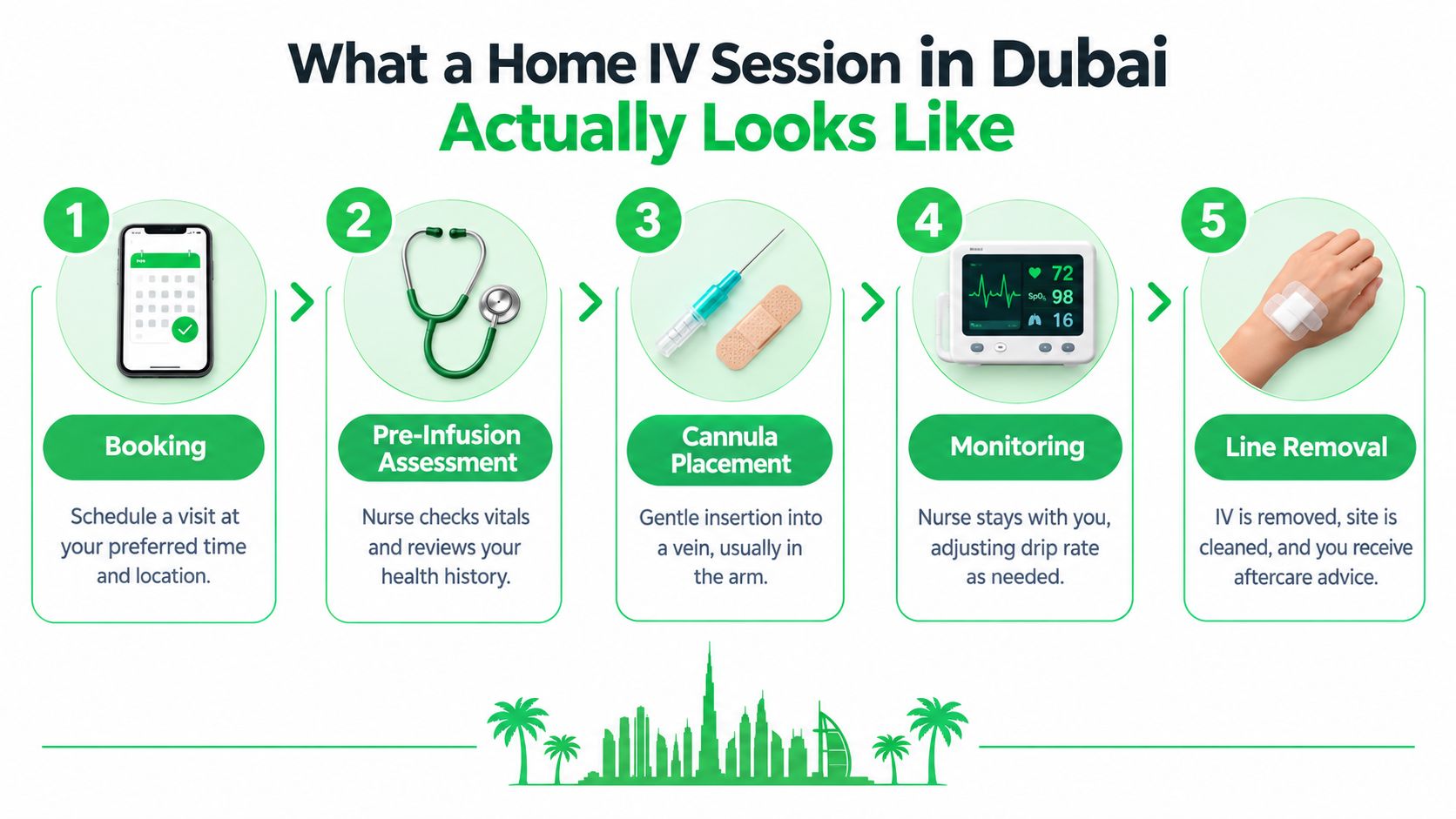
A properly run home visit starts with an assessment, not with a preselected drip. The clinician should ask why you're considering treatment, review your medical history and medications, check allergies and hydration status, and decide whether IV therapy is appropriate. A first visit can take longer than the infusion itself because those checks help determine whether treatment is safe and what, if anything, should be administered.
From assessment to line removal
After the clinician decides to proceed, they prepare the prescribed infusion and place a cannula, commonly in an arm vein. The fluid then runs at a controlled rate while the patient is monitored. The clinician may adjust the rate, pause the drip, or stop it if you develop discomfort, dizziness, nausea, or signs of an adverse reaction.
The procedure also relies on infection-control practices. Dubai Healthcare City's Standard Precautions Guidelines set out requirements for aseptic preparation and administration of parenteral medicines, including safe handling of syringes, single-dose IV containers, and sharps. These practices are part of clinical care, not optional extras.
Once the prescribed infusion is complete and the clinician has checked your response, they remove the line and explain aftercare. A safe visit should include monitoring and a plan for what to do if symptoms worsen later. Dubai IV treatment information can help you understand what a home-based service may involve, but the appropriate plan still depends on an individual assessment.
Vitals Healthcare On-Call Doctor provides home healthcare in Dubai, including IV therapy, with DHA-licensed clinicians. For a patient, the useful expectation is a monitored medical visit with an assessment and an infusion paced to the clinical situation, not a guaranteed appointment length or a fixed duration of relief.
Who Should Think Twice Before Booking a Repeat Session
A longer-lasting effect isn't automatically a better result, and a repeat session isn't automatically appropriate because the last one seemed helpful. Some conditions change how safely your body can manage fluid or particular nutrients. Tell the clinician about your full health history, medicines, allergies, and any recent change in symptoms before an elective infusion.
Extra caution or a different treatment plan may be needed for people with:
- Kidney disease or fluid restrictions, because the body may not handle added fluid or some nutrients as expected.
- Heart failure or uncontrolled high blood pressure, where fluid balance and blood pressure need careful consideration.
- Pregnancy or breastfeeding, when the clinician must assess the treatment's suitability rather than assume a wellness formula is harmless.
- Blood-thinner use, allergies, or active infection, which may affect the procedure or the risk assessment.
- G6PD deficiency when high-dose vitamin C is proposed, or another condition that could affect vitamin handling.
Repeated elective infusions can expose someone to avoidable risks, including infection, vein irritation, fluid overload, electrolyte disturbance, allergic reactions, and nutrient toxicity. That doesn't mean every infusion will cause harm. It does mean the formula, dose, and reason for treatment need review before a repeat is considered. Information on IV drip side effects can help patients recognise why monitoring and clinical oversight matter.
Ask a different question if you're repeatedly tired or unwell: What's causing the symptom, and does it need diagnosis? A drip may temporarily change how you feel without resolving the underlying problem. Persistent or recurrent symptoms deserve medical review rather than an automatic booking.
Building a Safe Repeat Schedule and Knowing When to Escalate
A repeat plan should follow clinical need, not a preset calendar. The clinician can review how you responded, whether symptoms returned, and whether testing is appropriate. That's particularly important when symptoms follow illness, fasting, vomiting, or an unexplained health change, because the cause may require treatment beyond an infusion.
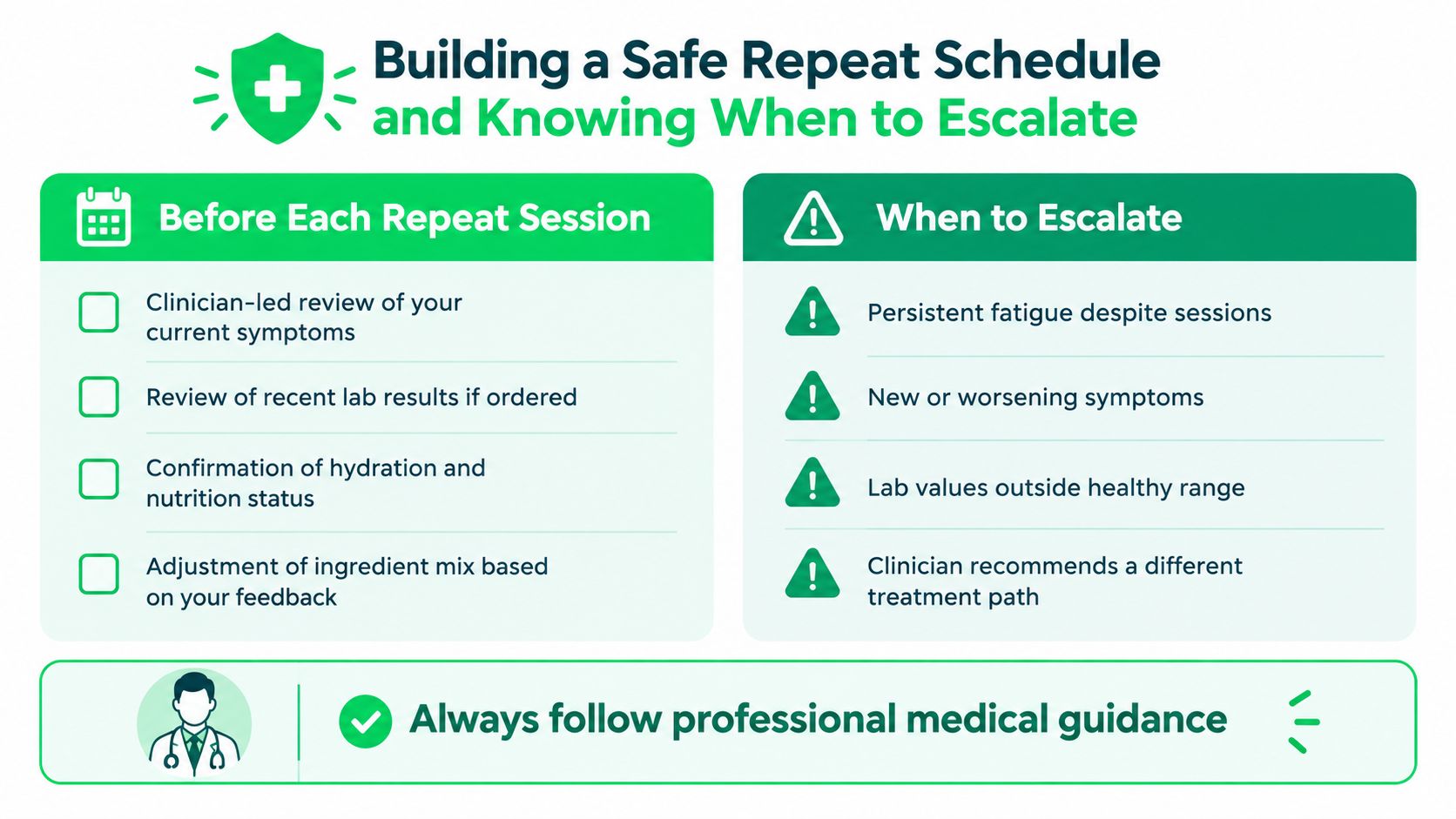
During or shortly after treatment, chest pain, severe breathlessness, confusion, worsening dehydration, a rash, wheezing, abnormal vital signs, or severe pain at the cannula site need prompt attention. The infusion should be paused or stopped if a concerning reaction occurs, and the patient should be assessed. If symptoms are severe or rapidly worsening, seek urgent medical care.
Vitals Healthcare On-Call Doctor can discuss follow-up through phone or WhatsApp, but a clinician should determine whether another infusion is suitable. Don't assume that recurring symptoms mean you need the same formula again. A review can identify when a different investigation or treatment path makes more sense.
Putting the Three Timelines Together
The infusion usually takes 30–60 minutes; possible symptom relief may be noticed over 12–48 hours, while the duration of perceived benefit can vary from days to several weeks. Those windows depend on the formula, clinical need, and your health, not a fixed schedule. Before booking, confirm that a clinician will assess you, ask why the proposed ingredients fit your symptoms, plan to continue appropriate oral fluids, and understand which warning signs mean stopping treatment and seeking help. Vitals Healthcare On-Call Doctor offers home healthcare in Dubai, including clinician-led IV therapy for homes, hotels, and offices.
If you're considering an IV at home, hotel, or office, Vitals Healthcare Doctor On Call offers access to DHA-licensed clinicians who can assess your symptoms and discuss whether treatment is appropriate. Visit Vitals Healthcare Doctor On Call to explore its on-call medical services and arrange a clinician-led review.