
If you're considering glutathione and vitamin C in Dubai, the most important question isn't whether a larger dose sounds more powerful. It's whether the formulation reaches your circulation, whether your body can use it, and whether the treatment is appropriate for you in the first place. Route, clinical assessment, and provider regulation matter more than a promotional promise about “maximum absorption”.
This guide explains how the two antioxidants relate, what oral products can realistically offer, how IV therapy changes exposure, and why G6PD screening and DHA oversight matter. It's written for Dubai residents, hotel guests, business travellers, UK and US citizens living in the UAE, and anyone comparing a supplement with a doctor-supervised home treatment.
Table of Contents
- The Bioavailability Reality of Antioxidant Therapy
- How Vitamin C Supports Glutathione Function
- Comparing Oral Supplements and IV Infusions
- Safety Protocols and Clinical Contraindications
- Navigating DHA Regulations for Home Healthcare
- What to Expect from an At-Home or Hotel IV Drip
- Securing Your Regulated Antioxidant Therapy
The Bioavailability Reality of Antioxidant Therapy
The popular advice is simple: take more antioxidants and expect better results. Clinical practice is less convenient. A high labelled dose doesn't guarantee a high usable dose, because the body processes oral glutathione through the digestive tract before it enters the bloodstream. A Dubai resident choosing capsules and a tourist considering a hotel IV drip are making different delivery decisions, not merely choosing different brands.
A UAE-facing review describes oral glutathione as having less than 1% absorption, while IV delivery can approach near 100% plasma bioavailability. The same review cautions that higher plasma levels don't automatically prove a meaningful intracellular or clinical benefit, particularly for cosmetic and “immunity” claims. That distinction should shape the consultation, not be buried in small print. Read the UAE-facing discussion of glutathione bioavailability and IV therapy.
What the combination is intended to do
Glutathione is an antioxidant produced by the body, while vitamin C participates in antioxidant recycling. Combining them is therefore biologically plausible, but plausibility isn't the same as a guaranteed treatment outcome. The practical purpose may be nutritional support, antioxidant support, or part of a physician-reviewed IV protocol, depending on the patient's history and stated goal.
The route changes the question:
- Oral capsules are convenient and suitable for people seeking a routine supplement, but their delivered exposure depends on the product form and digestion.
- IV infusion bypasses gastrointestinal processing and produces a rapid rise in plasma exposure, but it requires clinical screening, cannulation, monitoring, and appropriate follow-up.
- Cosmetic claims need particular caution. Marketing language often moves faster than evidence, especially when “glow” or skin-lightening outcomes are presented as predictable.
Before choosing a product, it's sensible to review ingredient form, serving instructions, co-factors, and quality controls. A practical guide on how to choose antioxidant supplements can help you assess a label without treating the highest milligram figure as proof of superiority.
Why Dubai patients should separate wellness from treatment
A post-flight traveller may want hydration and medical review after a long journey. A resident may be exploring general antioxidant support. Someone with fatigue, recurrent illness, kidney concerns, diabetes, or medication use needs a clinical assessment rather than a standardised drip selected from a menu.
For people considering a supervised option, IV vitamin therapy in Dubai should be approached as a healthcare service, not a beauty appointment. A clinician should first establish whether the proposed ingredients and route fit the person's health status.
Practical rule: A higher dose can increase exposure, but it can also increase risk. The correct protocol is the one justified by the patient's history, not the one with the largest number on a menu.
How Vitamin C Supports Glutathione Function
Vitamin C does not automatically make every glutathione protocol more effective. The pairing has a biochemical rationale, but clinical value still depends on absorption, dose, nutritional status, and the patient's underlying condition.
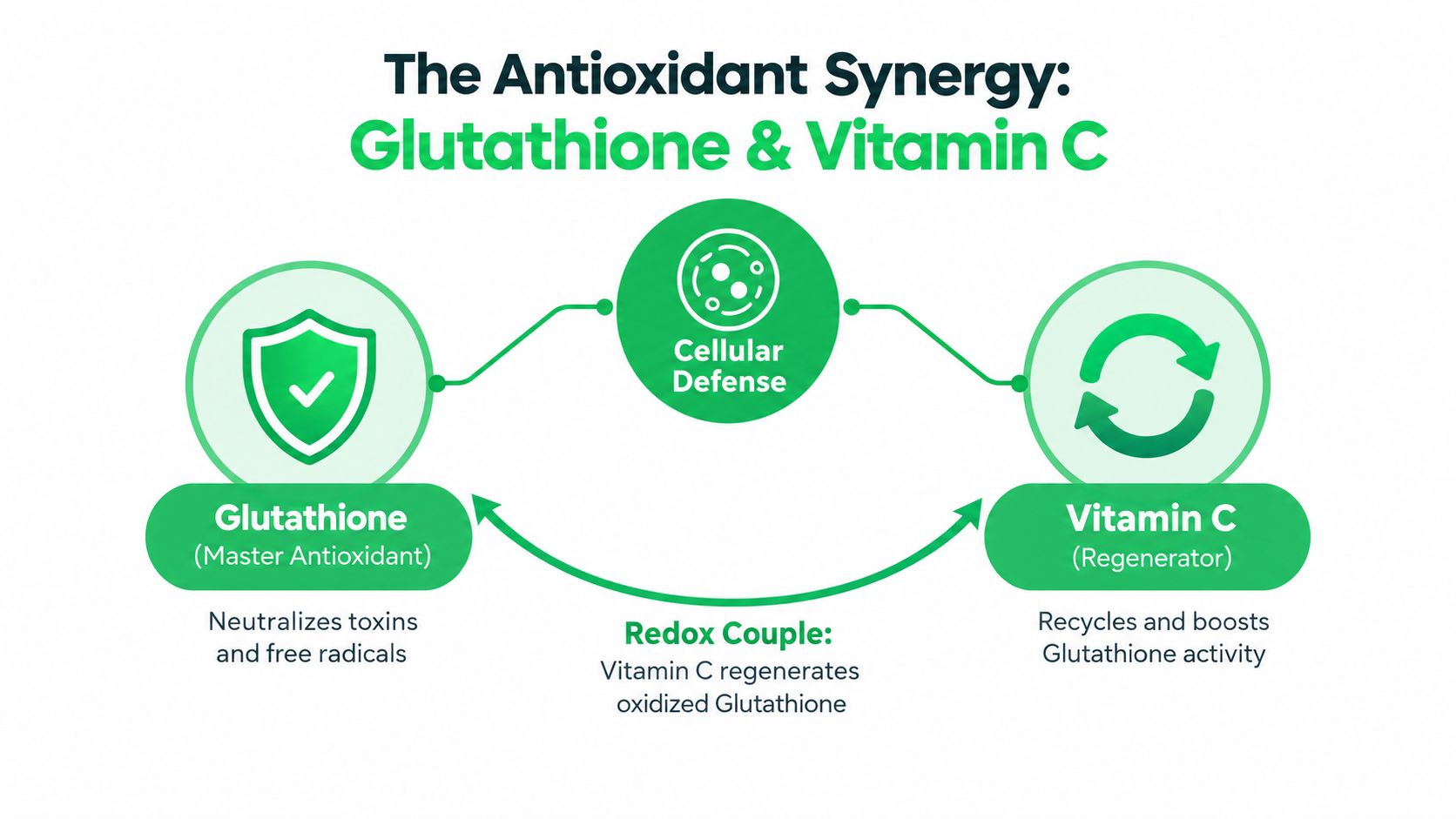
Glutathione neutralises reactive compounds and can become oxidised during that process. Vitamin C supports the reduction of oxidised glutathione back toward its active, reduced state. This redox relationship explains why clinicians may consider the two nutrients together, without treating the combination as a guaranteed result.
The redox cycle in plain language
Glutathione functions as a reusable cellular antioxidant. After participating in antioxidant reactions, it can shift into an oxidised form. The body has systems that restore it, and vitamin C contributes to the wider network that helps maintain antioxidant balance.
That makes a glutathione-only formulation an incomplete answer in some situations. Vitamin C may support the recycling environment, while glutathione performs its own antioxidant role. The relationship is complementary, not magical.
A controlled human trial cited by the National Academies found that healthy adults taking 500 mg per day of vitamin C had a significant rise in red blood cell glutathione. Mean glutathione increased by nearly 50% after the 500 mg period, while individual changes ranged from an 8% increase to an 84% increase. The report also found that men consuming very low vitamin C intakes of 5 to 20 mg per day experienced significant falls in plasma total glutathione and in the reduced-to-oxidised glutathione ratio. Review the human trial record for vitamin C and glutathione status.
What the evidence does and doesn't establish
The findings support a relationship between vitamin C status and glutathione homeostasis. They do not show that every patient needs an IV infusion, that a cosmetic outcome will follow, or that increasing the dose always improves the result.
Older human data also caution against choosing treatment by dose alone. A review discussed in a UAE-facing clinical context reported that a 500 mg dose sometimes outperformed 2,000 mg, with effects that were not dose-linear. Bioavailability and individual response therefore matter more than a large number on a treatment menu. For route-specific considerations, consult this vitamin C IV drip guide.
UAE context matters as well. A population study surveyed adults living in the Emirates during February and March 2022, examining vitamin C knowledge, intake, and attitudes. Its relevance is practical: vitamin C remains a public-health nutrition issue in the UAE, rather than only a clinic or supplement topic. Explore the UAE vitamin C intake and knowledge research.
For readers assessing oral products, an overview of vegan glutathione for immune health shows how these supplements are positioned. Product language should be separated from evidence for a supervised infusion.
The clinical interpretation
The combination can make biological sense when antioxidant support is the objective and the patient is suitable for it. It does not replace food, sleep, treatment of an underlying illness, or assessment of symptoms.
Fatigue, pigmentation changes, recurrent infections, and poor recovery require questions about their cause before antioxidants are added. A clinician should match the formulation and route to the patient, rather than assuming that combining nutrients, or escalating exposure, resolves the underlying problem.
Comparing Oral Supplements and IV Infusions
Oral supplements and IV infusions solve different problems. Capsules are portable, familiar, and easier to use over time. Infusions provide direct vascular delivery, but they involve a procedure and should be selected after medical review.
UAE retail listings commonly position combination products at 1,500 mg of glutathione per 60 capsules, with vitamin C and other antioxidant co-factors. That formulation pattern shows how products are marketed in the local retail environment, but it doesn't tell you the amount absorbed or prove a clinical outcome. Check the serving size, form, ingredient list, storage instructions, and whether the stated amount refers to the container or the daily serving. Review UAE glutathione and vitamin C product listings.
Clinic-style UAE offerings have published packages listing glutathione at 600 to 2,400 mg with 3,000 mg of vitamin C per drip. These pages are promotional, not controlled efficacy trials, so their listed doses should be treated as examples of market positioning rather than a recommendation. See an example of a UAE-listed glutathione and vitamin C offering.
Oral Supplements vs IV Infusion Therapy
| Feature | Oral Supplements | IV Infusion Therapy |
|---|---|---|
| Delivery route | Passes through the digestive system | Enters the bloodstream directly |
| Practical advantage | Convenient for a self-managed routine | Useful when a clinician judges rapid vascular delivery appropriate |
| Exposure | Depends on formulation, digestion, dose, and absorption | Produces high plasma exposure, but plasma exposure doesn't guarantee cellular or clinical benefit |
| Procedure | No cannulation or clinical observation required | Requires a trained clinician, sterile equipment, assessment, and monitoring |
| Best suited to | People considering ongoing nutritional support | Patients assessed as suitable for a supervised infusion |
| Main trade-off | Lower and less predictable delivered exposure | Greater procedural and safety responsibility |
| Cosmetic claims | Evidence remains limited and product-dependent | IV cosmetic evidence is particularly weak and safety concerns are significant |
| What to verify | Label, serving size, ingredient form, and product quality | Provider licence, clinician credentials, screening, ingredients, and escalation arrangements |
Choosing according to the real objective
For general nutritional support, an oral product may be the more proportionate starting point, especially when the person has no indication for parenteral treatment. For an acute complaint, the first question should be whether the complaint needs a doctor, a lab test, hydration, rest, or another intervention. An IV drip shouldn't become a substitute for diagnosis.
The most useful comparison isn't “which gives stronger results?” It's “which route offers a reasonable balance between the intended benefit and the burden or risk?” Someone who dislikes needles, has no clear clinical reason for an infusion, or wants a daily routine may favour oral use. Someone who can't tolerate oral intake or has a clinician-identified need for supervised IV support may have a different decision.
You can also compare general hydration and multivitamin protocols with antioxidant-focused options through vitamin IV therapy benefits and limitations. The important safeguard is to ask what each ingredient is intended to do, which symptoms it addresses, and what outcome would justify continuing.
A drip is a delivery method, not a diagnosis. If the underlying problem hasn't been identified, better delivery may simply deliver the wrong intervention more efficiently.
Safety Protocols and Clinical Contraindications
Safety screening is the dividing line between clinical IV therapy and an unregulated wellness transaction. Glutathione and vitamin C may be discussed as antioxidants, but high-dose IV treatment can create risks that aren't visible from a product menu.
The most important example is G6PD deficiency. The literature warns that G6PD status should be established before high-dose IV vitamin C because haemolysis can occur in susceptible patients. This isn't a minor administrative detail. A clinician should decide whether testing is needed based on the proposed dose, medical history, ethnicity or family history where relevant, and the overall protocol.
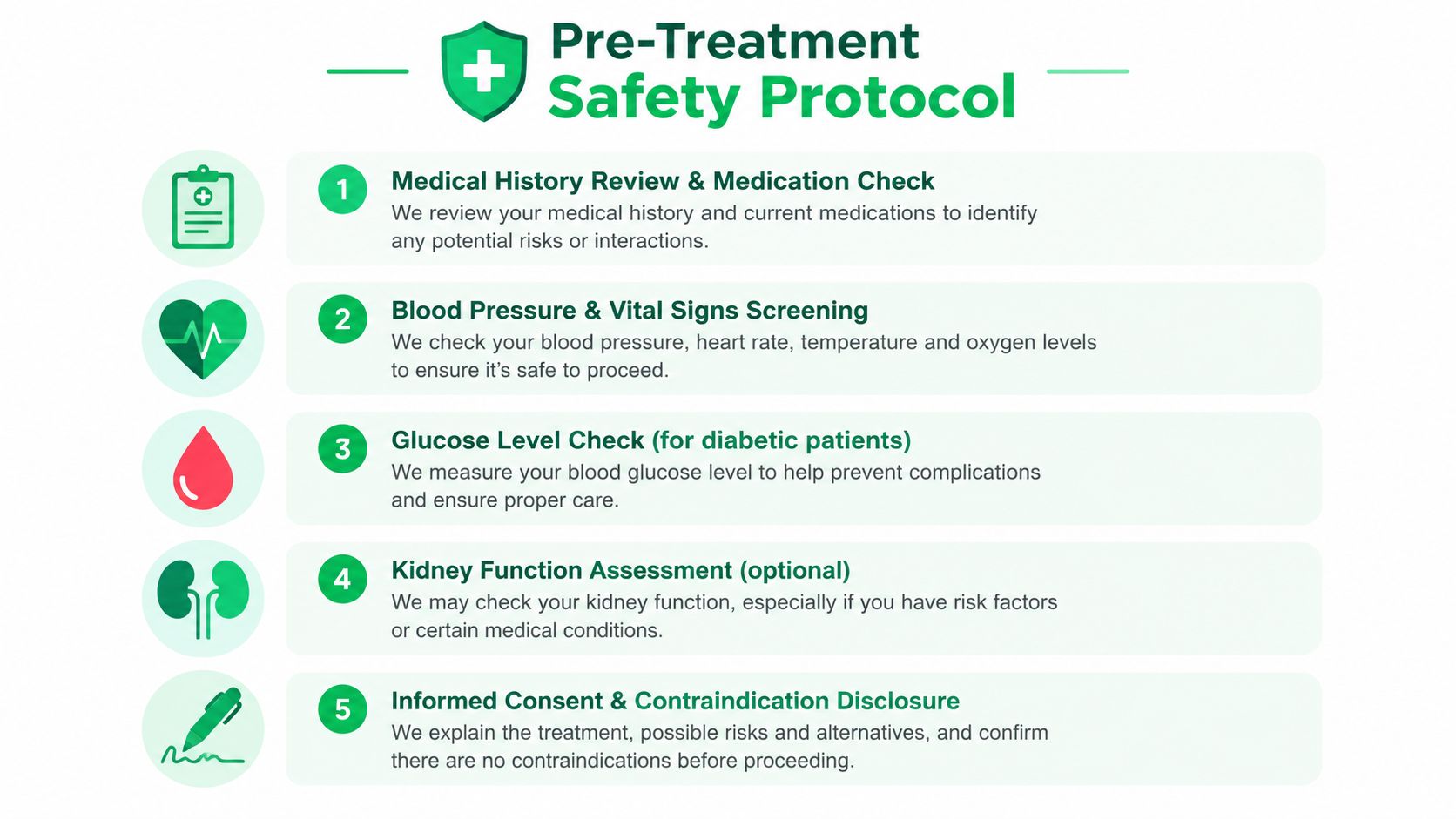
The pre-infusion checklist
A responsible assessment should cover more than a quick blood pressure reading.
Medical history and medication review
The clinician should ask about kidney disease, previous reactions, pregnancy, chronic illness, current symptoms, and prescribed or non-prescribed medicines. High-dose vitamin C may be unsuitable in some circumstances, and medication interactions or treatment priorities need individual review.Vital signs and current condition
Blood pressure, pulse, temperature, hydration status, and the reason for requesting treatment help determine whether an IV is appropriate. A patient who is acutely unwell may need a doctor-led evaluation or emergency referral rather than a wellness infusion.G6PD assessment where indicated
This is the critical safeguard before high-dose IV vitamin C when the clinician considers the risk relevant. The purpose is to reduce the chance of oxidative injury to red blood cells and haemolysis.Kidney and metabolic considerations
Kidney function, diabetes, fluid sensitivity, and other conditions may alter the risk profile. A kidney assessment isn't automatically required for every patient, but it may be appropriate when the history or proposed protocol indicates it.Informed consent and monitoring
The patient should understand the intended purpose, uncertainty of benefit, alternatives, possible adverse effects, and what happens if symptoms develop during or after the infusion.
Cosmetic use needs a higher evidence threshold
A 2025 systematic review reported melanin-index reduction with oral glutathione in five randomised trials. Its assessment of IV glutathione was much less favourable. The only placebo-controlled IV trial didn't show a statistically significant benefit, and the review concluded that IV cosmetic use was contraindicated on efficacy and safety grounds. Read the systematic review of glutathione for skin-lightening purposes.
That finding should change how patients interpret “skin brightening” offers. Uneven pigmentation can have many causes, and a clinician should consider dermatological assessment rather than promising a uniform result from an antioxidant drip.
Before booking, review common IV drip side effects and ask who will assess you, who will administer the infusion, what emergency procedures exist, and whether the provider can arrange medical follow-up. A spa-style setting shouldn't be used for a treatment requiring medical screening.
Navigating DHA Regulations for Home Healthcare
Receiving an IV in a home, office, or hotel room doesn't remove the need for healthcare regulation. In Dubai, the Dubai Health Authority framework applies to facilities and professionals delivering home healthcare, including services provided outside a traditional clinic.
DHA states that a person or entity must obtain a DHA licence to operate an independent home healthcare facility in the emirate. The framework covers government, semi-government, private, and free-zone facilities, and an already licensed healthcare facility needs DHA approval before adding home healthcare services. Read the DHA home healthcare framework for facilities.
What patients should verify
The service provider should be able to explain which licensed facility is responsible for your care and which clinician will attend. DHA's current home healthcare standard requires facilities offering the service to follow licensing and administrative procedures, and licensed professionals delivering home healthcare must be licensed and registered with DHA. Review DHA's home healthcare services standard.
You can ask for:
- Facility identity: Confirm the company arranging the visit and the licensed healthcare facility behind the service.
- Clinician credentials: Ask whether the doctor or nurse delivering care is licensed and registered with DHA.
- Clinical responsibility: Establish who reviews your history, approves the protocol, and handles follow-up.
- Documentation: Request an itemised record of the treatment, ingredients, route, and any advice given.
- Escalation plan: Know what happens if you develop a reaction or the clinician finds a concerning symptom.
DHA's Sheryan portal is the digital gateway for registering and licensing healthcare professionals and facilities in Dubai. The DHA FAQ lists 800342 as the main contact number for official support and verification queries. Access the DHA Sheryan licensing portal.
Home and hotel care are still clinical encounters
A hotel room may feel informal, but the clinical standards shouldn't be. The visiting team should use appropriate infection-control procedures, confirm identity and consent, assess the patient at the bedside, and document the treatment. A concierge can help with access, but the concierge isn't a substitute for a licensed healthcare facility.
For tourists, regulation also provides a practical filter. Avoid operators who won't identify the responsible facility, refuse to discuss clinician credentials, or insist that a drip is suitable without asking about your health history.
What to Expect from an At-Home or Hotel IV Drip
A properly organised home or hotel visit should feel structured rather than improvised. You'll provide your location, contact details, symptoms or wellness objective, medical history, allergies, medication information, and any relevant test results. The clinical team then decides whether a consultation, lab test, doctor visit, or IV assessment is the appropriate next step.
The service may be arranged for a Dubai residence, office, or hotel. Hotel guests should tell reception or the concierge that a licensed healthcare professional is expected, while preserving privacy by requesting an in-room assessment. The clinician should confirm the room and patient identity before beginning.
The usual clinical sequence
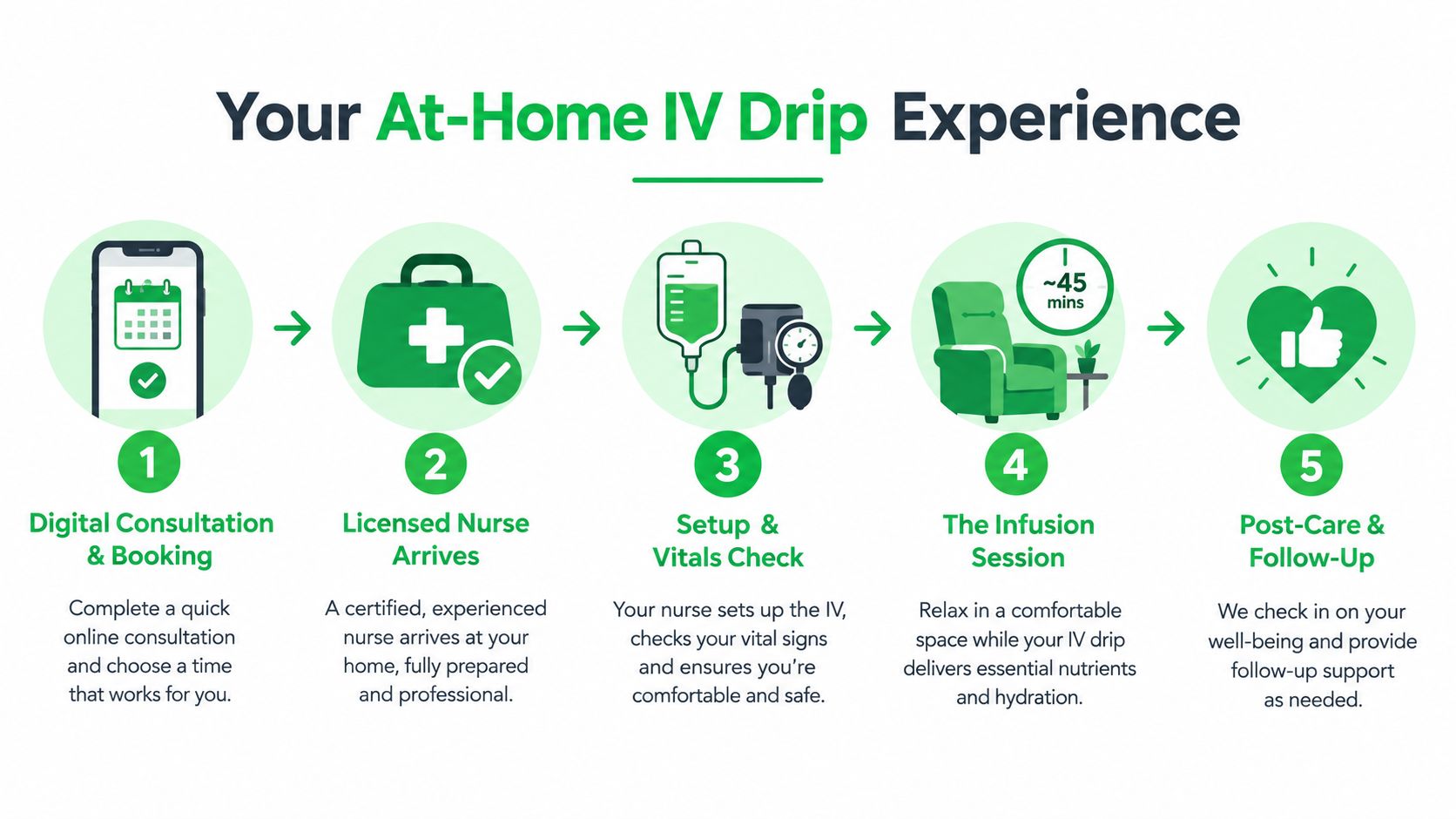
First, consultation and booking. A phone or digital conversation establishes what you're seeking and whether there are warning symptoms. If you're reporting chest pain, severe breathlessness, confusion, collapse, or another emergency concern, an IV wellness visit isn't the correct pathway. Emergency services take priority.
Next, arrival and identification. The visiting clinician should show appropriate identification and confirm the responsible provider. Don't feel awkward about checking credentials. This protects both the patient and the clinician.
Then, assessment before treatment. The clinician reviews your history, medications, allergies, current symptoms, vital signs, hydration, and suitability for the proposed ingredients. If the clinical picture is unclear, the correct decision may be to delay or decline the infusion.
During the infusion, the clinician prepares the equipment using infection-control precautions, inserts the cannula, and monitors your response. Published service descriptions often describe an infusion window of approximately 45 to 60 minutes, although the actual duration depends on the formulation, route, patient response, and clinical decision-making. Don't treat a fixed time as a guarantee.
Finally, post-care. The clinician checks how you feel, gives instructions about symptoms that need attention, documents the treatment, and explains follow-up. A patient who develops worsening symptoms after the visit should contact the provider or seek urgent medical help rather than assuming the reaction is normal.
Practical preparation for residents and visitors
Wear clothing that allows easy access to the arm and choose a stable place to sit or recline. Keep your passport or Emirates ID, medication list, allergy information, and relevant medical records available. Hotel guests should arrange a quiet room and tell the clinician about any travel-related symptoms, alcohol intake, recent illness, or dehydration.
A hotel IV isn't a replacement for a doctor's examination when the patient has a significant illness. If you're seeking help because of persistent fatigue, vomiting, fever, abdominal pain, or unexplained skin changes, ask whether a doctor consultation or mobile lab testing should come first.
Securing Your Regulated Antioxidant Therapy
The sensible way to evaluate glutathione and vitamin C therapy is to combine four questions. Does the proposed route provide a meaningful advantage for your situation? Is the intended benefit supported or still uncertain? Have the clinician and facility completed the safety screening? Can you verify that the home healthcare service is regulated in Dubai?
The biochemical rationale for pairing vitamin C with glutathione is credible, particularly because human evidence connects vitamin C status with glutathione homeostasis. The delivery argument for IV treatment is also clear: it bypasses digestion and creates high plasma exposure. Neither point proves that a drip will improve skin colour, immunity, energy, or recovery for every person.
A decision framework for your appointment
Use this checklist before you consent:
- Define the objective: Say whether you're seeking nutritional support, hydration, recovery assistance, or help with a symptom.
- Ask what is known: Request a realistic explanation of the expected benefit and the limits of the evidence.
- Confirm the route: Understand why oral treatment, IV treatment, or no antioxidant treatment has been selected.
- Complete the safety review: Discuss G6PD status, kidney health, diabetes, medications, allergies, pregnancy, and previous infusion reactions.
- Verify regulation: Confirm the facility and clinician's DHA status through appropriate official channels.
- Plan follow-up: Know whom to contact if symptoms persist, worsen, or appear after treatment.
Don't book based only on a social media before-and-after image or a package name. Cosmetic IV glutathione has weak evidence, and the safety review cited earlier found serious concerns about its intravenous use. A regulated provider should be willing to explain uncertainty rather than conceal it.
If you're comparing providers, review guidance on avoiding scams and overcharging in home healthcare and ask for transparent pricing, a treatment record, clinician identification, and a clear cancellation or escalation process. Vitals Healthcare Doctor On Call offers DHA-licensed home healthcare visits, including doctor, nursing, lab, and IV therapy coordination across Dubai, subject to clinical suitability and service availability.
The logical next step
If your goal is general antioxidant support, start with a clinician-led discussion rather than selecting a high-dose product by appearance or marketing language. If you're a hotel guest with a genuine medical concern, ask for an assessment at your location. If you're considering an IV specifically for skin lightening, keep expectations cautious and discuss safer, evidence-based dermatology options.
The right decision may be an oral supplement, an IV infusion, a lab test, a doctor visit, or no antioxidant treatment at all. A credible clinical service should help you reach that decision without pressure.
For a DHA-regulated assessment of glutathione and vitamin C therapy at your Dubai home, office, or hotel, contact Vitals Healthcare Doctor On Call to discuss your symptoms, goals, medical history, and suitable options. The team coordinates doctor on call, nursing, lab testing, and physician-reviewed IV therapy, so you can arrange an informed next step instead of choosing a drip from a generic menu.