
You're in a Dubai hotel room or family apartment, it's late, swallowing hurts, and the tonsils look swollen or coated. The immediate question is usually simple: is this something to manage with fluids and pain relief, or do you need a doctor and antibiotics? The answer depends less on how alarming the throat looks and more on whether the cause is viral, bacterial, or developing into a complication.
This guide explains practical علاج التهاب اللوزتين in the UAE context, using DHA clinical guidance, Centor-based assessment, and clear escalation points. It also explains when a clinic is enough, when urgent care is safer, and when a Dubai doctor home or hotel visit can make sense. The approach reflects the principles reviewed in DHA's Telehealth Clinical Guidelines for virtual sore-throat management, alongside the clinical reviews used for reference.
Table of Contents
- What Is Tonsillitis and How It Starts
- Viral Versus Bacterial Tonsillitis
- Home and Hotel Self-Care That Actually Helps
- When Antibiotics Become Necessary
- Red Flags and ENT Referral Decisions
- Choosing Between Clinic and a Dubai Doctor Home Visit
- Prevention and Final Takeaways
What Is Tonsillitis and How It Starts
In a Jumeirah apartment, a child may stop eating because every swallow hurts. In a Marina hotel, a visitor may wake with fever and enlarged, red tonsils before a planned day out. The practical question is whether symptoms can be managed briefly at home or whether a clinician should examine the throat.
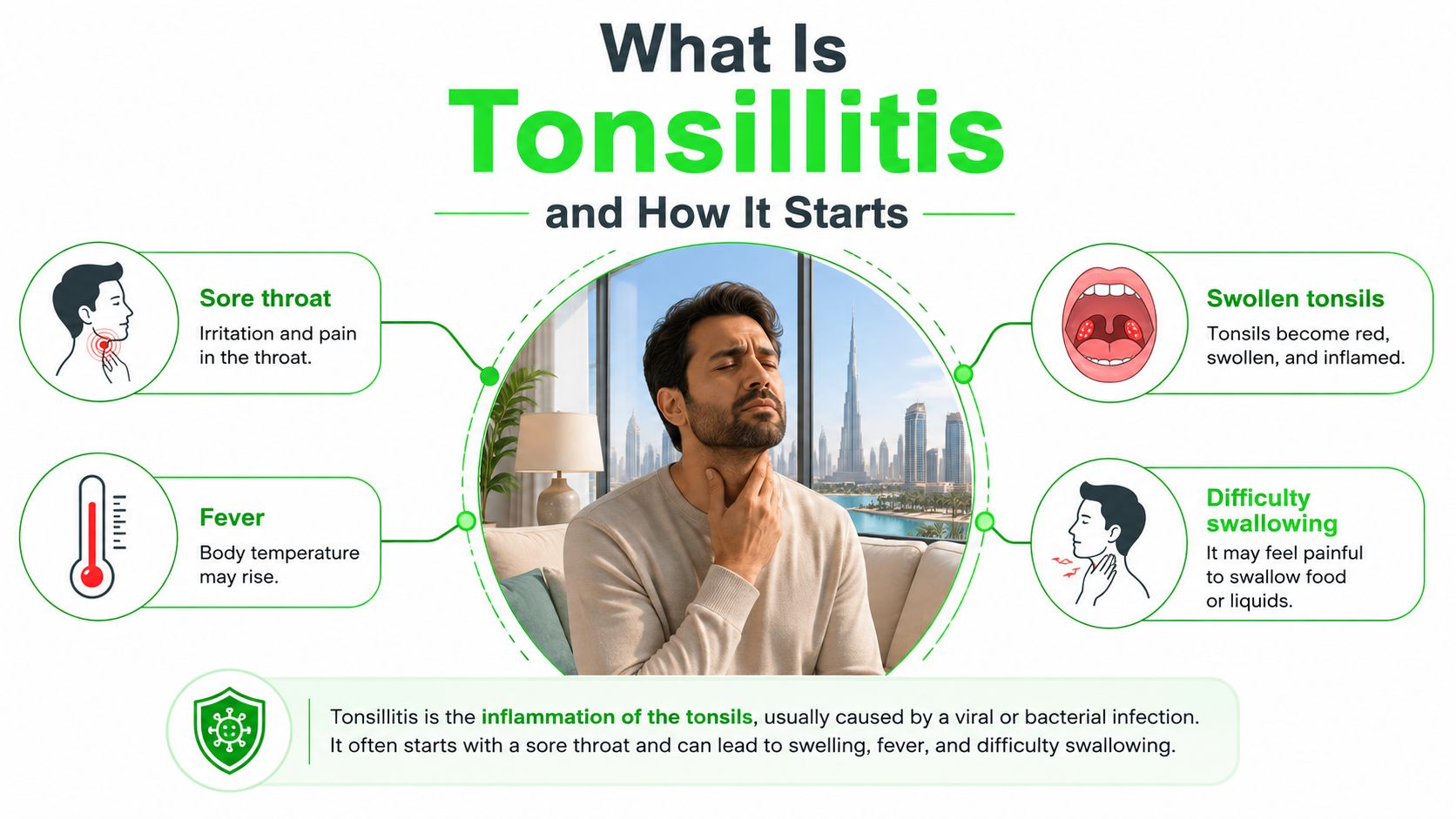
Tonsillitis is inflammation of the palatine tonsils, the paired lymphatic tissues at the back of the throat. They help detect organisms entering through the mouth and nose. Viral or bacterial infection can trigger local inflammation, causing redness, swelling, pain, and sometimes a white or yellow coating.
Typical symptoms include:
- Sore throat: Pain may start mildly and become sharper when swallowing.
- Swollen or red tonsils: The tonsils may appear enlarged and inflamed.
- Fever: Persistent fever with significant throat pain warrants closer assessment.
- Difficulty swallowing: Children may refuse food or fluids because swallowing hurts.
- Voice changes: Swelling can make speech sound muffled.
- Neck tenderness: Nearby lymph nodes may become painful during the immune response.
Why Dubai conditions can aggravate symptoms
Dusty summer winds, strong air conditioning, and dry indoor air can irritate an already inflamed throat. They do not establish the cause, but they can increase soreness, coughing, and discomfort during swallowing. Hydration and appropriate pain relief may help while arranging DHA Telehealth advice or a clinical examination.
School and nursery contact can increase household exposure during the school season, especially in crowded indoor settings. UAE reporting described a 30% rise in tonsillitis patients after the new school year began, while one outpatient clinic reported that roughly 30% of its cases were tonsillitis. These figures are reported in UAE reporting on the seasonal tonsillitis increase.
Hajj and Umrah returnees may also bring respiratory infections into homes and workplaces after crowded travel. Hand hygiene and avoiding shared cups reduce spread, but neither can identify whether an individual sore throat is viral or bacterial.
If nasal congestion is also contributing to mouth breathing and throat dryness, review this guide to home treatment for sinus congestion in Dubai. For tonsillitis, worsening swallowing, dehydration, breathing difficulty, or a child who appears unusually unwell should prompt a clinician call. Vitals Healthcare can arrange a DHA-aligned telehealth review or a 24/7 doctor visit to a Dubai home or hotel when travelling to a clinic is difficult.
Viral Versus Bacterial Tonsillitis
In Dubai, the first useful distinction is whether the sore throat fits a viral illness or possible GAS or strep infection. Viral tonsillitis often arrives with a runny nose, cough, conjunctivitis, hoarseness, or a gradual onset. Bacterial tonsillitis more often causes sudden, marked throat pain, fever, tonsillar exudate, and tender lymph nodes at the front of the neck. These patterns guide assessment, but no single symptom confirms the cause. White patches alone do not justify antibiotics.
How clinicians sort the two pathways
During a DHA Telehealth review or Vitals Healthcare home or hotel visit, the clinician checks onset, fever, cough, swallowing, recent exposure, and the patient's overall condition, then examines the throat and neck. UAE clinical reviews describe a Centor score-based approach, with antibiotics considered at a Centor score of 3 or 4, as outlined in this peer-reviewed comparison of sore-throat treatment guidelines.
Centor assessment considers fever, tonsillar exudate, tender anterior cervical nodes, absence of cough, and an age adjustment. It reduces the chance that a dramatic-looking viral infection receives antibiotics without adequate reason. Depending on the findings, a clinician may recommend a rapid strep test or throat culture before treatment.
| Feature | Viral Tonsillitis | Bacterial (Strep) Tonsillitis |
|---|---|---|
| Onset | Often gradual | Often sudden |
| Cough or runny nose | Common | Less characteristic |
| Conjunctivitis | Can occur | Less typical |
| Throat pain | Variable | Often marked |
| Tonsillar coating | Possible | Possible, but not diagnostic alone |
| Tender neck nodes | May occur | More suggestive with other criteria |
| Antibiotics | Do not treat the virus | May be indicated after assessment or testing |
A child with severe throat pain and no cough may need testing or an in-person examination, while an adult with cough, runny nose, and mild fever may fit a viral pattern. Age, symptoms, and Centor findings still determine the next step.
Respiratory illness during UAE school-season peaks, or after crowded travel, can broaden the differential. A traveller with fever, cough, body aches, or marked fatigue may need assessment for influenza or another viral infection rather than isolated tonsillitis. In that situation, an influenza care doctor on call in Nad Al Sheba can assess the wider presentation at a Dubai home or hotel through a 24/7 dispatch service.
Home and Hotel Self-Care That Actually Helps
For a mild sore throat without breathing difficulty, severe dehydration, or concerning deterioration, supportive care is the sensible starting point. It won't make a bacterial infection disappear, but it can reduce pain and help you maintain fluid intake while the illness declares itself.
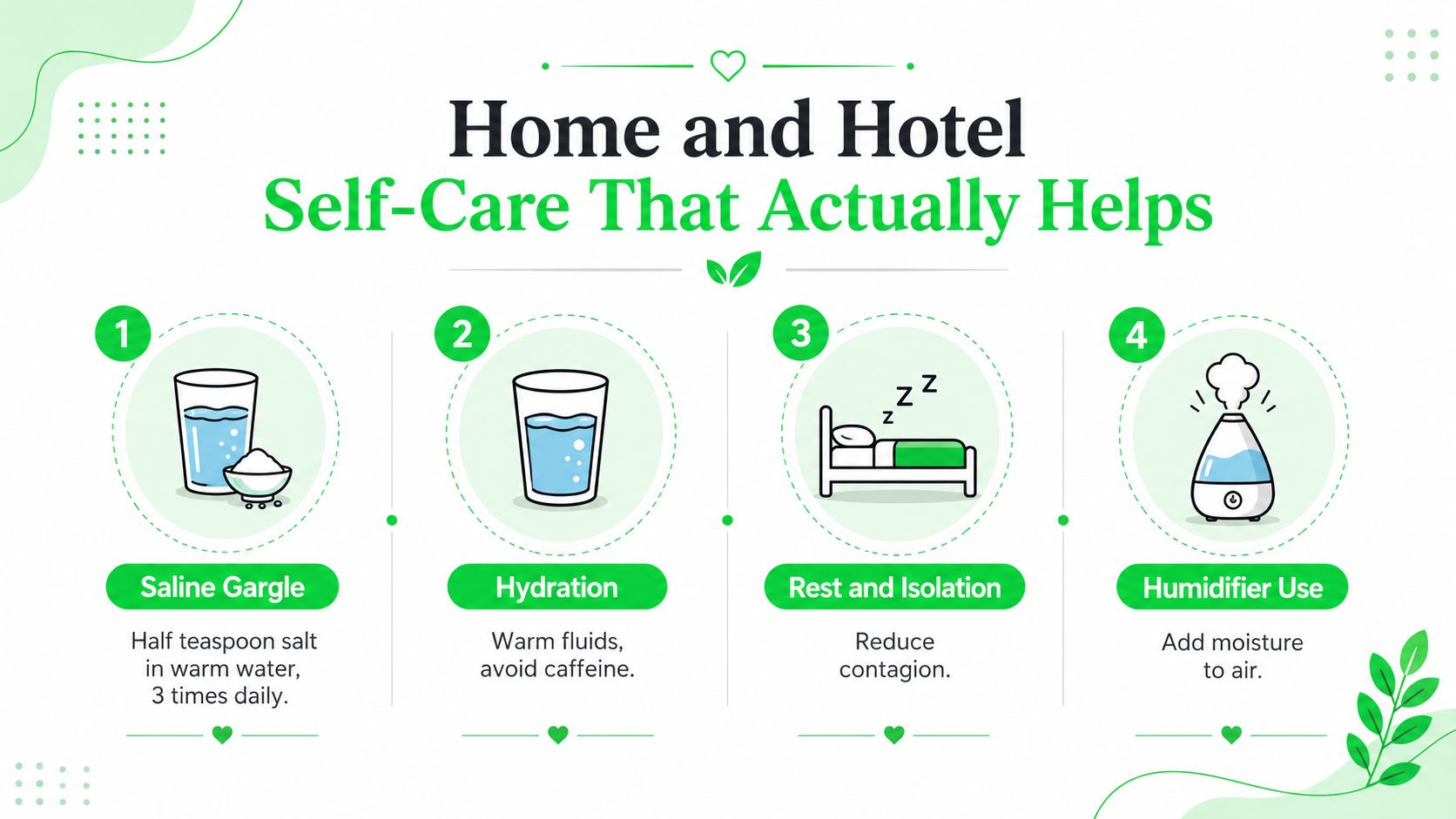
Practical measures for the first day
- Saline gargles: Mix half a teaspoon of salt into warm water and gargle three times daily, without swallowing the mixture. The warm saline can soothe irritation and clear secretions.
- Fluids: Choose cool water, oral fluids, or warm drinks according to what feels comfortable. Dubai heat and strong air conditioning can make dehydration easier to miss.
- Honey and lemon: Adults and children above one year may use honey in a warm drink for throat comfort. Never give honey to a child below one year.
- Pain and fever relief: Paracetamol or ibuprofen can help when used according to the person's age, weight, medical history, and product instructions. Children need weight-based advice, not an adult tablet divided by guesswork.
- Lozenges: Suitable throat lozenges can provide temporary relief for older children and adults who can use them safely.
- Moisture and rest: A humidifier may help in an over-cooled room. Rest your voice and avoid shouting while the tissues are inflamed.
What to avoid
Antibiotics without a prescription don't treat viral tonsillitis and can expose you to unnecessary adverse effects. Kerosene oil gargles are unsafe, high-dose vitamin C megadoses aren't a substitute for diagnosis, and skipping meals can worsen weakness when the body is already struggling with reduced intake.
Hotel guests should ask reception for extra drinking water, avoid minibar alcohol because it can worsen dehydration, and keep cups, cutlery, and towels separate from other guests or family members. If swallowing is too painful for fluids, don't keep forcing self-care indefinitely. A home IV hydration assessment may be considered by a clinician when oral intake is inadequate, but it doesn't replace examination of the throat or assessment for complications.
Arrange medical review if symptoms persist beyond 48 hours or worsen, especially if fever continues, swallowing becomes difficult, or the voice changes. Supportive care is a bridge, not permission to ignore a deteriorating patient.
When Antibiotics Become Necessary
A throat that looks severely inflamed does not automatically need antibiotics. In Dubai practice, the decision depends on whether the symptom pattern makes group A streptococcal (GAS) infection likely enough to justify testing or treatment. DHA guidance uses antibiotic stewardship: viral sore throats remain common, so prescribing is reserved for bacterial features or guideline-supported thresholds.
The Centor assessment in Dubai practice
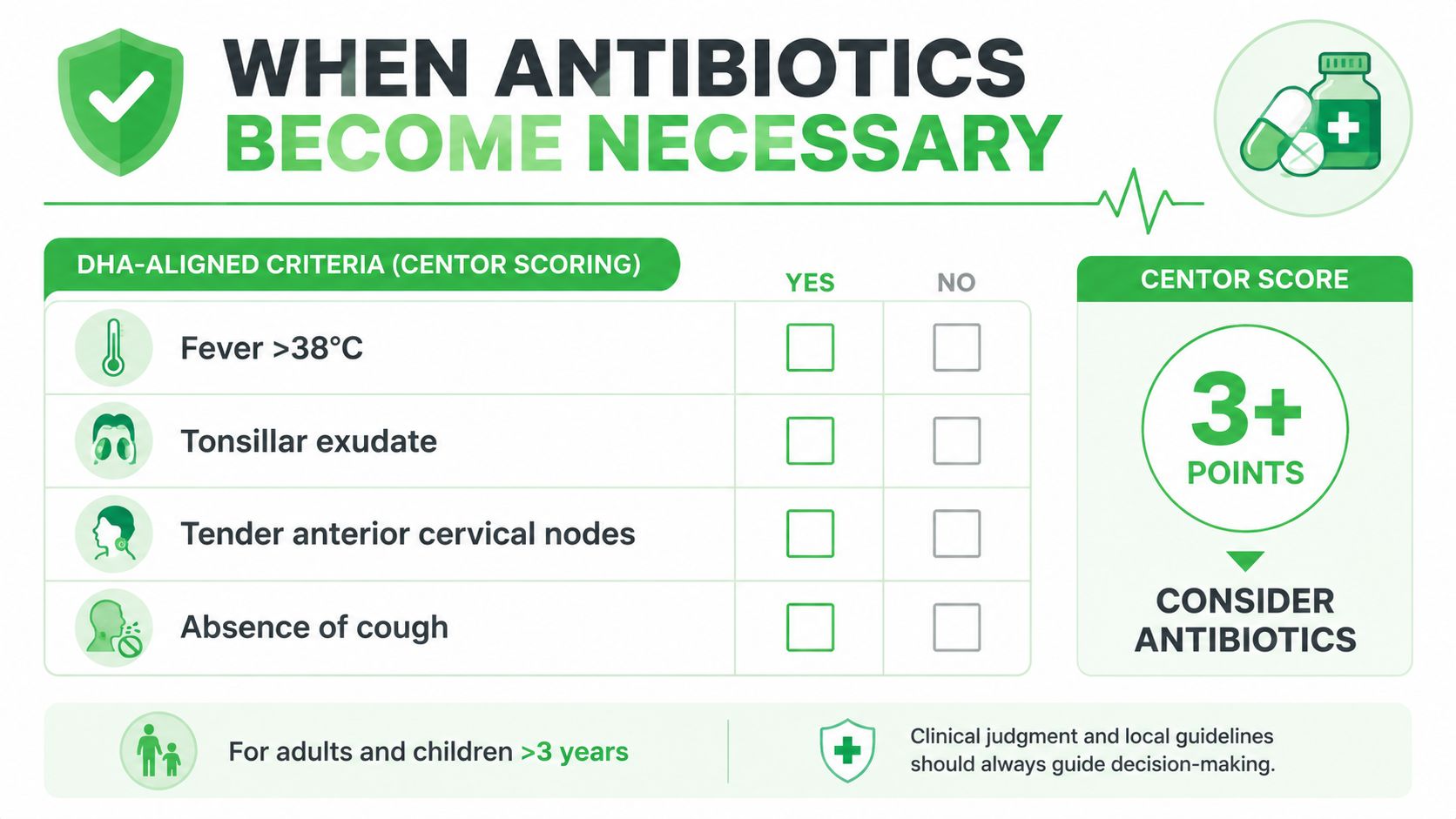
A DHA-licensed clinician reviews the main Centor features:
- Fever: The visual guidance uses a threshold above 38°C. Persistent fever above 38.3°C also supports arranging medical review.
- Tonsillar exudate: White patches or coating increase suspicion, but cannot confirm bacteria alone.
- Tender anterior cervical nodes: Painful lymph nodes at the front of the neck add weight to the assessment.
- Absence of cough: No cough makes GAS more plausible than a typical viral respiratory illness.
- Age adjustment: Children and adults are assessed differently, so age affects the clinical calculation.
UAE guidance considers antibiotic treatment at a Centor score of 3 or 4. Depending on the examination and the patient's overall condition, the doctor may recommend a rapid antigen detection test or throat culture before prescribing. This approach limits unnecessary broad treatment while still addressing likely bacterial infection.
What the first-line prescription looks like
For confirmed or strongly suspected GAS pharyngitis, the DHA virtual sore-throat guideline identifies penicillin as the treatment of choice. For most adults, it specifies oral penicillin V 500 mg two to three times daily for 10 days, with oral amoxicillin as a reasonable option. For most children, either penicillin V or amoxicillin may be used. Amoxicillin is often preferred because its suspension is more palatable. The DHA sore-throat guideline and its antibiotic recommendations sets out these recommendations.
Macrolides require a specific reason, such as an appropriate allergy history or local resistance considerations. Complete the prescribed course, as also advised by Cleveland Clinic Abu Dhabi's tonsillitis guidance.
A Vitals Healthcare doctor can assess the throat during a Dubai home or hotel visit, arrange point-of-care testing where available, prescribe when indicated, and coordinate with a pharmacy. If the presentation suggests a broader illness, a full blood test at home may be selected, rather than used automatically for every sore throat.
Red Flags and ENT Referral Decisions
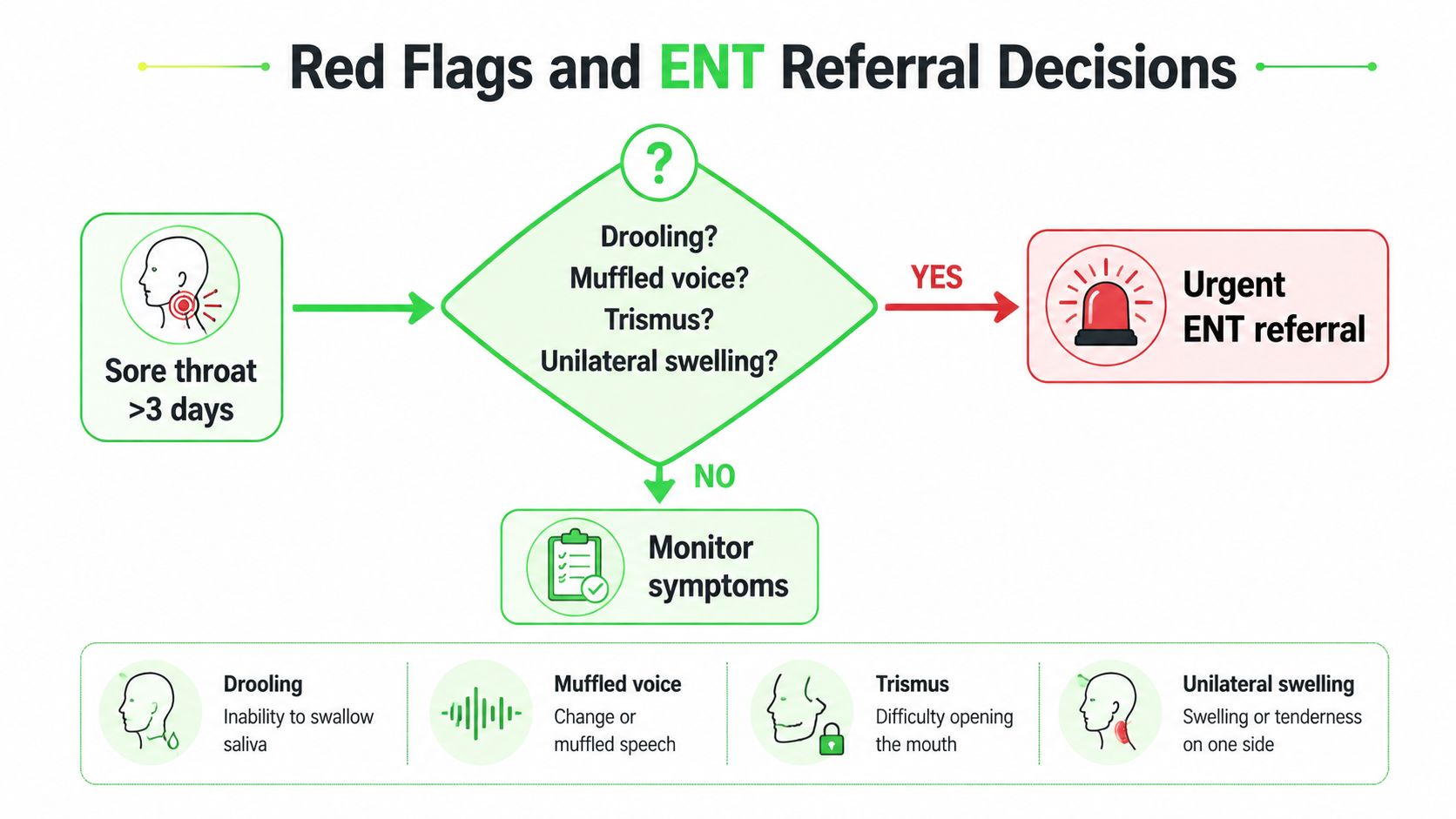
A patient may start with a sore throat at home or in a Dubai hotel, then deteriorate over a few hours. Drooling, a muffled “hot potato” voice, or difficulty opening the mouth means the presentation needs more than routine tonsillitis advice. During a DHA Telehealth assessment or a Vitals Healthcare doctor visit, these findings change the care pathway immediately.
Seek emergency assessment for:
- Breathing compromise: Noisy breathing, stridor, inability to speak comfortably, or increasing breathlessness requires emergency care.
- Drooling or inability to swallow fluids: This may indicate severe swelling, obstruction, significant pain, or dehydration.
- Muffled voice or trismus: A changed voice or restricted mouth opening is more concerning than ordinary throat soreness.
- One-sided swelling: Marked unilateral tonsil or throat swelling can indicate a peritonsillar abscess.
- Neck stiffness or systemic illness: Severe neck symptoms, confusion, collapse, or rapidly worsening illness require prompt escalation.
- High-risk medical background: Immunocompromised patients should be assessed earlier because infection may progress differently.
When recurring disease becomes an ENT issue
Repeated episodes should be documented by date, examination findings, test results, treatment, and recovery, rather than managed through repeated short medication courses. UAE paediatric guidance describes surgery as generally reserved for very frequent recurrence, including 7 episodes in 1 year, 5 per year over 2 years, or 3 per year over 3 years, as set out in the UAE National URTI Guideline for paediatrics.
ENT referral can also follow a documented abscess, obstructive sleep symptoms, persistent asymmetry, or another examination finding requiring specialist review. The workup may include flexible nasendoscopy, sleep-related planning, or imaging when indicated.
Vitals Healthcare's 24/7 home and hotel doctor service across Dubai can assess the patient, document findings, prepare a referral letter, and advise whether hospital care is needed. It does not replace emergency or specialist treatment. IV antibiotic treatment at home must never delay emergency assessment or urgent ENT review when red flags are present.
Choosing Between Clinic and a Dubai Doctor Home Visit
A child has a fever, sore throat, and refuses the car ride. A hotel guest is stable but unsure where to seek care in Dubai. These situations need a practical choice based on severity, mobility, contagion risk, and the information still missing. A mild sore throat without fever can usually wait for a scheduled clinic appointment. Breathing difficulty, however, requires emergency care rather than a home visit.
| Factor | Clinic Appointment | Urgent Care / ED | 24/7 Home Doctor Visit |
|---|---|---|---|
| Best fit | Stable symptoms needing routine review | Breathing problems, severe dehydration, or rapid deterioration | Prompt assessment when travel, timing, children, or mobility make a clinic difficult |
| Waiting-room exposure | Present | Often higher | Reduced because assessment happens at the patient's location |
| Hotel suitability | Requires transport | Requires transport and navigation | Doctor attends the hotel room |
| Testing | Depends on clinic facilities | Usually available | Throat assessment and selected point-of-care services may be available |
| Follow-up | Through the clinic | May shift between teams | Direct follow-up guidance can be provided |
| Documentation | Clinic-issued | Facility-issued | Digital notes and certificates may be available when clinically appropriate |
How the decision works tonight
Choose a clinic when symptoms are mild, the patient can drink, breathing is normal, and waiting for an appointment does not create a safety concern. Use urgent care or the emergency department for stridor, respiratory compromise, severe dehydration, marked one-sided swelling, or rapid deterioration.
A home or hotel visit suits a patient who needs prompt evaluation without emergency airway signs. Under DHA clinical practice, the doctor can examine the throat at the bedside, check vital signs and hydration, apply clinical scoring such as Centor when appropriate, arrange testing, prescribe when indicated, and provide follow-up instructions. Vitals Healthcare Doctor On Call provides 24/7 home and hotel doctor dispatch across Dubai, including in-room consultations for visitors and families who prefer not to transport an unwell child.
The service may also support same-night medication delivery, on-site throat swabbing, digitally emailed fit-for-work or school certificates, and bilingual documentation for insurance administration. Confirm these options during booking, because availability and insurer requirements can vary.
Decision rule: If the patient can drink and breathe normally, begin supportive care or arrange a routine review. If the illness is severe but stable and transport is difficult, request a home assessment. If breathing or airway symptoms appear, go directly to emergency care.
Prevention and Final Takeaways
Dubai prevention is mostly about reducing exposure and protecting the throat from avoidable irritation. Wash hands after using the Metro, visiting malls, or returning from crowded venues. During school terms, don't share cups, bottles, cutlery, or towels, especially when a child has a sore throat or fever.
Air conditioning also deserves practical attention. A humidifier can make an over-dry bedroom more comfortable, while regular fluid intake helps counter the combination of heat outside and chilled, dry indoor air. Before Hajj travel, discuss appropriate vaccination planning with a clinician, and consider seasonal respiratory precautions during the October to February period. Travel should also prompt a small first-aid kit containing a thermometer, age-appropriate pain relief, oral rehydration supplies, tissues, hand sanitiser, and any regularly prescribed medicines.
A simple treatment sequence
- Start with comfort: Use fluids, rest, saline gargles, suitable analgesia, and sensible infection-control measures.
- Assess the pattern: Cough and runny nose point more towards a viral pathway, while fever, exudate, tender anterior neck nodes, and absence of cough increase the Centor score.
- Arrange review when needed: A Centor score of 3 or more, persistent fever above 38.3°C beyond 48 hours, worsening swallowing, or a changing voice warrants medical assessment.
- Escalate immediately: Breathing difficulty, drooling, trismus, unilateral swelling, or serious systemic illness requires urgent care rather than continued home observation.
Frequently asked questions
How long is tonsillitis contagious?
Contagiousness depends on the cause and the person's symptoms. Viral illness can spread while respiratory symptoms are active, so stay away from close contact while feverish or acutely unwell, cover coughs, wash hands, and avoid sharing utensils. Suspected bacterial infection requires clinician-directed advice about treatment and return to school or work.
When can a child return to school?
Return should wait until the child is clinically well, able to drink and participate normally, and no longer has a significant fever. If GAS is confirmed or strongly suspected, follow the treating clinician's advice rather than relying only on how the tonsils look.
Do you need a follow-up swab after antibiotics?
A follow-up swab isn't automatically required for every patient. Ask the DHA-licensed clinician whether one is appropriate, particularly if symptoms don't improve, recur, or affect a high-risk household contact.
If you or a family member in Dubai has painful swallowing, fever, or swollen tonsils tonight, Vitals Healthcare Doctor On Call can arrange a 24/7 doctor visit to your home or hotel, with assessment, treatment planning, and follow-up guidance. Contact the team before symptoms become difficult to manage, and seek emergency care immediately for breathing difficulty or inability to swallow fluids.