
You're in Dubai, comparing clinic advertisements, influencer before-and-after claims, and hotel-based treatment options. One page describes glutathione as a skin-brightening shortcut. Another presents it as a routine wellness service. You're left with a more important question than price: is a glutathione injection medically appropriate and legally handled in Dubai?
That question matters because Dubai has a specific regulatory position. The Dubai Health Authority issued a formal circular on 5 October 2021 warning against glutathione for dermatological treatment by injection into a vein, muscle, or under the skin, and the warning remains publicly listed in the Authority's circular archive (DHA circular on glutathione injections). This isn't the same as a routine beauty booking. It's a regulated medical issue that requires careful assessment, clear consent, and licensed clinical oversight.
Table of Contents
- Introduction to Glutathione Injections in Dubai
- What Glutathione Is and How It Works in the Body
- How Glutathione Injections Differ From IV Drips and Oral Forms
- Indications Clinical Evidence and Regulatory Position in Dubai
- Safety Profile Side Effects and Who Should Avoid Treatment
- What to Expect From a Licensed Home or Hotel Injection Service
- Making an Informed Choice and Next Steps for Care at Home
Introduction to Glutathione Injections in Dubai
Glutathione is a substance your body makes naturally, so the name can sound reassuring. But a familiar molecule doesn't make every route of administration, dose, product, or purpose automatically suitable. A medicine can be recognised for one clinical use while being marketed for a different aesthetic purpose, and that distinction is central to understanding glutathione injection Dubai services.
Dubai's aesthetic market includes residents seeking cosmetic care, visitors staying in hotels, and people who prefer treatment at home or in an office. Convenience can make medical care easier to access, but it can also make a regulated treatment look like an ordinary lifestyle appointment. A nurse arriving at a hotel room still needs the same clinical information, sterile equipment, consent process, and emergency plan expected in a proper healthcare setting.
The DHA warning is particularly important because it addresses the route of administration itself, including intravenous, intramuscular, and subcutaneous injection. It doesn't merely discuss product quality or advertising language. For someone considering a skin-lightening injection, that means the first step shouldn't be choosing between packages. It should be clarifying whether the proposed treatment is medically justified, permitted within the provider's scope, and explained transparently.
This guide uses plain language to separate four issues that are often blended together:
- Biology, what glutathione does in the body.
- Delivery, how injections, IV drips, and oral products differ.
- Evidence and regulation, what cosmetic claims mean in Dubai.
- Practical safety, what licensed home or hotel care should look like.
The aim isn't to encourage or dismiss treatment. It's to help you recognise the difference between a clinician-led medical decision and a promotional promise.
What Glutathione Is and How It Works in the Body
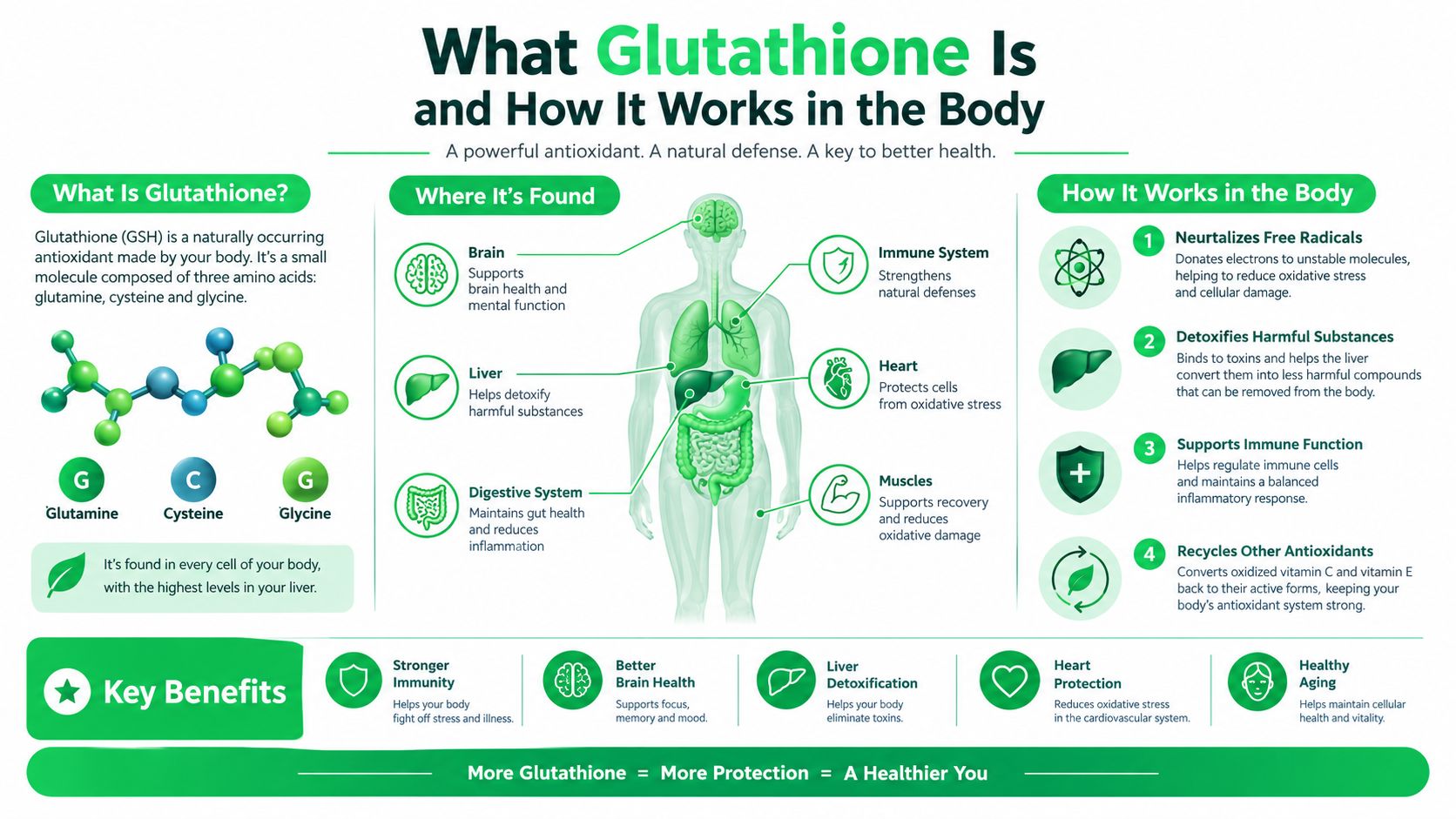
Glutathione is an antioxidant made naturally by the body from three amino acids. It helps cells manage oxidative stress, a process that occurs when reactive molecules outnumber the body's protective systems. A useful analogy is a cellular clean-up crew. Glutathione helps neutralise reactive compounds, then participates in recycling processes that allow antioxidant protection to continue.
The body produces glutathione in several tissues, with the liver playing an important role in processing and detoxification pathways. Sleep disruption, illness, nutritional problems, environmental stressors, and some medicines may affect antioxidant balance, but that doesn't mean every person with fatigue or uneven skin has a glutathione deficiency. Symptoms such as tiredness or dull skin have many possible causes, so they shouldn't be used alone to justify an injection.
Why the route changes the discussion
When you swallow a supplement, it passes through the digestive system before its components enter circulation. An injection bypasses digestion, while an IV route delivers the substance directly into a vein. That difference affects how quickly the substance enters the bloodstream, but faster delivery doesn't prove better cosmetic results.
Route also changes the risk profile. A tablet may create digestive or medication-related concerns. An injection introduces risks related to needles, contamination, tissue injury, and allergic reactions. An IV route adds venous access, fluid administration, and the possibility of infusion-related complications. The clinical question is therefore not, “Which route absorbs more?” It's, “Which route, if any, has a reasonable benefit for this person at an acceptable risk?”
For a readable overview of the subject, you can review this explanation of IV glutathione for wellness while keeping its general wellness framing separate from Dubai's regulatory position. If vitamin C is being discussed as an add-on, ask the clinician to explain why it's being proposed rather than assuming that combining antioxidants is automatically beneficial. A practical background resource on glutathione and vitamin C can help you prepare questions.
What glutathione can and can't tell you
Glutathione has real biological functions, but those functions don't validate every claim made about whitening, detoxification, energy, immunity, or recovery after travel. The body's antioxidant network is complex, and a single blood or treatment concept doesn't translate neatly into a guaranteed visible result.
A clinician should therefore discuss your actual objective. Are you concerned about diagnosed pigmentation, general skin tone, post-flight symptoms, or a broader health issue? Each concern may require a different assessment, and some may have safer, more established options than injectable treatment.
Practical rule: A biological explanation tells you what a substance can do in the body. It doesn't, by itself, establish that an injection is appropriate for a cosmetic goal.
How Glutathione Injections Differ From IV Drips and Oral Forms
The word “injection” can describe different routes, and marketing pages don't always make that clear. A shot into muscle, an injection under the skin, and an IV administration into a vein aren't interchangeable procedures. They differ in absorption pattern, monitoring needs, equipment, and regulatory implications.
The comparison below is a decision aid, not a treatment recommendation.
Glutathione Delivery Methods Compared
| Feature | Injection | IV Drip | Oral Form |
|---|---|---|---|
| Route | May be intramuscular, subcutaneous, or intravenous, depending on the prescribed and permitted procedure | Delivered through a vein, usually with a fluid solution | Swallowed as a tablet, capsule, powder, or other supplement |
| Absorption | Bypasses digestion, with absorption depending on the route and preparation | Enters the bloodstream through venous access | Depends on digestion, formulation, and individual absorption |
| Administration time | Usually shorter than a drip, but timing depends on the procedure and monitoring | A controlled infusion that takes longer than a shot | No clinical administration time |
| Dose control | Must be verified by the prescribing clinician and administering professional | Allows controlled infusion under observation | Dose depends on the product and instructions |
| Main practical trade-off | Convenient, but still an invasive medical procedure | More equipment, venous access, and monitoring | Less invasive, but it doesn't provide injectable delivery |
| Key safety question | Who is authorised to administer the injection, and why this route? | Who assesses IV suitability and monitors the infusion? | Is the product appropriate, genuine, and compatible with your medicines? |
An intramuscular or subcutaneous route generally creates a different absorption pattern from an IV route. An IV drip can also include fluids or additional ingredients, but those additions shouldn't be accepted as automatically useful. Every ingredient creates another opportunity for allergy, interaction, dosing error, or an unclear treatment rationale.
An oral form may seem less dramatic, and that can be a benefit when the goal is to avoid unnecessary invasive care. However, oral supplements aren't risk-free. They can interact with medicines, vary in quality, and be unsuitable for particular medical conditions. A pharmacist or doctor should review the product rather than treating “natural” as a synonym for safe.
The DHA circular makes the comparison especially important in Dubai. A clinic shouldn't use the existence of an oral product or a pharmaceutical glutathione formulation to imply that cosmetic injection routes are routine. If you're evaluating a glutathione IV drip in Dubai, ask the provider to state the route, ingredients, intended purpose, clinical rationale, and regulatory basis in writing.
A clear provider won't pressure you to select a route before a consultation. They'll explain why a route is being considered, what alternatives exist, and what would make them advise against treatment.
Indications Clinical Evidence and Regulatory Position in Dubai
A person may seek glutathione injections after noticing uneven pigmentation, feeling tired after travel, or wanting general antioxidant support. Those goals do not carry the same medical evidence. Glutathione has recognised biological functions, but that fact alone does not establish injectable treatment as approved or effective for a cosmetic result.
Dubai's regulatory position requires that distinction to be stated plainly. Dubai clinical information describes the registered pharmaceutical form of glutathione as an antidote with licensed uses, while skin lightening is not a registered indication. It also states that no regulator has approved an injectable product specifically for skin lightening (Dubai clinical and regulatory discussion of glutathione IV use). Cosmetic IV use is therefore off-label by definition, rather than an officially approved whitening treatment.
Marketing language versus clinical meaning
Terms such as “detox”, “glow”, “brightening”, and “immune boost” can sound clinical without describing a measurable diagnosis or outcome. A proper consultation should translate each promise into questions:
- What condition or symptom is being assessed?
- What result is realistically being considered?
- Is the proposed use approved, or is it off-label?
- What evidence supports both the route and the purpose?
- Which alternatives may carry fewer risks?
- What findings would lead the clinician to decline treatment?
“Skin lightening” also needs definition. It may mean reducing visible pigmentation, changing natural skin colour, or creating a more even complexion. These aims are different, and injectable glutathione should not be presented as a guaranteed answer to any of them.
The Dubai regulatory position
The DHA's formal circular, issued on 5 October 2021, warns against using glutathione for dermatological treatment by injection into a vein, muscle, or under the skin. The warning remains available in the DHA circular archive (official DHA circular record). The wording matters because it covers several injection routes, not only IV administration.
A clinic in Dubai should therefore treat cosmetic glutathione injections as a regulated medical decision. A hotel visit, polished setting, or premium package does not alter the regulatory position. A public price also does not demonstrate clinical endorsement. One Dubai listing describes 3–5 sessions, 30 to 60 minute treatment times, and prices from AED 700 to AED 2,500 per session (Dubai glutathione IV treatment information and public pricing). Those details show how one service is marketed. They do not establish approval, effectiveness, or suitability.
Ask for clarity: “Is this being offered for an approved medical indication or as an off-label cosmetic treatment, and how does that fit with the DHA circular?”
The answer should come before payment or administration. If a provider avoids the circular, promises guaranteed whitening, or describes the injection as a simple beauty service, pause the consultation. Ask for the clinician's rationale, the product and route, and the basis for offering it under Dubai's rules.
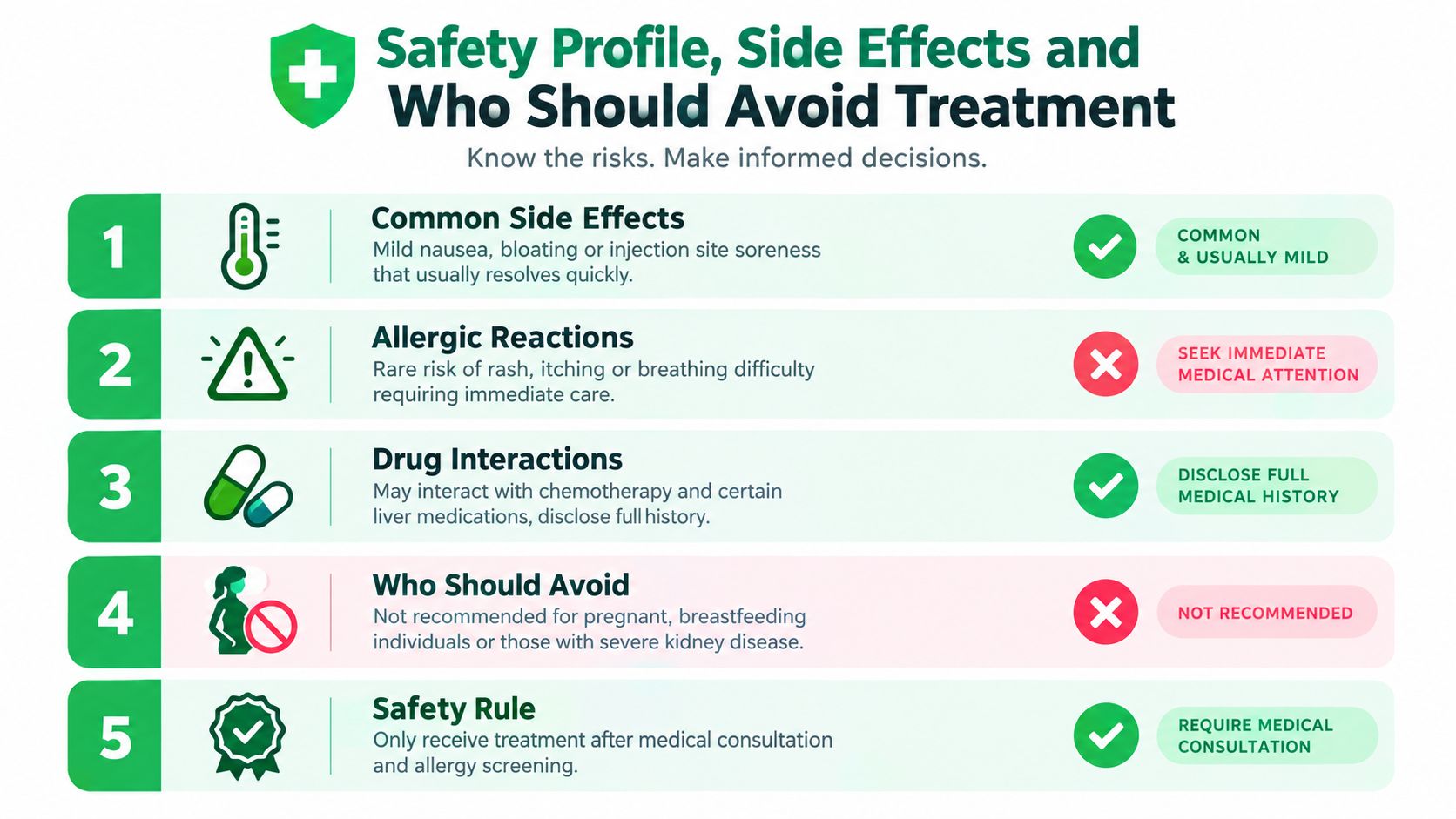
Safety Profile Side Effects and Who Should Avoid Treatment
Safety depends on more than the glutathione molecule. It depends on the product's origin, storage, preparation, route, dose, clinician training, screening process, and ability to respond if something goes wrong. A treatment that appears simple to a patient may involve several points where a clinical error can occur.
Common short-term problems may include soreness, bruising, redness, nausea, or feeling unwell. These symptoms may settle, but persistent or worsening discomfort needs clinical advice rather than repeated self-treatment. The administering professional should document what was given and explain which symptoms are expected and which require urgent help.
Situations that require extra caution
A full history should include allergies, asthma or previous reactions to injections, kidney or liver disease, pregnancy or breastfeeding, cancer treatment, and all prescribed and non-prescribed medicines. Chemotherapy and some liver medicines may create interaction concerns, so withholding medical history to speed up a booking can be dangerous.
Pregnancy and breastfeeding require particular caution because cosmetic benefit doesn't justify uncertain exposure. Severe kidney disease may also make a clinician advise against treatment. These decisions belong to a qualified doctor who has reviewed your health, not to an online booking form or a package salesperson.
Before consenting, ask the provider to confirm:
- Clinician identity: Is the doctor or nurse DHA licensed and working through a properly licensed service?
- Product details: What is the exact medicine, manufacturer, expiry information, storage requirement, and intended use?
- Route and dose: Which route is proposed, who prescribed it, and why is it being considered?
- Emergency readiness: What happens if you develop a severe allergic reaction during or after administration?
- Documentation: Will you receive consent records, treatment details, aftercare instructions, and follow-up contact information?
A regulated service should prepare medication in a clean clinical area, use sterile single-use equipment, verify the product and dose, and dispose of sharps safely. You shouldn't be asked to provide an unlabelled vial or accept a preparation that can't be identified.
Red flags after administration
Seek immediate medical care for breathing difficulty, facial or throat swelling, widespread hives, fainting, severe chest symptoms, confusion, or rapidly worsening illness. Contact the treating service promptly for significant redness, increasing warmth, pus, fever, severe pain, or symptoms that don't improve.
The same principle applies to IV therapy more broadly. A plain-language guide to IV drip side effects can help you prepare questions, but it can't replace an assessment of your specific medical history.
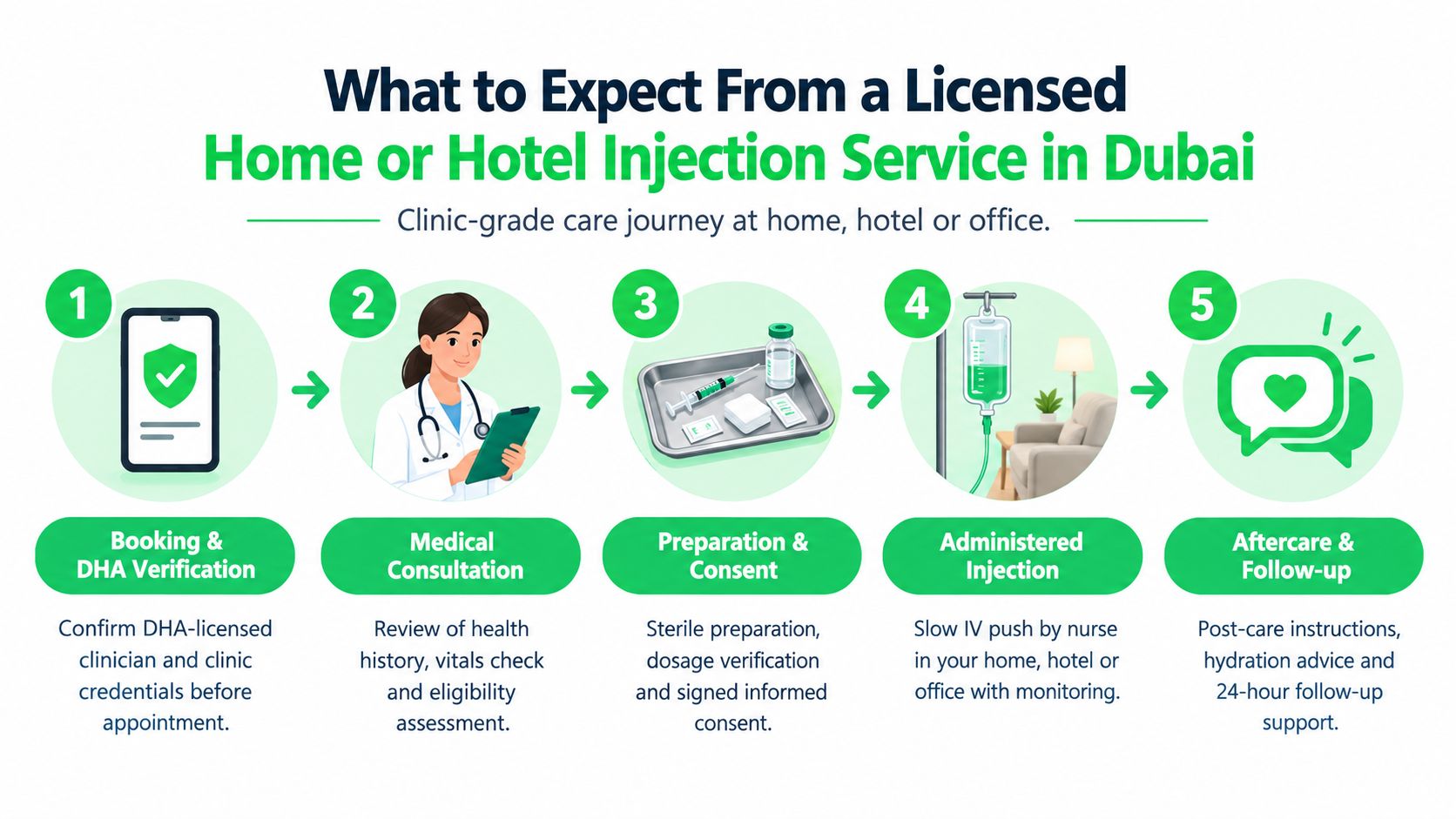
What to Expect From a Licensed Home or Hotel Injection Service
Home or hotel care should resemble a mobile clinical visit, not a beauty concierge appointment. The location changes, but the professional standard shouldn't. A licensed clinician still needs to establish whether treatment is appropriate, confirm the medicine, obtain consent, and monitor you during and after administration.
The care journey
Booking begins with verification. Before confirming an appointment, ask for the clinician's professional status and the name of the licensed healthcare provider responsible for the visit. Phone and WhatsApp coordination can be convenient, but messages shouldn't replace medical assessment.
The consultation comes before the needle. The clinician should review your symptoms, objective, allergies, medical conditions, pregnancy or breastfeeding status, medicines, and previous reactions. They may check vital signs and decide that an injection isn't appropriate. That decision is a sign of proper care, not poor service.
Preparation should be visible and organised. The professional should verify the medicine, route, dose, expiry information, and storage conditions. Sterile equipment should be opened appropriately, and used sharps should go directly into a suitable disposal container. A patient shouldn't be expected to supervise every technical detail, but you're entitled to ask what's being administered.
For background on safe handling considerations around multi-dose containers, this resource on multi dose vial QA for resellers may help explain why container integrity, labelling, storage, and contamination controls matter. It isn't a substitute for the provider's clinical protocol or the medicine manufacturer's instructions.

Administration and follow-up
The clinician should explain the route and what you'll feel, administer the treatment using the prescribed technique, and observe you for immediate problems. Don't accept “slow IV push” or another technical description without asking what it means for monitoring and why that route has been selected.
Aftercare should include hydration guidance where relevant, symptoms to watch for, a contact route, and documentation of the medicine given. A service offering IV home service in Dubai should still apply the same screening and aftercare principles as an in-clinic visit.
For residents, visitors, and hotel guests, practical coordination may include arranging access with reception, confirming the room or office location, and ensuring a clean, well-lit space. Providers may also offer round-the-clock scheduling, citywide visits, digital reports, follow-up guidance, and invoices, but you should confirm the exact service details before booking. Convenience is valuable only when it preserves clinical standards.
Making an Informed Choice and Next Steps for Care at Home
A sensible decision starts with your goal, not the package. If you want to address pigmentation, ask for a proper dermatological assessment and discuss established topical or procedural options. If you're tired after travel, consider sleep, hydration, infection, anaemia, medication effects, and other causes before assuming an antioxidant injection is the answer.
Use this checklist before consenting:
- Regulatory fit: Ask how the provider addresses the DHA circular and whether the proposed use is approved or off-label.
- Clinical suitability: Share your complete history, including pregnancy or breastfeeding, kidney or liver problems, asthma, allergies, cancer treatment, and current medicines.
- Product transparency: Request the medicine name, dose, route, expiry information, storage details, and written treatment record.
- Emergency planning: Confirm who will monitor you and how urgent symptoms will be handled.
- Alternatives: Ask what non-injectable or condition-specific options may address your actual concern.
- Location standards: A home, hotel, or office visit should include sterile preparation, informed consent, trained administration, monitoring, and aftercare.
If uncertainty remains, a doctor can assess whether laboratory testing or another consultation is useful. A service offering blood tests at home in Dubai may help with convenient sample collection when a clinician considers testing relevant, but testing should be chosen for a clinical reason rather than added automatically.
Vitals Healthcare Doctor On Call provides DHA-licensed doctor and nursing visits, including home, hotel, and office care, with assessment, injection support, IV therapy, and follow-up guidance where clinically appropriate. To discuss your situation safely, visit Vitals Healthcare Doctor On Call and request a medical assessment before making a treatment decision.