
The most popular advice about IV hydration therapy is also the least reliable: book a drip whenever you feel tired, hungover, or in need of a quick wellness boost. An IV isn't a premium glass of water. It's a medical procedure that places fluid directly into a vein, and the right question in Dubai isn't just whether a drip feels effective. It's whether you need intravenous treatment, whether oral fluids would be enough, and whether the person administering it can assess and manage risk in your home, hotel, or office.
Dubai's market has moved well beyond a niche service. The UAE intravenous hydration therapy market was estimated at USD 13.0 million in 2025 and is projected to reach USD 25.4 million by 2033, with the source describing about 95% total growth and a 9% CAGR from 2026 to 2033. Energy boosters generated the most revenue in 2025, while beauty and aesthetics was the fastest-growing segment, according to Grand View Research's UAE IV hydration therapy market outlook. Growth makes clinical clarity more important, not less.
Table of Contents
- Understanding IV Hydration Therapy and Its Medical Purpose
- Clinical Indications Versus Wellness Trends
- Safety Protocols and Regulatory Standards in Dubai
- What to Expect During a Professional Home Session
- Choosing a DHA-Licensed Home Healthcare Provider
- Real-World Applications for Dubai Residents and Visitors
- Frequently Asked Questions About Mobile IV Care
Understanding IV Hydration Therapy and Its Medical Purpose
IV hydration therapy delivers sterile fluids, and sometimes selected electrolytes or other prescribed ingredients, directly into a vein through a small catheter. The intravenous route bypasses the digestive system, so the administered fluid becomes available in the circulation without relying on the stomach and intestines to absorb it. That direct route is the reason clinicians use IV treatment when oral intake is unreliable, not because intravenous delivery is automatically superior for everyone.
Oral hydration remains the normal foundation for everyday fluid needs. A person who can drink, absorb fluids, and keep them down will usually be assessed differently from someone who has persistent vomiting, severe fluid loss, or an illness that prevents adequate intake. In Dubai-facing clinical guidance, IV hydration is generally reserved for moderate to severe dehydration or an inability to tolerate oral fluids, particularly when symptoms include persistent vomiting, confusion, very low blood pressure, or an inability to drink, as described by Vitals Healthcare's guidance on home IV hydration.
What the infusion changes physiologically
The main clinical purpose is intravascular volume replacement. A clinician selects an appropriate fluid, establishes venous access, controls the rate, and observes the patient while the infusion runs. The aim is to restore circulating fluid when drinking alone isn't practical or sufficient, while avoiding the equally important danger of giving more fluid or electrolytes than the patient can safely handle.
That distinction matters in wellness marketing. A bag labelled for energy, beauty, recovery, or immunity may contain ingredients that sound appealing, but the presence of a vitamin or mineral doesn't prove that a healthy person needs it intravenously. The medical value comes from the indication, the formulation, the dose, the patient's health status, and the monitoring around the procedure.
Clinical rule: Direct bloodstream access increases both speed and responsibility. The same route that can help a dehydrated patient can also create complications if the assessment or formulation is wrong.
Why the formula must be individualised
A safe plan starts with symptoms and medical history, not a menu name. Kidney disease, heart problems, diabetes, pregnancy, medication use, allergies, and previous reactions can all affect whether IV therapy is appropriate. The clinician should also consider whether a patient needs emergency evaluation rather than a mobile infusion.
For readers exploring nutrient-focused drips, a useful distinction appears in this discussion with a molecular biologist on NAD optimisation. It helps separate interest in NAD-related science from the much narrower question of whether an IV formulation is clinically justified for a particular person.
Before booking, review the ingredients, intended purpose, contraindications, and follow-up process. A clear explanation of what an IV drip formula may contain is more useful than a promise of instant transformation.
Clinical Indications Versus Wellness Trends
A branded drip can make a lifestyle service look like a medical solution, but the label doesn't determine the indication. IV hydration has a clear role when dehydration is clinically significant or oral intake cannot be maintained. Its role is far less certain when a healthy person wants a general energy lift, brighter skin, or faster relief after alcohol.
The UAE coverage and expert commentary cited in the brief emphasise that evidence is strongest for specific medical situations, while support for healthy people seeking energy, skin benefits, or hangover relief remains weak. That doesn't mean every person feels nothing after a wellness infusion. It means a subjective improvement shouldn't be confused with proof that intravenous vitamins were necessary or that the treatment corrected an underlying problem.
When oral fluids are usually enough
If you can drink comfortably, keep fluids down, and don't have warning symptoms, oral hydration is often the sensible first option. Rest, appropriate food, and medical advice for the underlying cause may do more than an expensive infusion. A clinician should be willing to say that an IV isn't needed.
Situations that deserve proper assessment include:
- Persistent vomiting or diarrhoea: Fluid loss can become clinically important, especially when drinking triggers more vomiting.
- Heat-related illness: Confusion, marked weakness, or low blood pressure requires urgent evaluation rather than a lifestyle appointment.
- Inability to drink: An IV may be considered when oral intake isn't tolerated.
- Medical recovery: Post-operative or acute-illness care must follow the treating clinician's plan, not a pre-set wellness package.
- Hangover symptoms: Dehydration may be present, but an IV doesn't remove alcohol-related risks or replace rest and medical evaluation.
For a practical comparison of routine oral intake and commercial energy products, see IV hydration versus energy drinks. The important decision is not which product sounds stronger. It's whether the patient has a fluid deficit that requires intravenous correction.
Why wellness claims need restraint
Beauty, fatigue, immunity, and “detox” language can hide the absence of a clear clinical target. Vitamins delivered directly into the bloodstream still require appropriate dosing and patient selection. They also don't turn poor sleep, inadequate nutrition, infection, or excessive alcohol use into conditions that an IV can reliably fix.
In Dubai, home IV treatment is a medical service under DHA-regulated home healthcare expectations. That means a clinician should assess the patient, use sterile equipment, monitor the infusion, and have a plan for escalation. A casual booking process that asks only which flavour or “boost” you want is a warning sign.
The market's fastest-growing category isn't automatically the safest or most effective one. Clinical appropriateness should remain the filter.
Safety Protocols and Regulatory Standards in Dubai
The most important safety question is not what colour the drip is or how quickly it is advertised to work. It's whether a qualified clinician has decided that the fluid, dose, route, and setting are appropriate for you. IV therapy can cause vein irritation, infiltration, infection, allergic reactions, fluid overload, or electrolyte disturbance. The risk rises when a provider skips screening or treats a standard package as suitable for every customer.
Patients with kidney disease or heart problems may be particularly vulnerable to excess fluid. Diabetes and medication use can also change the clinical assessment. A home visit should therefore begin with a review of symptoms, history, current medicines, allergies, and relevant vital signs.
Concentrated fluids aren't automatically better
UAE academic evidence on resuscitation fluids supports isotonic crystalloids over small-volume hypertonic solutions for critically ill adults. The evidence is described as very low certainty, and hypertonic solutions haven't shown a significant advantage. The practical implication is clear: clinicians shouldn't assume that a more concentrated fluid is stronger, faster, or safer.
For volume restoration, protocols should prioritise appropriate isotonic crystalloid options such as normal saline or Ringer's lactate when clinically indicated, with monitoring rather than guesswork. The exact choice still belongs to the treating clinician, who must account for the patient's condition and fluid requirements. The UAE academic summary on resuscitation fluid choice provides the regional evidence context.
What DHA oversight should mean to a patient
DHA standards aren't merely an administrative detail. They establish accountability around the facility, clinicians, infection control, documentation, and patient safety. The Dubai Health Authority home healthcare standards indicate that home healthcare providers need formal regulatory approval and registered healthcare professionals.
In practical terms, ask whether the provider can explain:
- Clinician credentials: Who is visiting, and are they registered to practise?
- Pre-treatment assessment: Will someone review your symptoms, medical history, medicines, allergies, and vital signs?
- Aseptic technique: How are the catheter site, equipment, hand hygiene, and sharps handled?
- Monitoring: Who watches for reactions, infiltration, breathing difficulty, or fluid intolerance?
- Escalation: What happens if the patient deteriorates during or after the visit?
- Documentation: Will you receive a record of the treatment and aftercare advice?
Practical rule: If the provider can't explain its licensing and escalation process before payment, don't let the infusion start.
A service that focuses only on promotional benefits may leave patients unable to identify complications or obtain follow-up. Dubai consumers should also recognise warning signs linked to misleading or inflated home healthcare offers, including the concerns discussed in this guide to home healthcare scams and fake IV treatment.
What to Expect During a Professional Home Session
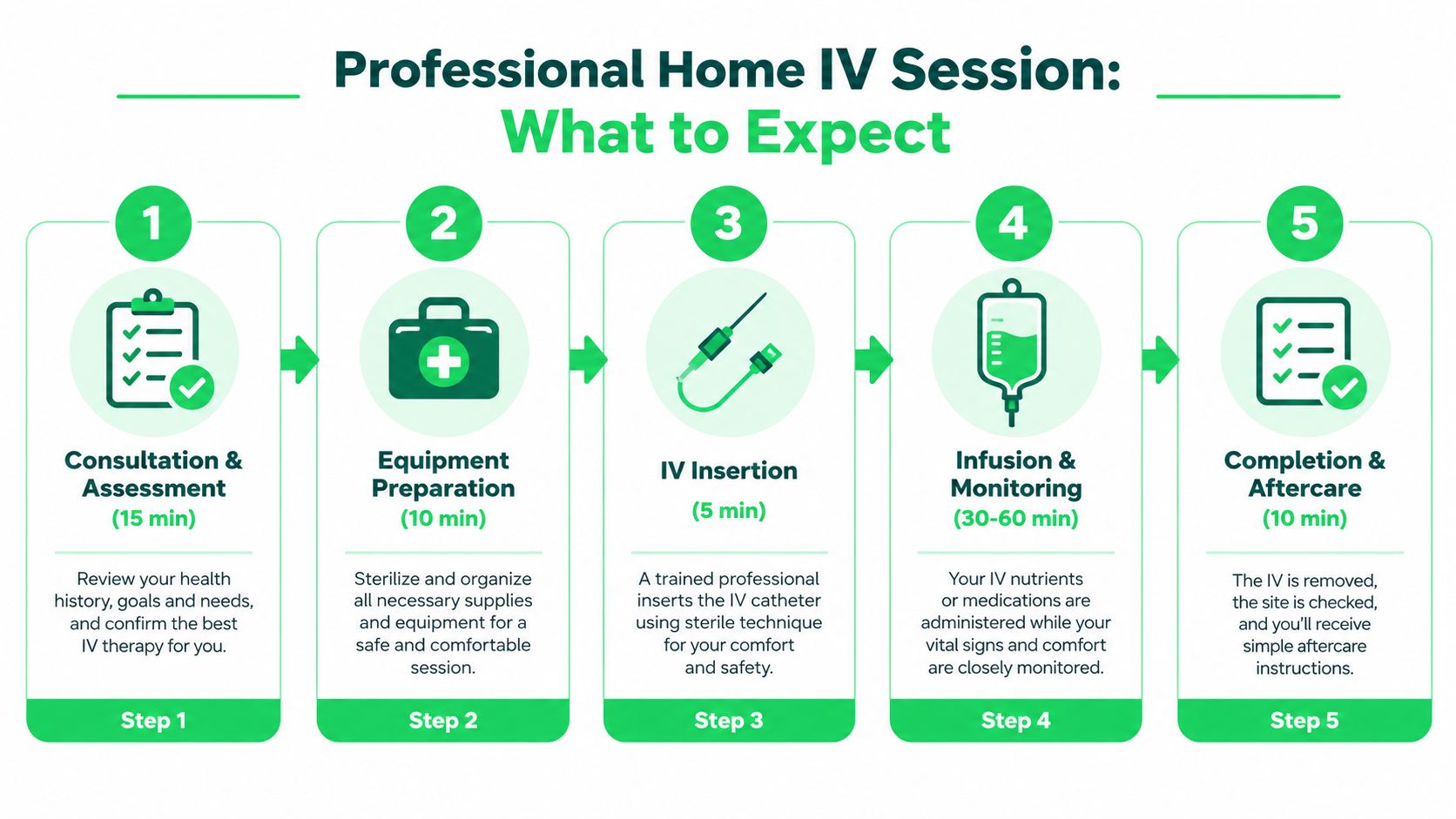
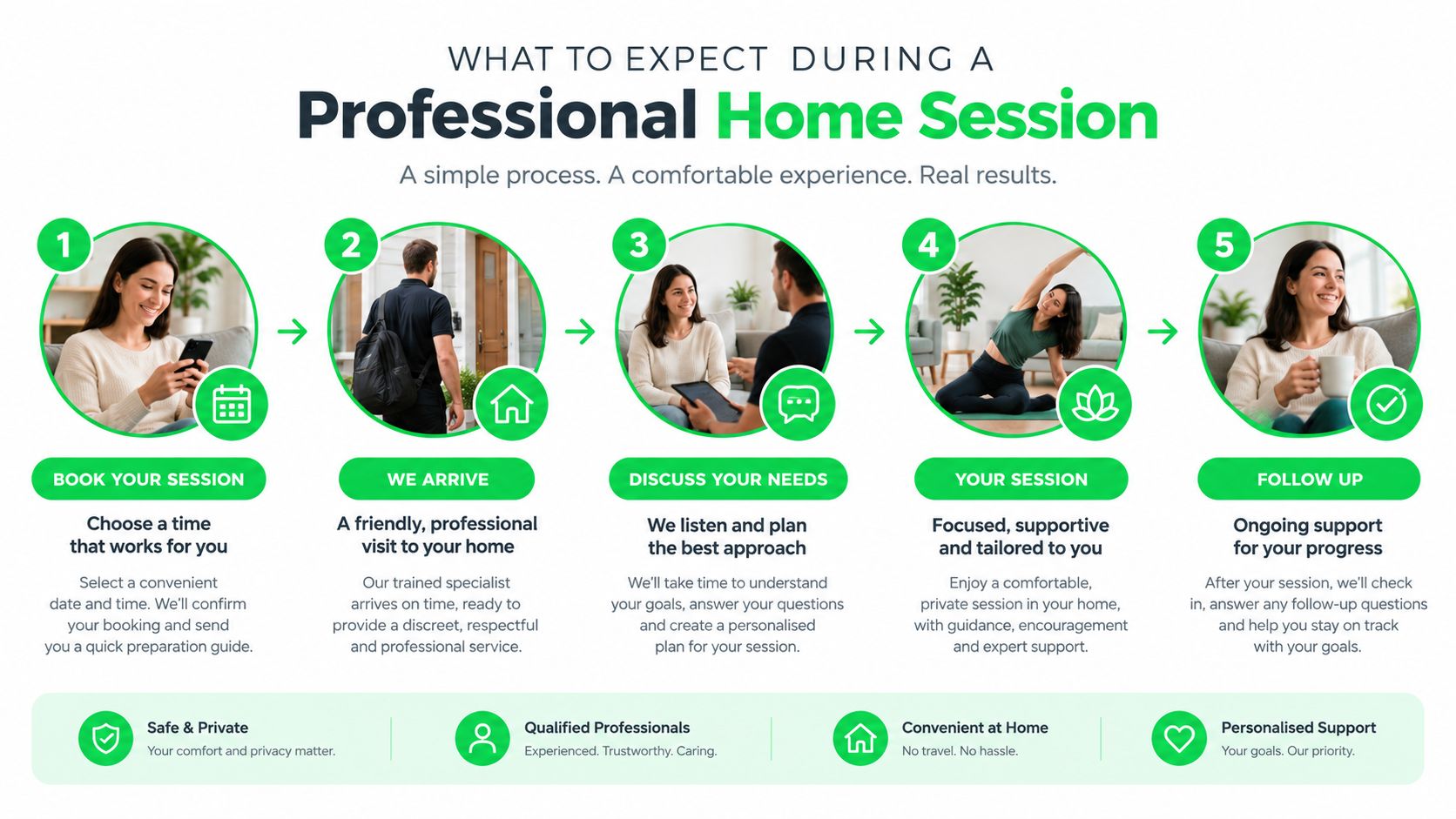
A professional home visit should feel organised rather than improvised. The clinician arrives with the required equipment, confirms the patient's identity and location, and establishes whether the planned treatment remains appropriate after seeing the patient. Booking an infusion doesn't guarantee that the infusion will go ahead.
Before the catheter is placed
The assessment should cover the immediate complaint, fluid intake, vomiting or diarrhoea, urine changes, relevant medical history, current medicines, allergies, and previous IV reactions. The clinician should take appropriate vital signs and look for symptoms that require emergency referral, such as severe confusion, collapse, serious breathing difficulty, or rapidly worsening illness.
The setting also matters. The clinician needs adequate lighting, a clean surface, seating or a bed that supports safe positioning, and enough space to dispose of sharps correctly. In a hotel, the patient should tell reception or security that a licensed healthcare visit is expected if access procedures require it.
After the assessment, the clinician prepares the equipment and cleans the insertion site using aseptic technique. A single-use catheter is inserted into a suitable vein, sterile tubing is connected, and the line is checked before fluid administration begins.
During and after the infusion
The infusion generally takes about 30 to 60 minutes in Dubai-facing clinical guidance, although the total visit can be longer because assessment, insertion, monitoring, removal, and aftercare are separate parts of the encounter. The clinician should observe the patient's comfort and the IV site, adjust or stop the infusion if concerns arise, and remain ready to respond to a reaction.
Patients should report burning, increasing pain, swelling, tightness, rash, dizziness, chest discomfort, or breathing difficulty immediately. Tolerating discomfort in silence isn't a safety strategy. Early reporting lets the clinician inspect the site and decide whether the line should be stopped or removed.
At completion, the catheter is removed, a dressing is applied, and the patient receives post-treatment guidance. Persistent redness, swelling, worsening pain, fever, shortness of breath, or chest discomfort needs prompt medical attention. For a broader view of the clinical workflow, read what happens during a home nurse visit.
Choosing a DHA-Licensed Home Healthcare Provider
A mobile IV provider should be evaluated like a healthcare service, not like a spa booking. The facility's approval, the visiting clinician's registration, the assessment process, and the response plan all matter more than a long list of branded drips.
A useful test is to ask the same questions before comparing prices. If one service gives a detailed clinical answer and another asks only for your preferred package, the difference is operational, not cosmetic.
A practical decision matrix
| Evaluation Criteria | DHA-Licensed Medical Provider | Unregulated Wellness Service |
|---|---|---|
| Facility and clinician status | Can identify the regulated provider and registered clinician | May provide unclear or incomplete licensing information |
| Patient assessment | Reviews symptoms, history, medicines, allergies, and vital signs | May rely on a short intake focused on selecting a package |
| Formulation | Chooses fluids based on clinical indication and patient factors | May promote fixed blends as suitable for broad audiences |
| Infection prevention | Uses documented aseptic procedures and proper sharps disposal | Processes may not be explained or consistently applied |
| Monitoring | Observes the patient during infusion and checks the IV site | May treat monitoring as informal or minimal |
| Escalation planning | Can refer or arrange urgent care if the patient deteriorates | May have no clear pathway beyond the booking service |
| Documentation and follow-up | Provides treatment details and aftercare guidance | May offer limited clinical records or post-visit support |
| Pricing transparency | Explains consultation, treatment, and any additional charges | May use low headline prices followed by unclear add-ons |
Ask who has authority to stop the treatment. A competent clinician must be able to decline an infusion if the patient needs emergency care, if the medical history creates unacceptable risk, or if the proposed formulation isn't justified.
Operational reliability also matters. A regulated home-care company should coordinate visits, identify the clinician, protect patient information, and communicate follow-up instructions. For questions about assessing home nursing services in Dubai, use this guide to finding a trusted home nurse.
Vitals Healthcare Doctor On Call offers doctor and nursing visits, home IV hydration, mobile lab collection, and related home-care services through DHA-licensed clinicians across Dubai. That makes it one option to assess, but the same licensing and safety questions should be applied to every provider.
Real-World Applications for Dubai Residents and Visitors
Mobile care has a practical value that doesn't depend on wellness slogans. It brings assessment to the patient, which can reduce the burden of travelling while vomiting, feeling faint, recovering after surgery, or caring for an elderly family member. The infusion itself is only one part of that value. The clinical decision made at the bedside may be more important than the fluid bag.
For a business traveller staying in Downtown, DIFC, Dubai Marina, or Palm Jumeirah, an in-room assessment can distinguish mild fatigue from dehydration or an illness that needs a hospital. A visitor who has been unwell may find it hard to manage an unfamiliar clinic, while a clinician at the hotel can review symptoms, check vital signs, and decide whether home treatment is appropriate.
Families in Arabian Ranches, Jumeirah, or other residential areas may value a visit for a different reason. An older adult with limited mobility, a patient following a clinician's post-operative plan, or someone unable to keep fluids down may need care without the physical strain of travelling. In these cases, the home setting supports comfort and continuity, but it doesn't reduce the need for medical standards.
Where mobile care adds genuine value
- Acute but non-emergency illness: A clinician can assess fluid loss and determine whether oral treatment, an IV, medication, testing, or escalation is more appropriate.
- Post-operative support: Home nursing and doctor review can help follow the existing care plan, but an IV shouldn't be used as a substitute for surgical follow-up.
- Elderly care: A familiar environment may make assessment easier for families and patients with mobility limitations.
- Corporate and hotel visits: On-site care can limit disruption and provide discreet clinical support when a patient can't easily leave the location.
- Laboratory coordination: Home sample collection may help connect symptoms with a diagnosis rather than treating fatigue or weakness blindly.
The citywide nature of Dubai also means access and response depend on location, demand, and clinical availability. Mobile care is convenient, but convenience should never override triage. Severe confusion, collapse, chest pain, significant breathing difficulty, or rapidly worsening symptoms require emergency services rather than a routine home IV booking.
Frequently Asked Questions About Mobile IV Care
How should I prepare my home or hotel room?
Choose a clean, well-lit area with a comfortable chair or bed and enough room for the clinician to work. Keep your identification, medication list, allergy information, recent medical records, and emergency contact details available. Don't conceal alcohol use, supplements, pregnancy, kidney disease, heart conditions, diabetes, or previous reactions, because those details can change the treatment decision.
If you're in a hotel, arrange access in advance and tell reception that a healthcare professional is visiting. Avoid placing the treatment area beside food waste, pets, or clutter. The clinician should bring clinical equipment, but the patient still needs to provide a safe workspace.
Will UAE health insurance cover mobile IV hydration?
Coverage depends on your insurer, policy, medical indication, provider status, and whether the service is considered medically necessary. Wellness packages and elective vitamin infusions may be treated differently from an IV prescribed or administered for documented dehydration or acute illness.
Ask the provider for an itemised invoice, clinician details, treatment documentation, and any required medical report. Then confirm pre-authorisation and reimbursement rules directly with your insurer before the visit. An invoice alone doesn't guarantee payment.
How often should I receive IV hydration?
There isn't a universal schedule for healthy people, and recurring treatment shouldn't be arranged just because a package offers repeat visits. Frequency must follow the underlying diagnosis, fluid losses, laboratory findings where relevant, response to treatment, and the treating clinician's judgement.
For an acute problem, the focus should be correcting the cause and deciding whether further treatment is needed. For chronic illness or repeated dehydration, the clinician should investigate why oral intake, medication management, nutrition, or existing medical care isn't working. Regular IV access without a clear indication exposes the patient to repeated procedural risk without solving the underlying problem.
Can I request a specific vitamin or drip blend?
You can ask what a formulation contains and why it has been recommended, but the clinician should retain responsibility for the final decision. A named “energy” or “beauty” blend isn't a diagnosis. Ask about ingredients, contraindications, alternatives, expected benefits, possible adverse effects, and what would make the clinician stop treatment.
When should I seek emergency care instead?
Don't wait for a mobile infusion if you have severe breathing difficulty, chest pain, fainting, severe confusion, signs of stroke, collapse, or rapidly worsening illness. These symptoms need emergency assessment. IV hydration may be part of hospital care, but a scheduled wellness visit isn't an emergency department.
For safe IV hydration therapy in Dubai, choose assessment over advertising and confirm that qualified clinicians can monitor and escalate care. Vitals Healthcare Doctor On Call offers 24/7 doctor and nursing visits, DHA-licensed home IV hydration, mobile lab support, and care at homes, hotels, and offices across Dubai. Contact the service to discuss your symptoms and location so a clinician can determine whether home treatment is appropriate.