
35.4% of asymptomatic adults in Sharjah had vitamin B12 deficiency, showing that low B12 can affect people who feel completely well. Vitamin B12 therapy may help when a confirmed deficiency is present, but the right treatment depends on why your level is low and whether your body can absorb the vitamin.
A person in Dubai may search for B12 therapy after weeks of fatigue, poor concentration, or tingling in the feet. They may assume an injection will solve the problem, yet symptoms alone can't confirm deficiency. Another person may have no obvious symptoms at all but carry a meaningful risk because they take metformin, follow a vegan diet, or have undergone bariatric surgery.
That distinction matters. B12 therapy isn't just an energy treatment. It is a medical intervention used to replace a nutrient when testing, symptoms, medical history, or absorption problems point to a genuine need.
Table of Contents
- Why Vitamin B12 Matters More Than You Think
- Understanding Vitamin B12 Deficiency and Who Is at Risk
- Comparing Vitamin B12 Therapy Options
- The Testing and Monitoring Process Explained
- How Home-Based B12 Therapy Works in Dubai
- Common Misconceptions About B12 Therapy
Why Vitamin B12 Matters More Than You Think
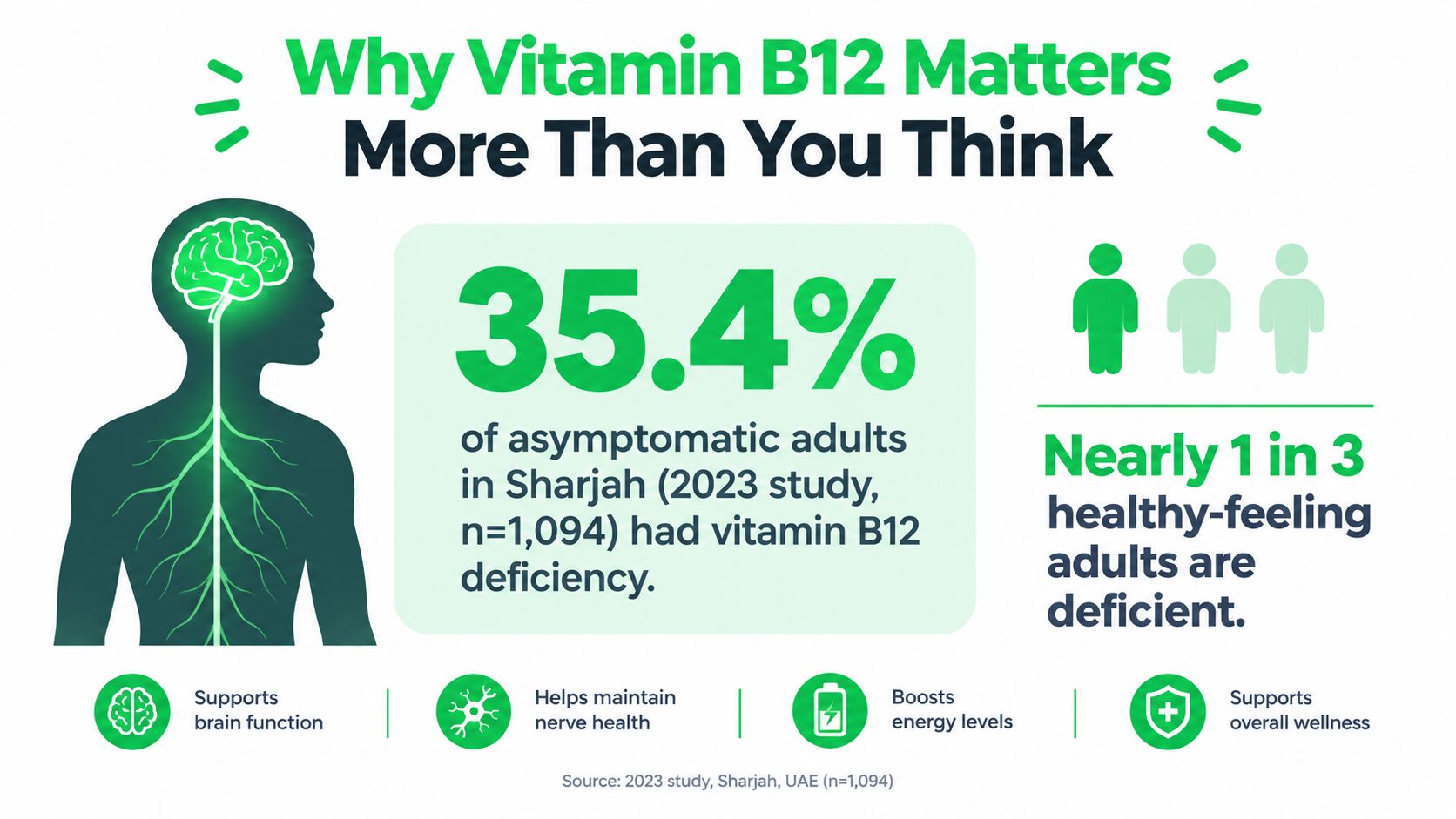
A Sharjah study of 1,094 asymptomatic adult residents found vitamin B12 deficiency in 35.4% of participants, even though the people tested didn't necessarily feel unwell. The findings are reported in this UAE study of vitamin B12 deficiency and Helicobacter pylori status. That result changes the usual way people think about B12. A person doesn't need to feel exhausted or develop numbness before low B12 becomes clinically relevant.
Consider someone who works long hours in Business Bay and blames persistent tiredness on a demanding schedule. They may book an injection at a wellness centre without checking their blood level. If the actual problem is iron deficiency, thyroid disease, poor sleep, infection, depression, or another condition, B12 won't address the cause. If they do have B12 deficiency, the next question is still important: is the problem dietary, medication-related, or caused by poor absorption?
What B12 does in the body
Vitamin B12 supports red blood cell production, nerve function, and DNA synthesis. A prolonged deficiency can contribute to anaemia and neurological problems, including altered sensation, balance difficulties, weakness, or cognitive changes. Neurological injury can become difficult to reverse when treatment starts late, which is why unexplained tingling or walking changes deserve medical assessment rather than a self-directed drip.
Fatigue is a common reason people ask about B12, but it isn't specific to this vitamin. A clinician needs to consider the full picture, including diet, medications, surgery, gastrointestinal symptoms, blood results, and the pattern and duration of symptoms. A careful assessment prevents both unnecessary treatment and delayed care.
For Dubai residents who find clinic visits difficult, essential nutrition and wellness home care can make an assessment more convenient. Convenience should support proper diagnosis, not replace it.
Practical rule: Treat the laboratory result and the underlying cause, not fatigue in isolation.
Why a risk-based approach works
The UAE data point to identifiable groups who may need closer attention. Post-bariatric patients, people taking metformin, strict vegans, and adults with possible gastric or intestinal absorption problems don't all need the same treatment. Their risks arise through different mechanisms, so a single injection package isn't an appropriate answer for everyone.
B12 therapy becomes more useful when it follows three questions:
- Is deficiency present? Testing provides evidence instead of relying on symptoms alone.
- Why did it happen? The cause determines whether oral replacement may work or whether treatment must bypass the digestive tract.
- Has treatment corrected the problem? Follow-up helps confirm biochemical recovery and supports a sensible maintenance plan.
That approach is more cautious than marketing claims, but it gives patients a clearer route to effective care.
Understanding Vitamin B12 Deficiency and Who Is at Risk
B12 deficiency usually follows a pattern. The main possibilities are insufficient intake, medication-associated depletion, reduced absorption, or a combination of factors. Understanding the pattern helps a clinician choose testing and treatment rather than treating every low-energy complaint in the same way.
Strict vegans can be at risk because natural B12 is concentrated in animal-derived foods. Fortified foods and supplements may provide an alternative, but a person who follows a plant-based diet should discuss a reliable long-term B12 source with a clinician. A vegetarian diet may carry less risk than a strict vegan diet, depending on the foods regularly consumed.
Medication and metabolic risk
Metformin is widely used in type 2 diabetes care, and B12 status deserves attention in people taking it over time. A UAE-referenced review reports 48% B12 deficiency among metformin users, as described in this review of B12 deficiency in Arab countries and metformin users. The figure doesn't mean every person taking metformin is deficient. It does mean that symptoms such as tingling, weakness, or unexplained anaemia shouldn't automatically be attributed to diabetes itself.
One UAE study of people with type 2 diabetes using metformin reported low transcobalamin in 11.8%, while high homocysteine occurred in 8.4% of patients compared with 2.2% of controls, according to this Heliyon review and UAE evidence summary08172-6). These markers can add context when a standard B12 result doesn't fully explain the clinical picture.
Surgery and absorption problems
The treatment decision changes substantially after metabolic bariatric surgery. In a UAE study of pregnant women in Abu Dhabi, B12 deficiency affected 24.4% of women with a history of metabolic bariatric surgery, compared with 3.9% among women without that surgical history, as reported in this UAE research on B12 status after metabolic bariatric surgery. Surgery can alter the digestive process that normally releases and absorbs B12 from food.
Other absorption-related causes include pernicious anaemia, gastric disease, and possible effects of Helicobacter pylori infection. The Sharjah research linked deficiency with H. pylori CagA status, supporting the need to consider gastric health when a person has persistent low B12 or symptoms such as chronic dyspepsia.
A clinician may therefore ask about:
- Diet: vegan, vegetarian, restricted, or poorly tolerated foods.
- Medicines: especially long-term metformin and other medicines relevant to nutrient absorption.
- Medical history: bariatric surgery, gastric disease, intestinal disorders, or autoimmune conditions.
- Symptoms: numbness, balance changes, mouth or tongue changes, weakness, fatigue, or breathlessness.
- Related blood findings: anaemia or abnormal red blood cell results.
If you need a broader first assessment, a full blood test in Dubai can be discussed with a qualified clinician. A full blood count doesn't replace a B12 test, but it may reveal anaemia or another reason for symptoms.
Comparing Vitamin B12 Therapy Options
The best route depends on cause and absorption, not on which option sounds strongest. High-dose oral B12 may be suitable for dietary deficiency because enough can be absorbed through the intestine. Injections become more important when the gut can't absorb B12 reliably, such as with pernicious anaemia or after certain gastric operations.
Intramuscular treatment places B12 into muscle tissue, bypassing the digestive process. A clinician may use a loading schedule when stores need to be replenished or neurological symptoms require prompt attention, then move to a maintenance plan. The schedule varies with the cause, the product used, local prescribing practice, and the patient's response.
The main routes at a glance
| Therapy route | Best for | Onset of effect | Maintenance needed |
|---|---|---|---|
| Oral high-dose B12 | Dietary deficiency and some cases where absorption remains adequate | Improvement develops as replacement corrects the deficiency | Often needed while the dietary cause continues |
| Intramuscular injection | Pernicious anaemia, significant malabsorption, post-gastric surgery, or selected symptomatic cases | Can restore B12 without relying on gut absorption | Often required when the underlying absorption problem is permanent |
| Intravenous therapy | Selected clinical situations determined by a doctor, not routine treatment for simple dietary deficiency | Depends on the underlying condition and the broader treatment plan | Determined by the cause, not by the IV route itself |
The table is a guide, not a prescription. A person with a vegan diet and normal absorption may not need injections. Someone with post-surgical malabsorption may not respond adequately to ordinary oral multivitamins. A person with neurological symptoms may need urgent clinical evaluation rather than a routine wellness appointment.
Oral treatment versus injections
Oral therapy is often practical when the problem is inadequate intake. It can also be considered in selected patients with absorption concerns if a clinician chooses a sufficiently high dose and monitors the response. The key is follow-up. Feeling more energetic doesn't prove that the deficiency has been corrected.
Injections are not automatically better. They are useful because they bypass the gut, not because they create a general energy boost. They also require a prescription or professional assessment, safe administration, and a plan for repeat doses where necessary.
IV nutrient therapy is marketed in some UAE settings, but an IV route doesn't automatically make B12 more effective. If you want to understand how clinics describe vitamins and minerals IV therapy, use that information as a starting point for questions, not as a substitute for a diagnosis.
The decisive question is not “Which route is strongest?” It is “Which route can correct this person's cause of deficiency safely and reliably?”
A home IV vitamin therapy consultation may be convenient, but B12 replacement should still be matched to confirmed need. Ask what testing has been completed, whether the treatment is oral or injectable, how the cause was identified, and when the response will be reviewed.
The Testing and Monitoring Process Explained
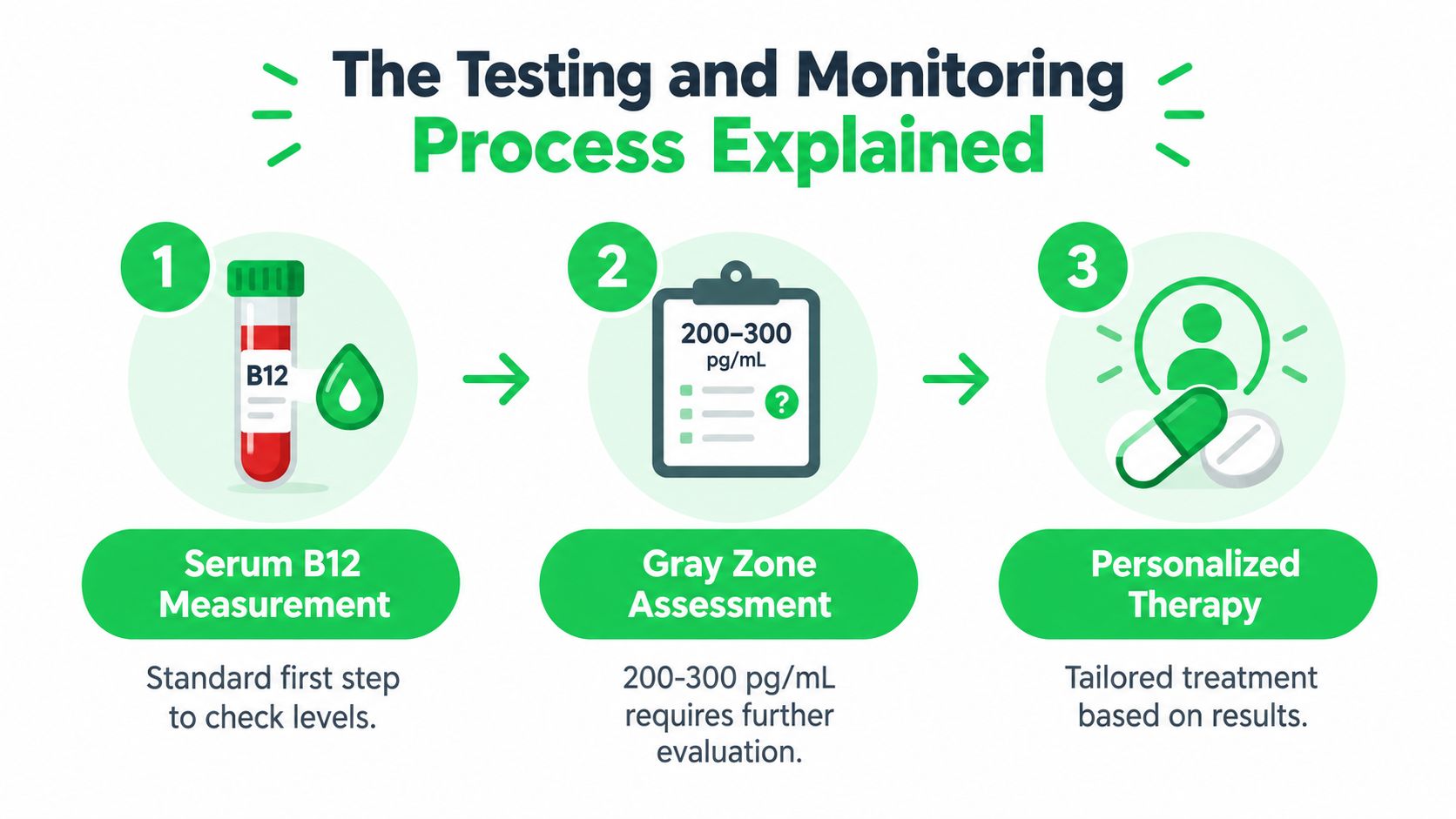
Testing turns a vague concern into a clinical decision. A clinician usually starts with a serum B12 measurement and reviews the result alongside symptoms, diet, medications, surgery, and related blood findings. No single result should be interpreted without context, particularly when the level sits near the lower end of the laboratory range.
Step one involves the initial blood test
Serum B12 is the standard starting point. The clinician may also request a full blood count, folate, iron studies, or other tests if anaemia or an alternative explanation is possible. Tell the clinician about supplements before testing, because recent use can affect how the result is interpreted.
A result in the 200 to 300 pg/mL range requires further evaluation, particularly if symptoms or risk factors are present. The UAE medical student study included participants in this range who had B12 insufficiency, while no frank deficiency was observed in that study population. The finding reinforces the need to distinguish a borderline result from a clearly normal result, rather than treating every value identically.
Step two clarifies an uncertain result
When the serum level doesn't settle the question, clinicians may consider methylmalonic acid and homocysteine. These tests provide additional information about how B12 is functioning in the body. The choice depends on the initial result, symptoms, available testing, kidney function, and the clinician's judgement.
A patient with tingling, a restricted diet, and a borderline serum B12 may need a different evaluation from someone with no symptoms and no risk factors. A patient who has already started supplements may also need a carefully timed interpretation. Don't stop prescribed treatment without medical advice just to change a test result.
Step three creates a treatment and review plan
Once the cause and severity are clearer, the clinician can select oral therapy, injections, or another approach. The plan should state what to take, how often to take it, how long replacement may continue, and what symptoms require earlier review.
Follow-up testing can confirm biochemical correction, especially when malabsorption is suspected or symptoms persist. A home collection service such as blood testing at home in Dubai can reduce scheduling barriers, but the sample still needs professional collection, laboratory processing, and clinical interpretation.
Seek prompt medical attention for progressive numbness, difficulty walking, marked weakness, breathlessness, fainting, or severe palpitations. Those symptoms may indicate a significant problem that needs more than a vitamin appointment.
How Home-Based B12 Therapy Works in Dubai
Home-based care can make B12 assessment easier for people who work irregular hours, have limited mobility, are staying in a hotel, or prefer a private consultation. The safe model begins with clinical review, not with an automatic injection. A qualified clinician should ask about symptoms, diet, medications, surgery, previous results, allergies, and any red flags.

What a responsible visit includes
A typical pathway may involve booking a doctor or nurse visit, discussing whether blood collection is appropriate, arranging laboratory testing, and reviewing the result before treatment. If a deficiency is already documented, the clinician can assess whether the existing prescription supports oral replacement or an injection.
The visit may take place at home, in an office, or in a hotel room. Location changes the logistics, but it shouldn't change the clinical standard. The provider should use appropriate identification, sterile equipment, safe sharps disposal, accurate documentation, and clear advice about side effects and follow-up.
Ask these questions before booking:
- Who will attend? Confirm that the clinician is appropriately licensed and identify whether a doctor or nurse will provide the service.
- What happens before treatment? Ask whether the provider reviews test results and medical history rather than selling an automatic drip.
- What product is being used? Request the medication name, dose, route, expiry information, and prescribing instructions.
- How is follow-up arranged? Find out who reviews results and what happens if symptoms continue.
- What are the red flags? A reliable service should explain when home care isn't suitable and emergency assessment is needed.
Home care is particularly useful when a patient needs sample collection and has difficulty travelling. It also supports continuity for people who already have a clinician-led maintenance schedule. It shouldn't be used to avoid urgent assessment when neurological symptoms are progressing or when anaemia may be severe.
Convenience must remain clinically controlled
Dubai has a broad wellness market, and the phrase “B12 injection” can refer to very different services. Some providers may offer a general nutrient blend, while others deliver prescribed treatment after reviewing laboratory evidence. Read the service description carefully and check whether the provider distinguishes between assessment, prescription, administration, and follow-up.
A convenient appointment can remove friction, but it can't determine the cause of deficiency by itself. The strongest home-based pathway combines accessible testing with a documented decision about the route, dose, and duration of therapy.
Common Misconceptions About B12 Therapy
The first misconception is that everyone with fatigue needs B12 injections. Fatigue has many possible causes, and an injection won't correct a problem unrelated to B12. Treating a normal B12 level as though it were deficient can also distract from sleep disorders, anaemia, thyroid disease, mental health concerns, infection, medication effects, or other medical conditions.
The second misconception is that IV therapy is always superior. IV administration may be offered in wellness settings, but the route doesn't remove the need to establish deficiency or identify malabsorption. Oral treatment can be appropriate for dietary deficiency, while injections have a clearer role when the body can't absorb B12 reliably.
A third misconception is that only vegans need to think about B12. UAE findings show clinically important deficiency among people outside that group, including asymptomatic adults, people with diabetes who use metformin, and patients with a history of metabolic bariatric surgery. Risk comes from diet, medication, absorption, age, surgery, and medical history, not from one lifestyle category alone.
B12 therapy should answer a medical question, not serve as a default response to tiredness.
Be cautious with providers that promise broad benefits, pressure you to buy a package before testing, or avoid explaining the product and route. This guide to identifying overcharging and fake IV treatment offers practical context for checking home healthcare services.
A useful conversation with your clinician starts with four points: your symptoms, your risk factors, your test results, and the likely cause. Ask whether oral therapy is enough, whether absorption is impaired, when monitoring should occur, and how long maintenance may be needed. That approach keeps vitamin B12 therapy focused, safe, and relevant to your actual health.
Vitals Healthcare Doctor On Call offers DHA-licensed doctor visits, nursing support, home blood collection, injections, and IV therapy at homes, hotels, and offices across Dubai. If you need B12 assessment or treatment, visit Vitals Healthcare Doctor On Call to arrange an evaluation that connects testing, treatment choice, and follow-up.