
IV Vitamin Therapy Cost in Dubai typically ranges from AED 300 for basic hydration to over AED 2,500 for specialised NAD+ protocols, and the final price depends heavily on the formulation, clinical oversight, and delivery setting. The cheapest headline number is rarely the cheapest real-world option once you add safety screening, VAT, and proper medical supervision.
The common mistake is comparing drips as if they were the same product. In Dubai, they're not, and the price gap usually reflects ingredients, dosage, monitoring, and who is allowed to give the infusion.
Table of Contents
- IV Drip Pricing in Dubai: What Drives the Number
- Typical Price Ranges by Treatment Type
- What Your Quote Includes
- Comparing Clinic Visits and Mobile Delivery
- The Hidden Financial Risks of Cheap Drips
- Navigating Insurance Claims and Final Bookings
IV Drip Pricing in Dubai: What Drives the Number
The first assumption to drop is that an IV drip has one fair market price. It doesn't. A basic hydration bag, a vitamin blend, and a premium NAD+ protocol sit in different cost bands because they use different formulations, take different amounts of time, and require different levels of clinical oversight.
Why the label alone is misleading
A patient often sees a treatment name and expects a fixed rate. The treatment label tells you little about what is inside the bag, how long the infusion takes, or whether the quote includes a physician review. That is why the Dubai market shows such a wide spread, from entry-level hydration in the AED 300 to AED 500 range to more complex options that move into the AED 1,000 to AED 2,500+ bracket, depending on protocol and provider (Dubai clinic pricing overview).
Published Dubai and UAE price lists show the same pattern. Basic hydration can start at a few hundred dirhams, while glutathione, beauty, energy, and NAD+ protocols cost more because they involve additional ingredients, longer administration, and tighter supervision. A low quote can still be the expensive choice if it leaves out the medical work itself.
Practical rule: compare formula, dose, monitoring, and setting, not just the headline drip name.
That is the core pricing lesson in this market. The central question is not "What does a drip cost?" It is "What clinical service am I buying?"
Typical Price Ranges by Treatment Type
Dubai's pricing makes more sense when you sort it by treatment type. The headline number matters less than the protocol behind it.
| Treatment Category | Estimated Price Range (AED) |
|---|---|
| Basic hydration | 300 to 500 |
| Vitamin or energy drip | 400 to 900 |
| Immunity-focused infusion | 500 to 1,000 |
| Glutathione or beauty protocol | 700 to 1,500 |
| NAD+ therapy | 1,000 to 2,500+ |
These ranges line up with local clinic pricing. Basic hydration and simpler vitamin drips sit at the lower end, while glutathione, beauty, and NAD+ protocols move higher because they usually involve more specialised ingredients and more clinical time. For a full breakdown of what a premium NAD+ protocol involves, see the complete NAD+ IV therapy guide for Dubai.
A separate UAE package schedule shows the same pattern in another form, with named treatments priced by intensity and 5% VAT applied on top (UAE IV package schedule). That matters because the same treatment can look affordable on paper and become more expensive once tax, consultation, or travel is added.
The spread is logical. A basic hydration session is mostly fluids and straightforward support. A skin, detox, or longevity protocol often adds more specialised components, longer administration, and tighter supervision. That is why IV vitamin therapy cost should be read as a range, not a fixed figure.
Cheap quotes deserve scrutiny here. A lower headline price can still leave out the clinical work that keeps the treatment safe, and that can turn the “budget” option into the costly one if it leads to delays, extra add-ons, or poor oversight.
If you are comparing options, ask a simple question. Is this a hydration visit, a multivitamin visit, or a specialised medical protocol? They do not belong in the same price bracket, and they should not be judged as if they do.
What Your Quote Includes
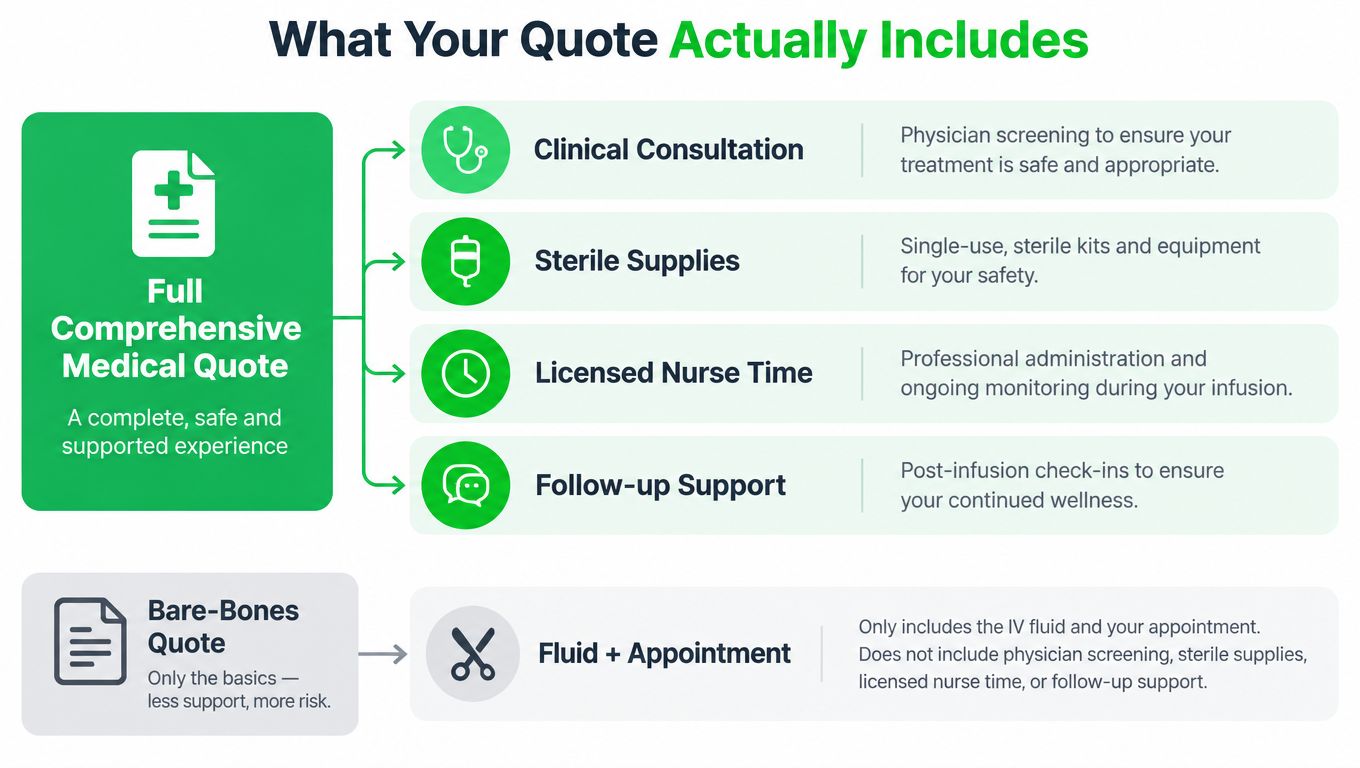
A low quote often leaves out the parts that keep IV therapy safe and compliant. The fluid bag is only one line. The service includes screening, clinical judgment, sterile equipment, administration time, and the response plan if a patient reacts badly.
The service bundle behind a proper quote
A compliant quote in Dubai should include DHA facility authorisation, DHA-registered clinicians, sterile single-use equipment, patient assessment, vital-sign monitoring, emergency readiness, pharmaceutical products, documentation, and follow-up (Dubai IV therapy licensing overview). Published treatment pricing in the same market shows how wide the spread can be, from about AED 250 for a single vitamin injection to AED 2,850 for a high-end multivitamin drip, which reflects differences in ingredients, supervision, and delivery model.
A proper self-pay invoice should separate the formula from the clinical service. If the provider cannot explain what is included, you are not comparing like-for-like pricing. Ask whether the quote covers the doctor review, prescription if needed, nurse administration, supplies, monitoring, VAT, and any travel or call-out charge.
For a useful framework on itemised self-pay billing, the good faith estimate rules show the same transparency standard patients should expect in elective care. That does not make every wellness infusion a formal insurance case, but it does support the case for a written quote that lists each charge clearly.
Useful standard: if the quote only says “fluid + appointment,” it is incomplete for any regulated medical service.
Formula details matter too. A provider's treatment menu should show what the drip is designed to do, not just a catchy name. A clear IV drip formula overview helps patients see the difference between a simple hydration option and a more complex protocol before they book.
Comparing Clinic Visits and Mobile Delivery
Where you receive the infusion changes the final cost, even when the drip itself is similar. A clinic quote can look lower at first glance, but the patient still spends time getting there, parking, waiting, and getting back home. Mobile care shifts some of that burden into a call-out fee, which often feels higher on paper but can be easier to justify in practice.
Clinic time versus door-to-door convenience
A clinic visit usually bundles the facility cost into the service, whether the patient notices it or not. That includes room use, staffing, scheduling, and overhead tied to the building itself. Mobile delivery does the opposite. It brings the clinician, supplies, and protocol to the patient's home, hotel, or office, which is why home-based IV care can be priced differently even when the underlying treatment is similar.
For patients who value privacy or are short on time, mobile delivery can be the better fit. Tourists in hotels, executives in meetings, and people with limited mobility often prefer not to deal with traffic or sit in a waiting room while dehydrated or unwell. That convenience becomes part of the total cost, even if it doesn't always appear as a line item.
A useful internal benchmark is the home IV drip service model, where the provider comes to the patient rather than asking the patient to absorb the logistics. That matters most when time itself has a real cost.
What changes the bill in mobile care
Mobile IV therapy typically adds practical charges tied to travel, timing, and delivery setting. The cost logic is straightforward. A clinician who leaves a base, carries sterile supplies, and provides bedside treatment has a different operating structure from a fixed clinic.
In practice, the cheapest quote is not always the lowest-cost option once travel, delay, and missed time are counted.
A clinic can work well for planned visits, especially if the patient is already nearby and doesn't mind the trip. Mobile treatment makes more sense when convenience, discretion, or limited mobility matters more than the lowest advertised fee. Both models can be legitimate, but they should be judged on the full experience, not the first number you see.
The Hidden Financial Risks of Cheap Drips
A low headline price can be the most expensive option if the provider skips proper screening. The risk is not abstract. A 2024 Dubai case reported severe convulsions, vomiting, and breathlessness after an immunity-focused IV drip, and the medical report described a severe allergic reaction (UAE IV drip risk report).
Why screening is part of the price
Safe IV treatment starts with suitability, not the drip bag. A clinician should check the patient's history, current condition, and any reasons the infusion may need to be changed or refused. Research and clinical guidance also point out that wellness drips have limited evidence in healthy people, while kidney disease, heart disease, and diabetes can increase the chance of fluid or nutrient complications.
That has a direct cost effect. If a patient needs assessment, testing, escalation, or later hospital care, the final bill can rise well beyond the advertised drip fee. Cheap unregulated care can also waste time when the patient should never have been infused at all.
Good providers sometimes turn people away or adjust the plan. That is disciplined practice, not lost revenue. A higher upfront price for screening can be cheaper than paying for an avoidable emergency later.
The questions that protect your wallet
Ask these before you pay:
- Will I be screened first? If a clinician is willing to infuse without checking suitability, that is a red flag.
- What happens if I am not a candidate? A proper provider should refuse safely.
- Are there hidden call-out or monitoring fees? These can change the final total.
- Is the staff DHA-licensed? Licensing matters because the service is medical, not cosmetic retail.
For home bookings, caution matters even more. The alert on home healthcare scams shows how a cheap visit can turn into an unsafe, poor-value transaction when pricing and credentials are unclear.
Navigating Insurance Claims and Final Bookings
Insurance and self-pay follow different rules in Dubai. Elective wellness infusions are generally paid out of pocket. Medically necessary IV treatment may qualify for reimbursement when a licensed physician documents the indication and the insurer approves it in advance. Confirm that distinction before booking, because approval after treatment is not guaranteed.
What to confirm before confirming the slot
Start by identifying the medical purpose. General wellness, recovery, or energy support usually means self-pay. If the infusion relates to a documented condition, ask the provider which clinical notes, prescription, and invoices your insurer requires. Confirm pre-authorisation directly with the insurer before treatment, rather than relying on a clinic's verbal assurance.
Review the invoice before accepting the slot. It should show the doctor consultation, prescription, nurse administration, VAT, supplies, and any travel or call-out charge. An itemised quote helps with a later claim and exposes additions that might otherwise appear at checkout.
Ask whether the appointment is at a clinic, home, or hotel. Each setting has different operating costs, so the quote should identify the location fee and explain what clinical monitoring is included. A low headline price may exclude assessment, travel, or follow-up care. If the provider cannot explain the total, postpone payment.
For home care that combines assessment with same-day support, the 24/7 doctor on call guide explains how regulated visits are commonly structured in Dubai.
A simple booking checklist
Before paying, confirm:
- Provider credentials and DHA registration.
- A written itemised quote listing included services.
- VAT clarity and every location or travel charge.
- Insurance paperwork if treatment is medically necessary.
- An escalation plan if you react or become unsuitable for infusion.
- The cancellation policy, including charges if a clinician decides not to proceed.
Vitals Healthcare Doctor On Call offers doctor visits and IV therapy at home, hotel, or office with DHA-licensed clinicians. This model separates the medical service from the convenience of the delivery location, helping patients compare regulated care on a like-for-like basis.
If you want a transparent quote for IV therapy in Dubai, choose a provider that explains the clinical review, monitoring, supplies, and location fees before treatment begins. Visit Vitals Healthcare Doctor On Call to review regulated home, hotel, and office care, then compare the itemised quote with the treatment you need.